Every framework, step by step
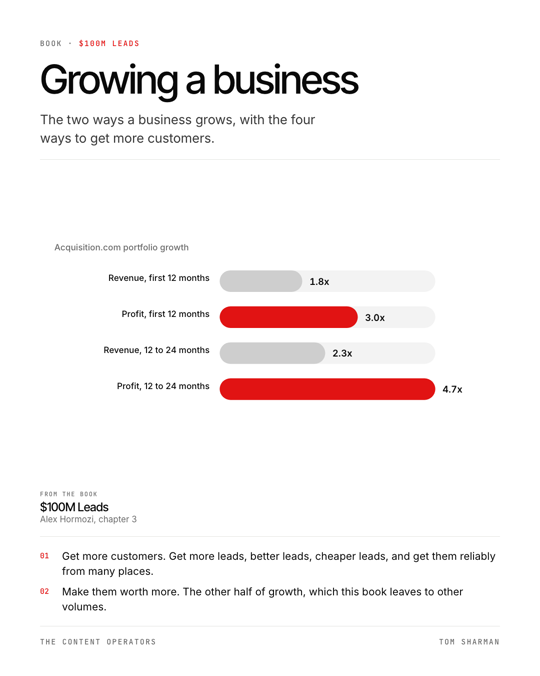
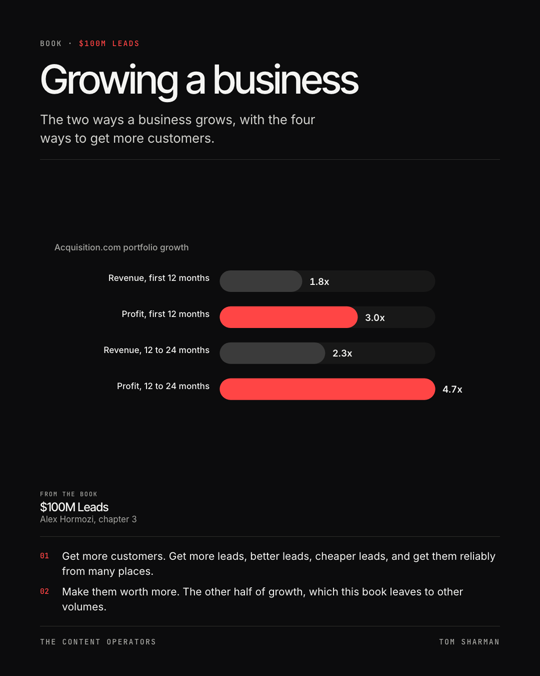
The two ways a business grows, with the four ways to get more customers.
- Get more customers. Get more leads, better leads, cheaper leads, and get them reliably from many places.
- Make them worth more. The other half of growth, which this book leaves to other volumes.
From chapter: The Problem This Book Solves, pp. 31–40
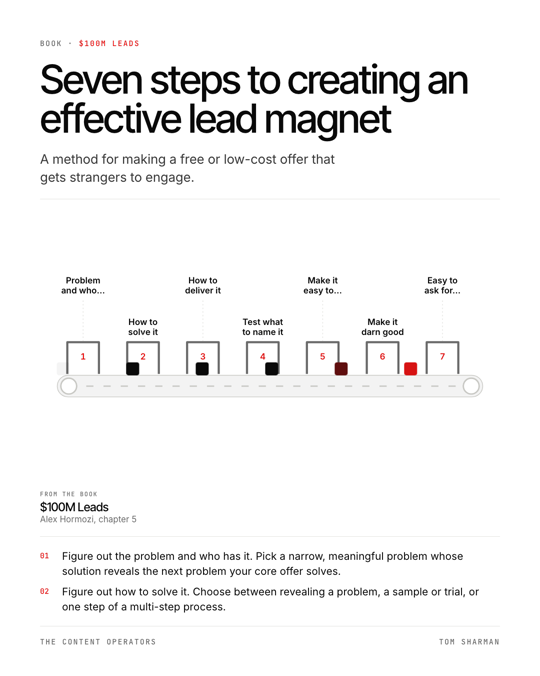
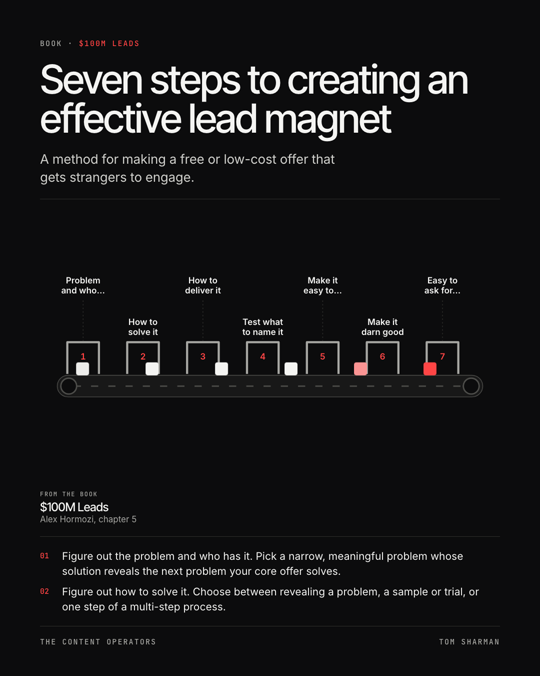
A method for making a free or low-cost offer that gets strangers to engage.
- Figure out the problem and who has it. Pick a narrow, meaningful problem whose solution reveals the next problem your core offer solves.
- Figure out how to solve it. Choose between revealing a problem, a sample or trial, or one step of a multi-step process.
- Figure out how to deliver it. Choose software, information, services or physical products.
- Test what to name it. Test the headline, then the images, then the subheadline.
- Make it easy to consume. Offer it in every format and at every time and channel you can.
- Make it darn good. Give away the secrets and sell the implementation.
- Make it easy for them to tell you they want more. Give a clear call to action plus reasons to act now.
From chapter: Engage Your Leads: Offers and Lead Magnets, pp. 44–78
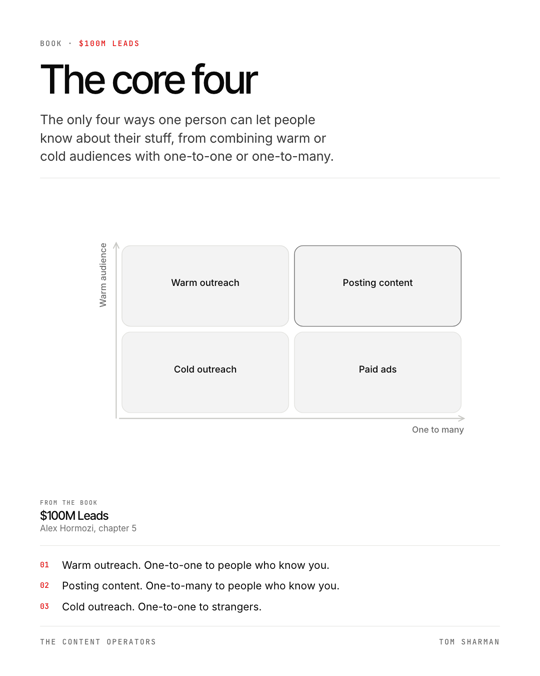
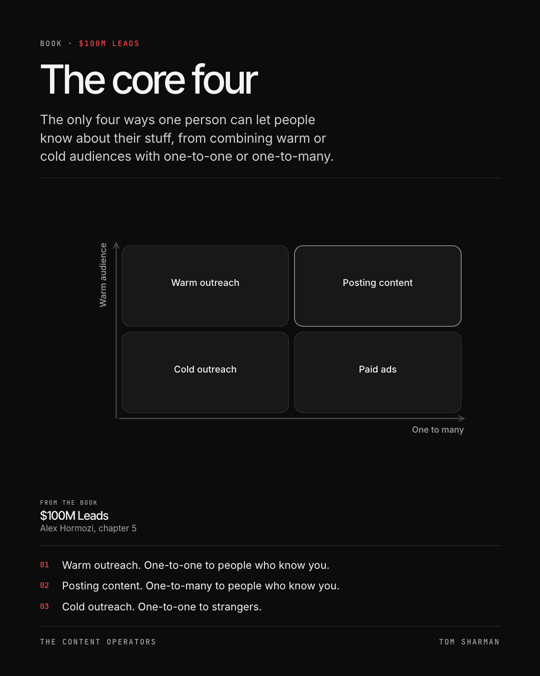
The only four ways one person can let people know about their stuff, from combining warm or cold audiences with one-to-one or one-to-many.
- Warm outreach. One-to-one to people who know you.
- Posting content. One-to-many to people who know you.
- Cold outreach. One-to-one to strangers.
- Paid ads. One-to-many to strangers.
From chapter: Engage Your Leads: Offers and Lead Magnets, pp. 44–78
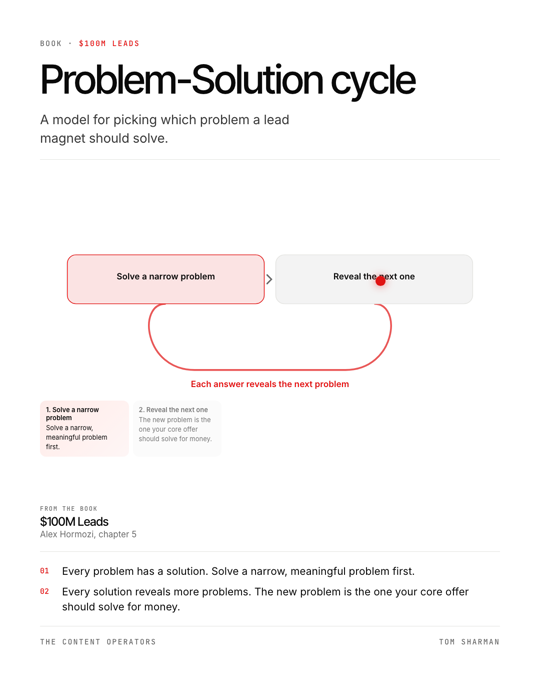
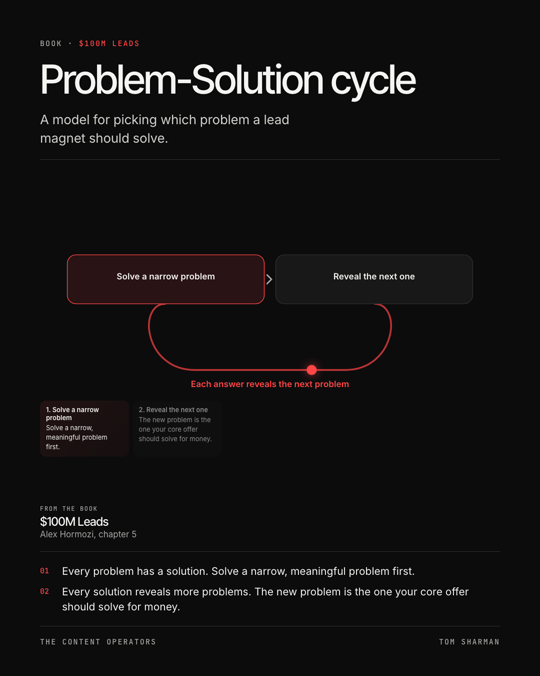
A model for picking which problem a lead magnet should solve.
- Every problem has a solution. Solve a narrow, meaningful problem first.
- Every solution reveals more problems. The new problem is the one your core offer should solve for money.
From chapter: Engage Your Leads: Offers and Lead Magnets, pp. 44–78
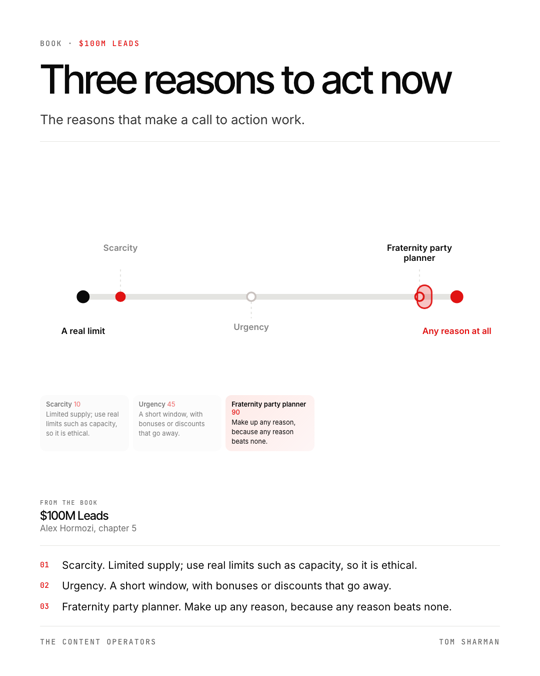
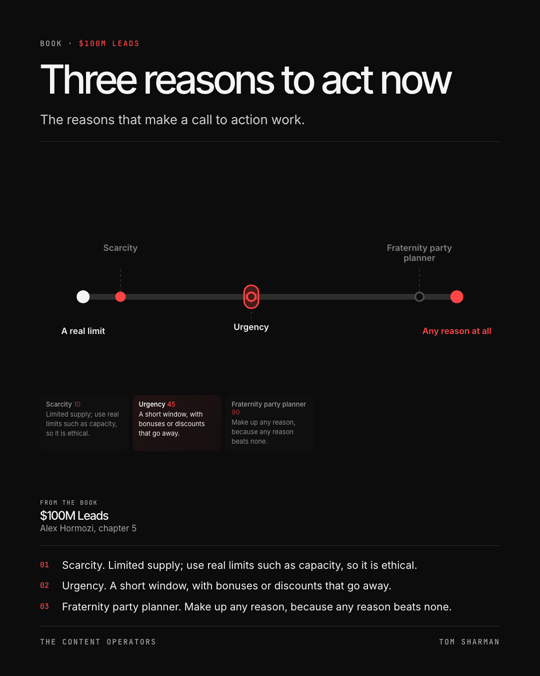
The reasons that make a call to action work.
- Scarcity. Limited supply; use real limits such as capacity, so it is ethical.
- Urgency. A short window, with bonuses or discounts that go away.
- Fraternity party planner. Make up any reason, because any reason beats none.
From chapter: Engage Your Leads: Offers and Lead Magnets, pp. 44–78
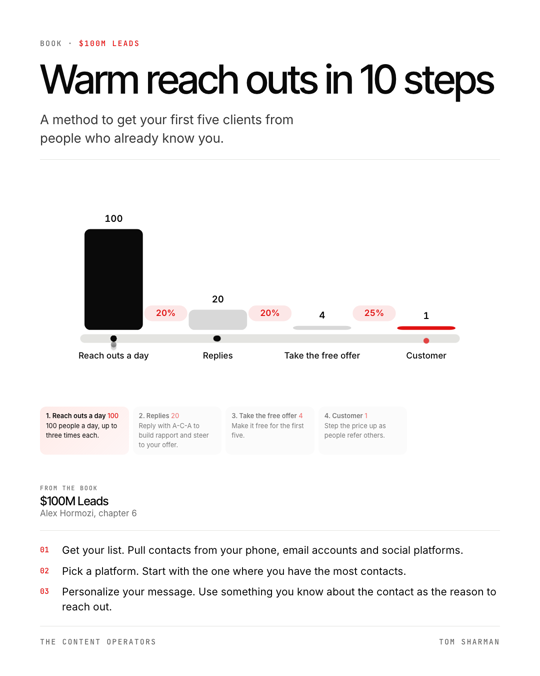
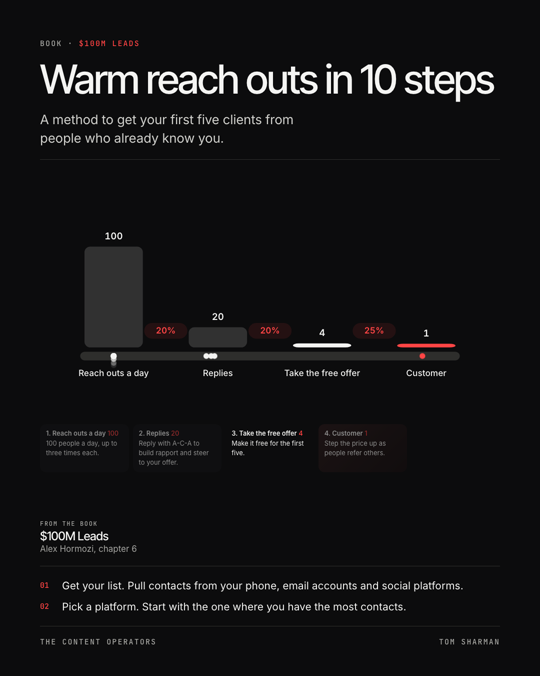
A method to get your first five clients from people who already know you.
- Get your list. Pull contacts from your phone, email accounts and social platforms.
- Pick a platform. Start with the one where you have the most contacts.
- Personalize your message. Use something you know about the contact as the reason to reach out.
- Reach out. 100 people a day, up to three times each.
- Warm them up. Reply with A-C-A to build rapport and steer to your offer.
- Invite their friends. Make an offer built on the value equation, asking who they know.
- Make them the easiest offer in the world. Make it free for the first five.
- Start at the top. Move to the platform with the next most contacts.
- Start charging. Step the price up as people refer others.
- Keep your list warm. Give value regularly, then probe with the nine-word email.
From chapter: #1 Warm Outreach, pp. 79–108
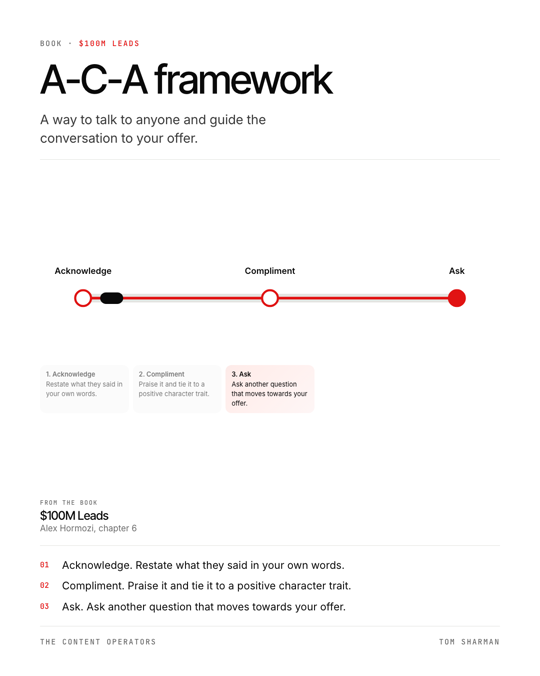
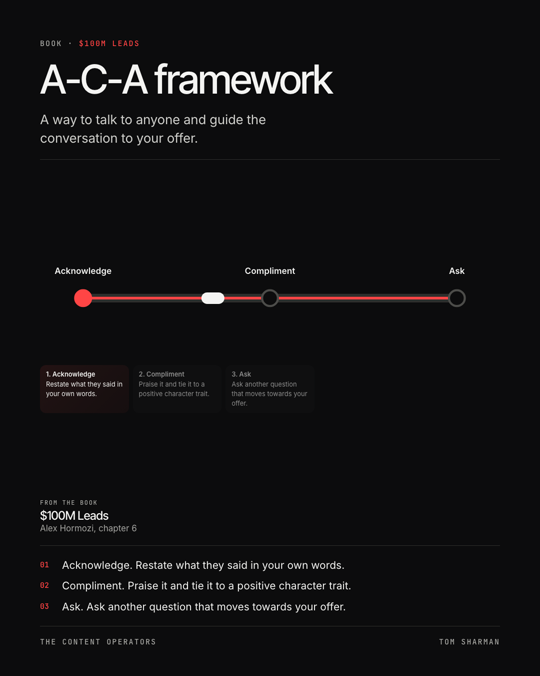
A way to talk to anyone and guide the conversation to your offer.
- Acknowledge. Restate what they said in your own words.
- Compliment. Praise it and tie it to a positive character trait.
- Ask. Ask another question that moves towards your offer.
From chapter: #1 Warm Outreach, pp. 79–108
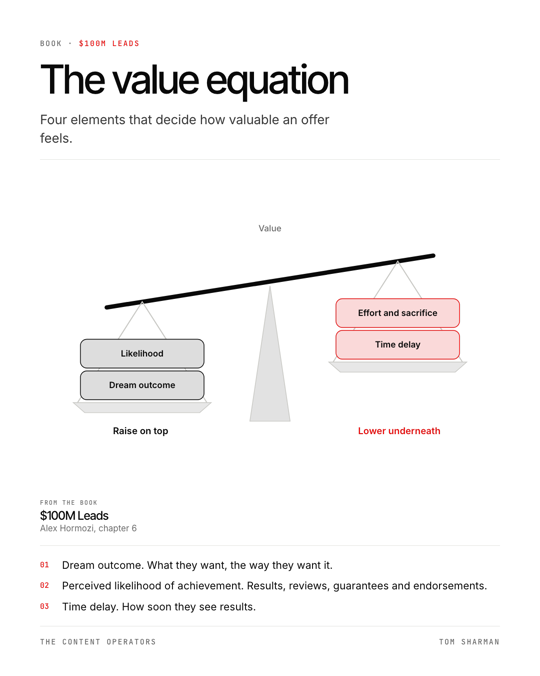
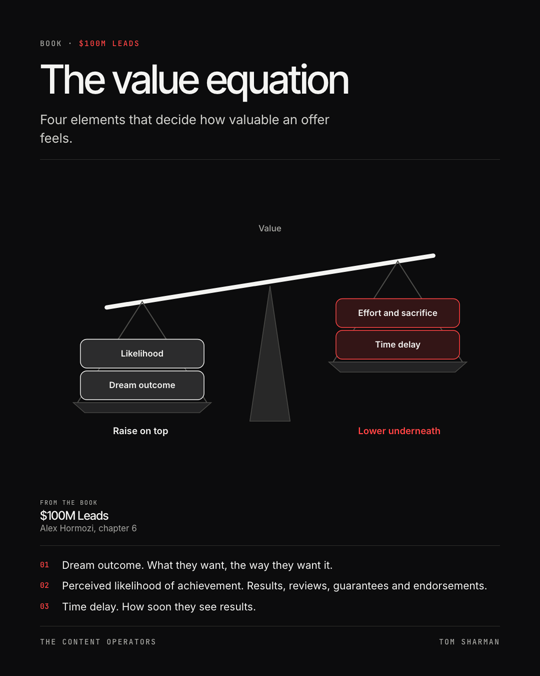
Four elements that decide how valuable an offer feels.
- Dream outcome. What they want, the way they want it.
- Perceived likelihood of achievement. Results, reviews, guarantees and endorsements.
- Time delay. How soon they see results.
- Effort and sacrifice. The bad stuff they endure and the good stuff they give up.
From chapter: #1 Warm Outreach, pp. 79–108
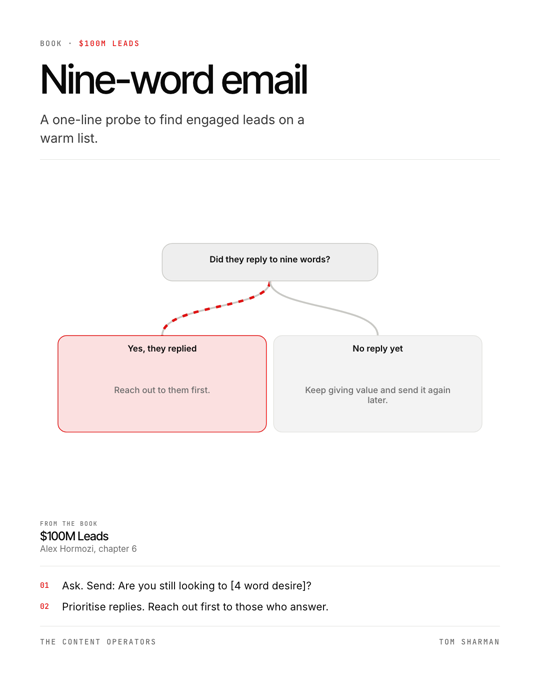
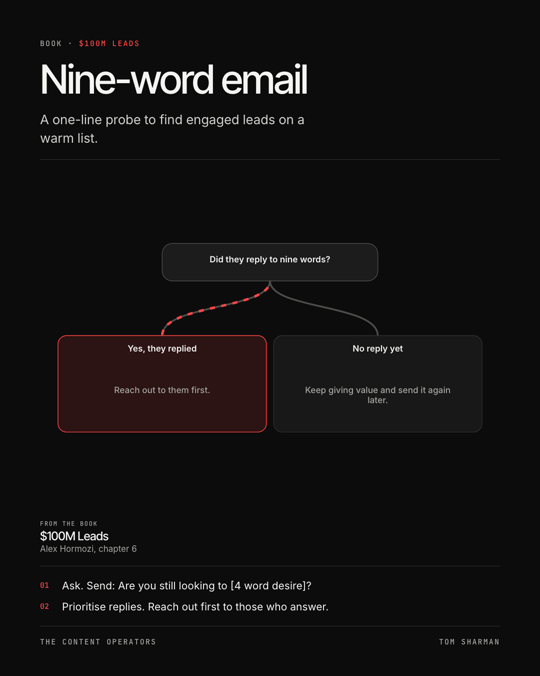
A one-line probe to find engaged leads on a warm list.
- Ask. Send: Are you still looking to [4 word desire]? with no images or links.
- Prioritise replies. Reach out first to those who answer.
From chapter: #1 Warm Outreach, pp. 79–108
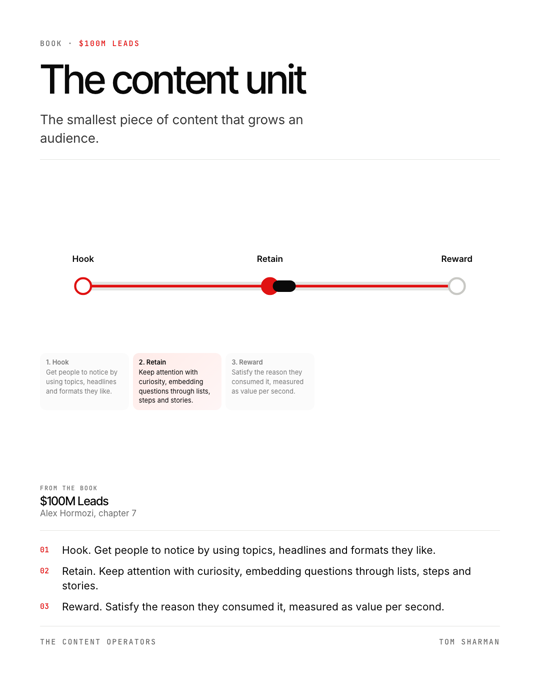
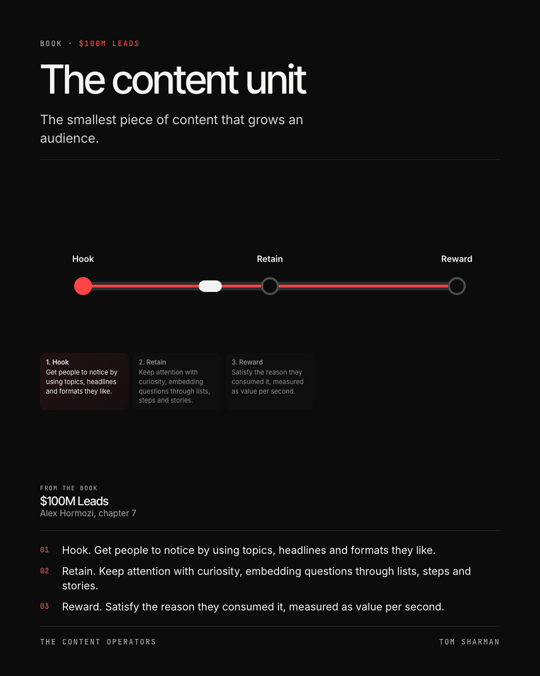
The smallest piece of content that grows an audience.
- Hook. Get people to notice by using topics, headlines and formats they like.
- Retain. Keep attention with curiosity, embedding questions through lists, steps and stories.
- Reward. Satisfy the reason they consumed it, measured as value per second.
From chapter: #2 Post Free Content Part I, pp. 109–131
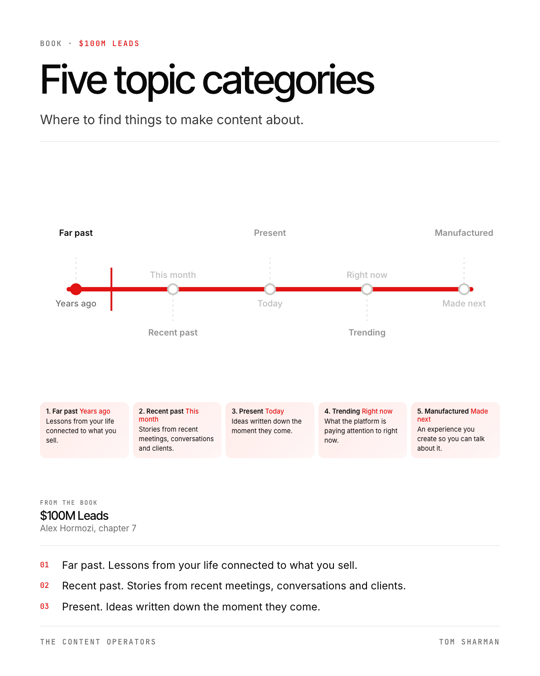
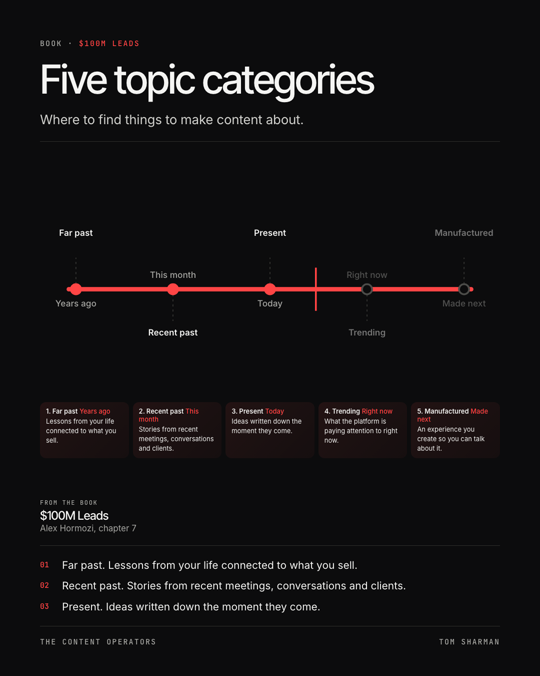
Where to find things to make content about.
- Far past. Lessons from your life connected to what you sell.
- Recent past. Stories from recent meetings, conversations and clients.
- Present. Ideas written down the moment they come.
- Trending. What the platform is paying attention to right now.
- Manufactured. An experience you create so you can talk about it.
From chapter: #2 Post Free Content Part I, pp. 109–131
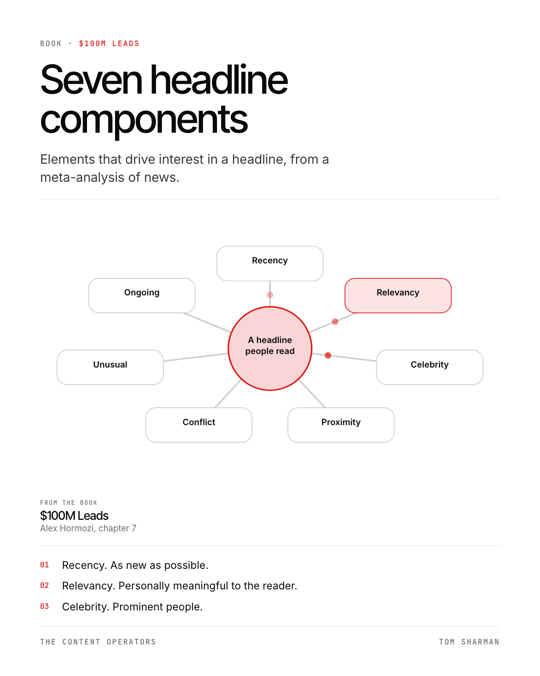
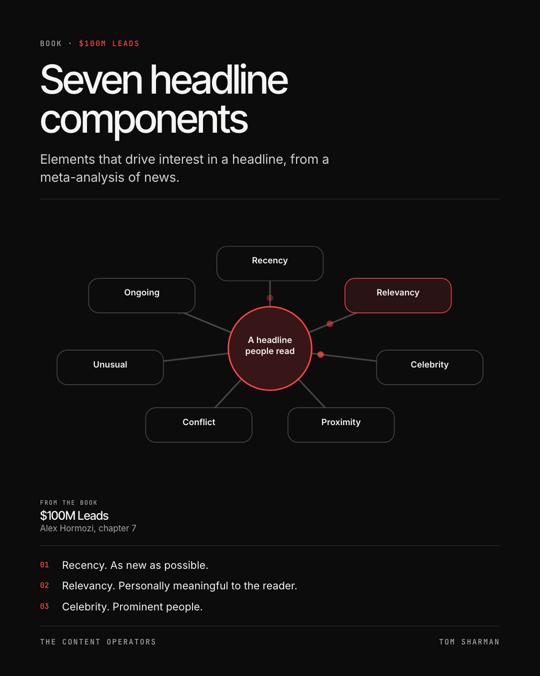
Elements that drive interest in a headline, from a meta-analysis of news.
- Recency. As new as possible.
- Relevancy. Personally meaningful to the reader.
- Celebrity. Prominent people.
- Proximity. Close to home.
- Conflict. Opposing ideas or people.
- Unusual. Odd, rare or bizarre.
- Ongoing. A story still in progress.
From chapter: #2 Post Free Content Part I, pp. 109–131
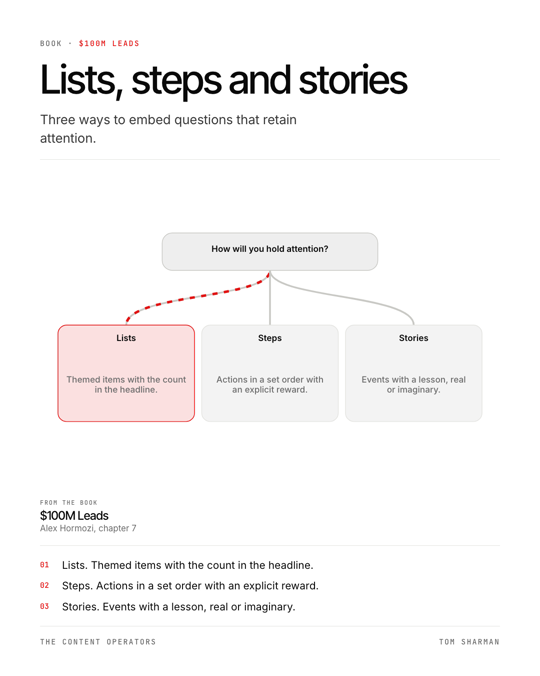
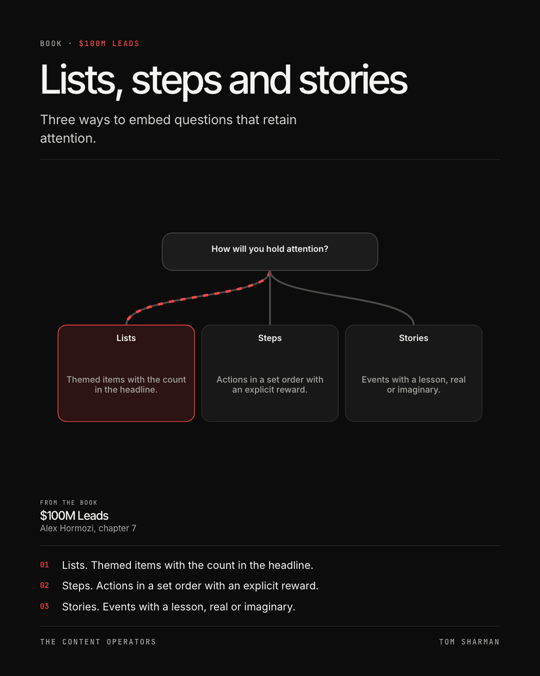
Three ways to embed questions that retain attention.
- Lists. Themed items with the count in the headline.
- Steps. Actions in a set order with an explicit reward.
- Stories. Events with a lesson, real or imaginary.
From chapter: #2 Post Free Content Part I, pp. 109–131
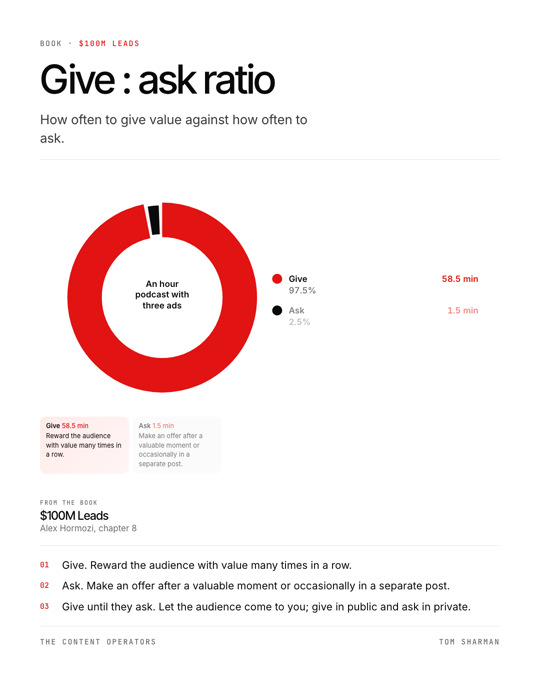
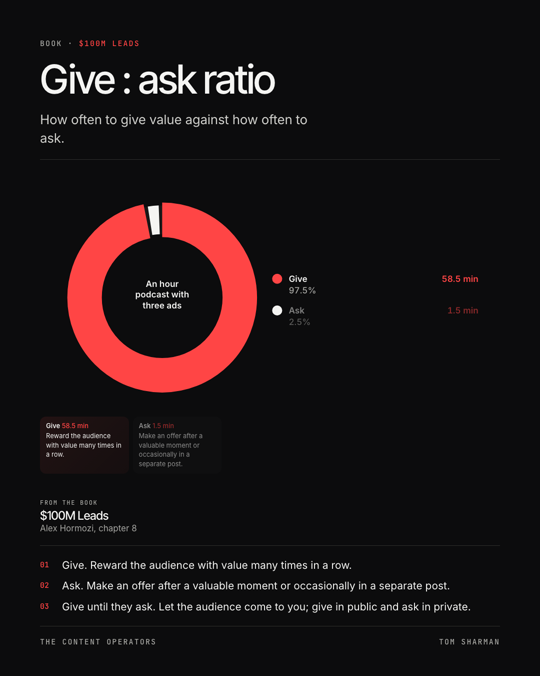
How often to give value against how often to ask.
- Give. Reward the audience with value many times in a row.
- Ask. Make an offer after a valuable moment or occasionally in a separate post.
- Give until they ask. Let the audience come to you; give in public and ask in private.
From chapter: #2 Post Free Content Part II, pp. 132–153
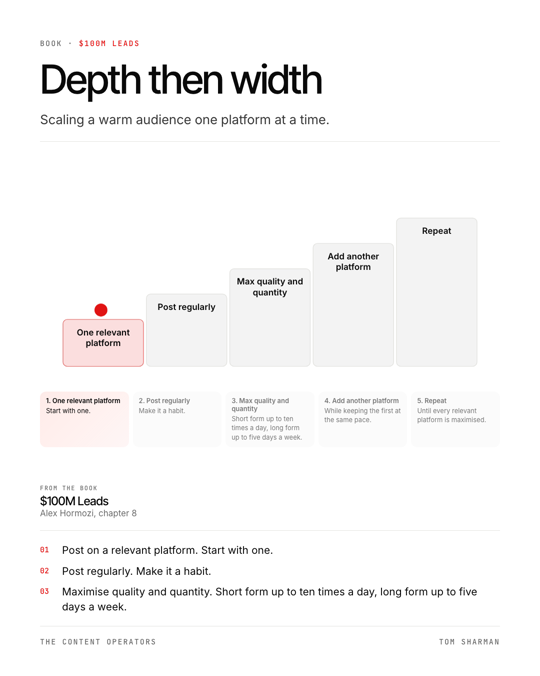
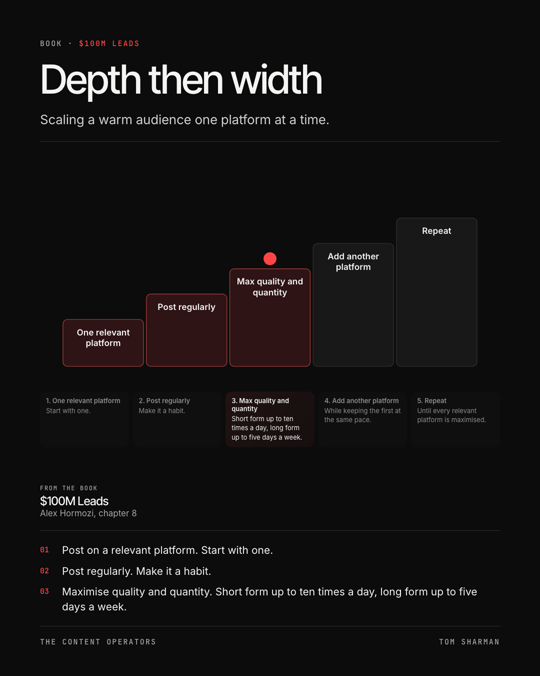
Scaling a warm audience one platform at a time.
- Post on a relevant platform. Start with one.
- Post regularly. Make it a habit.
- Maximise quality and quantity. Short form up to ten times a day, long form up to five days a week.
- Add another platform. While keeping the first at the same pace.
- Repeat. Until every relevant platform is maximised.
From chapter: #2 Post Free Content Part II, pp. 132–153
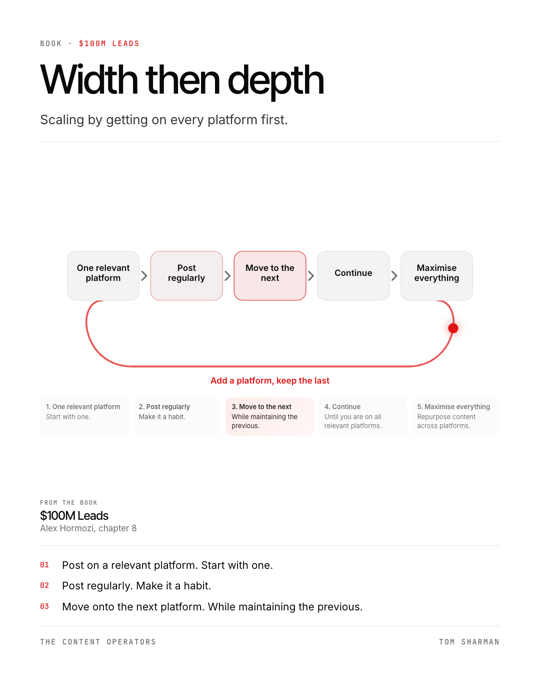
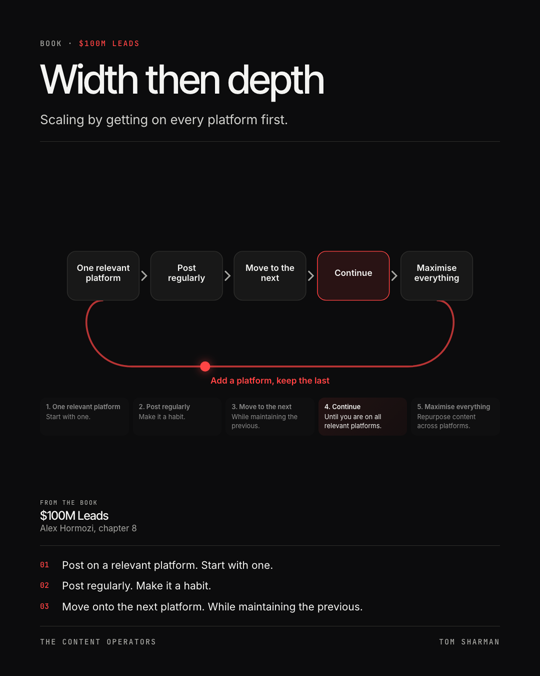
Scaling by getting on every platform first.
- Post on a relevant platform. Start with one.
- Post regularly. Make it a habit.
- Move onto the next platform. While maintaining the previous.
- Continue. Until you are on all relevant platforms.
- Maximise everything at once. Repurpose content across platforms.
From chapter: #2 Post Free Content Part II, pp. 132–153
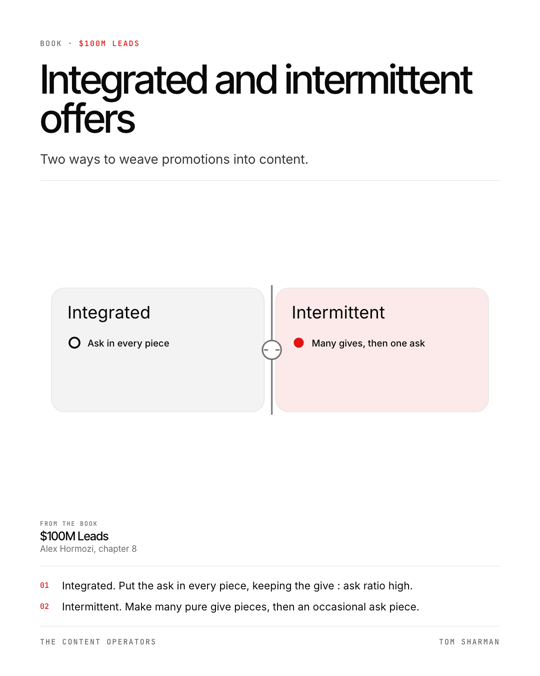
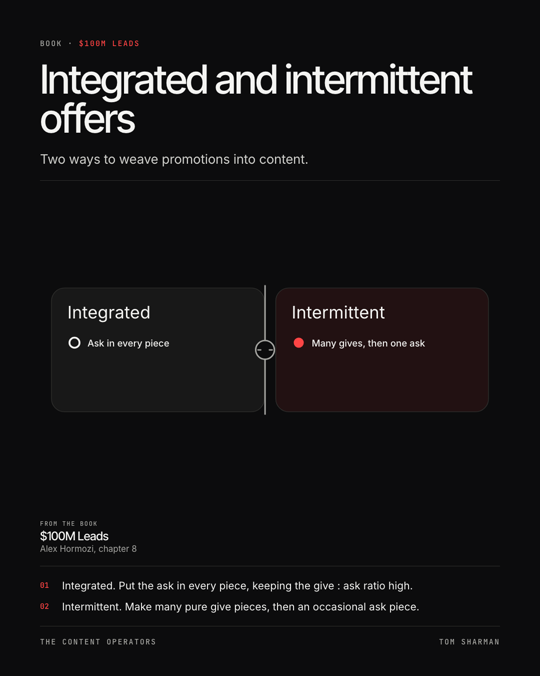
Two ways to weave promotions into content.
- Integrated. Put the ask in every piece, keeping the give : ask ratio high.
- Intermittent. Make many pure give pieces, then an occasional ask piece.
From chapter: #2 Post Free Content Part II, pp. 132–153
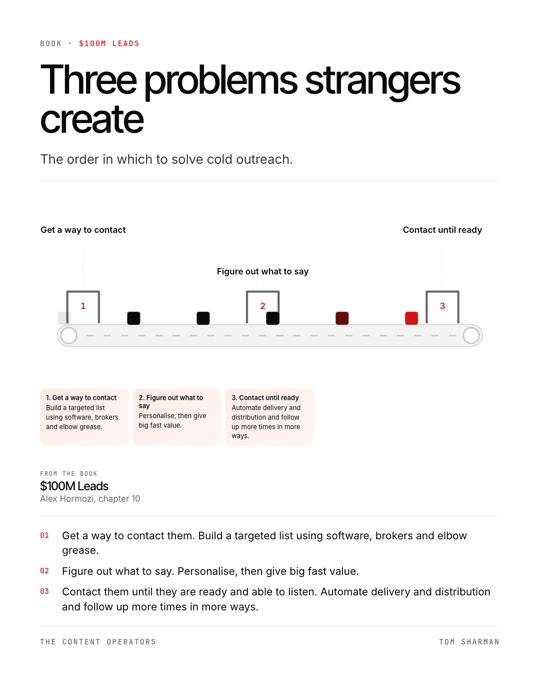
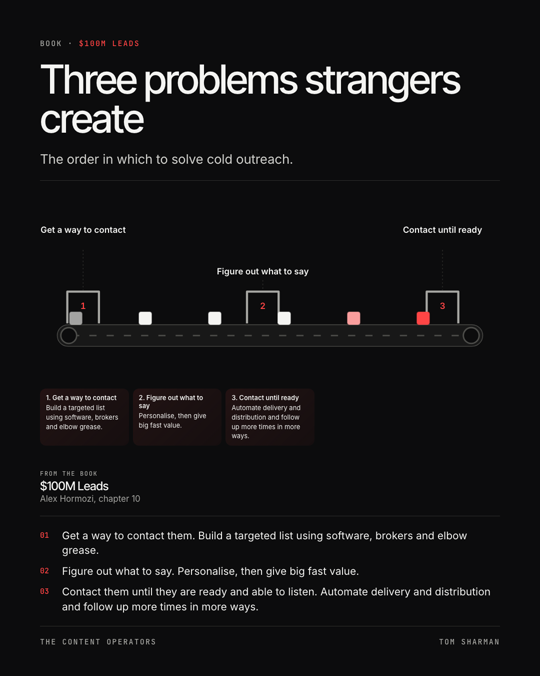
The order in which to solve cold outreach.
- Get a way to contact them. Build a targeted list using software, brokers and elbow grease.
- Figure out what to say. Personalise, then give big fast value.
- Contact them until they are ready and able to listen. Automate delivery and distribution and follow up more times in more ways.
From chapter: #3 Cold Outreach, pp. 158–190
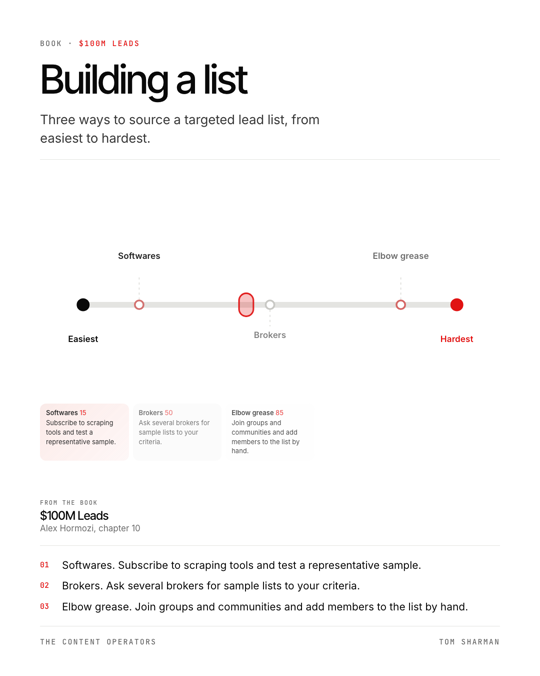
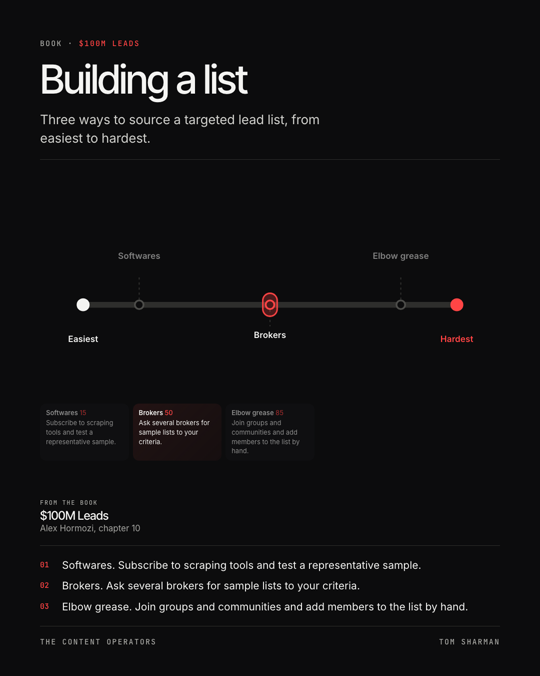
Three ways to source a targeted lead list, from easiest to hardest.
- Softwares. Subscribe to scraping tools and test a representative sample.
- Brokers. Ask several brokers for sample lists to your criteria.
- Elbow grease. Join groups and communities and add members to the list by hand.
From chapter: #3 Cold Outreach, pp. 158–190
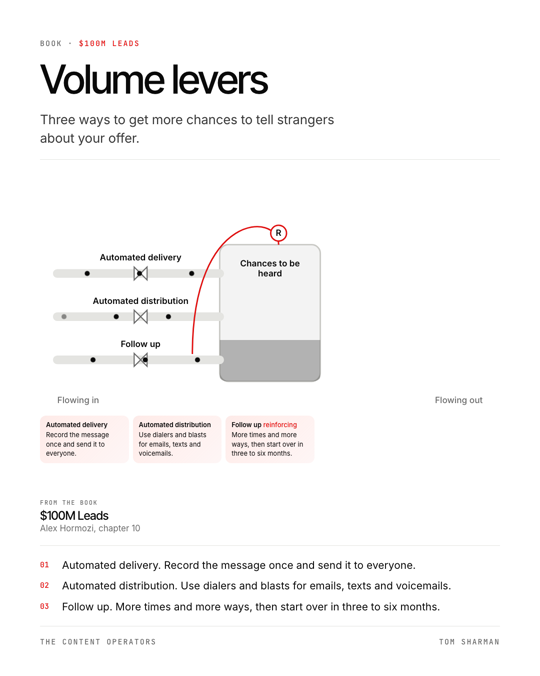
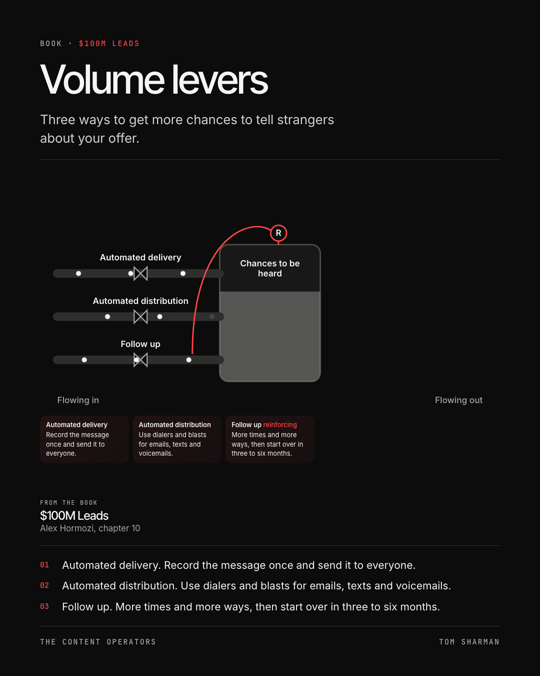
Three ways to get more chances to tell strangers about your offer.
- Automated delivery. Record the message once and send it to everyone.
- Automated distribution. Use dialers and blasts for emails, texts and voicemails.
- Follow up. More times and more ways, then start over in three to six months.
From chapter: #3 Cold Outreach, pp. 158–190
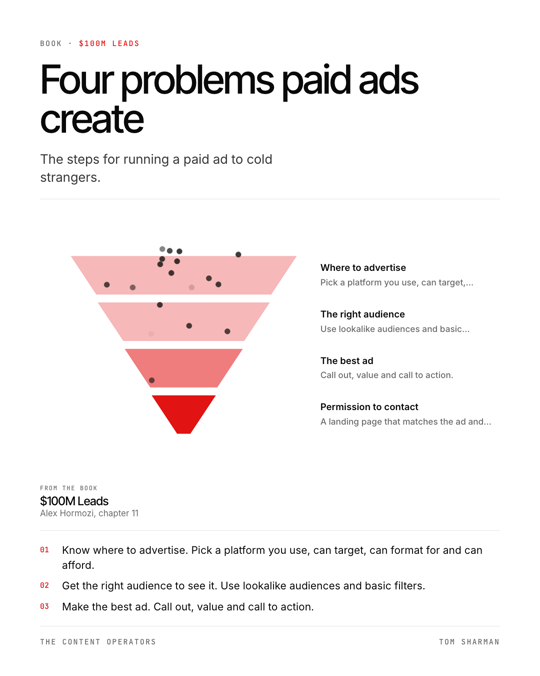
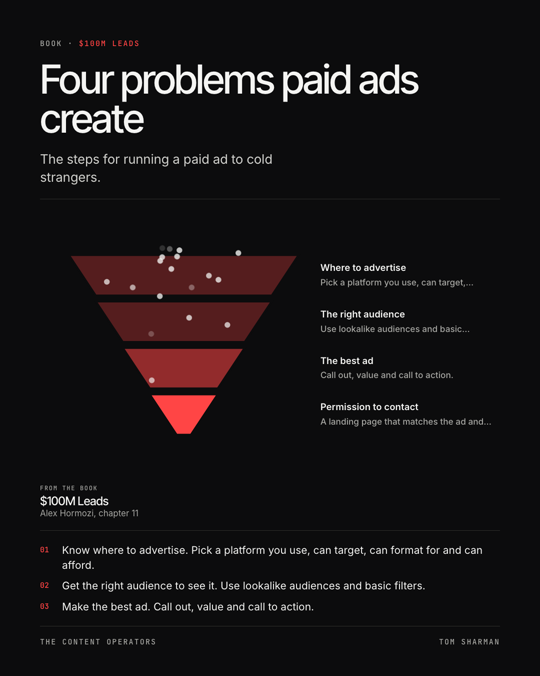
The steps for running a paid ad to cold strangers.
- Know where to advertise. Pick a platform you use, can target, can format for and can afford.
- Get the right audience to see it. Use lookalike audiences and basic filters.
- Make the best ad. Call out, value and call to action.
- Get permission to contact them. A landing page that matches the ad and captures contact details.
From chapter: #4 Run Paid Ads Part I: Making An Ad, pp. 191–219
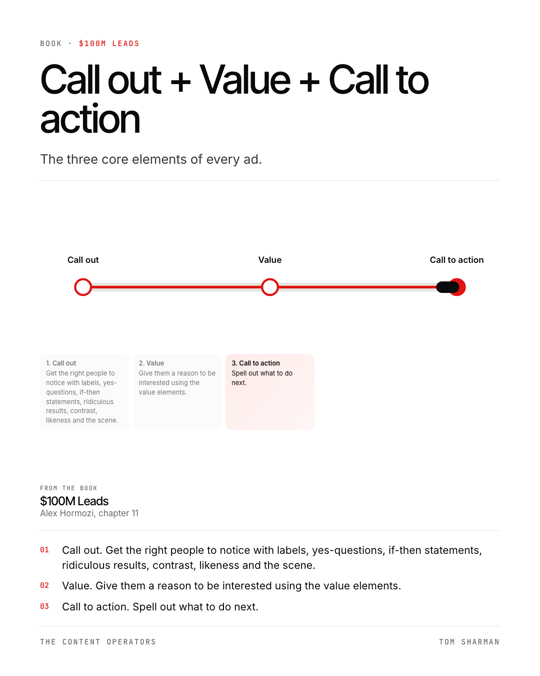
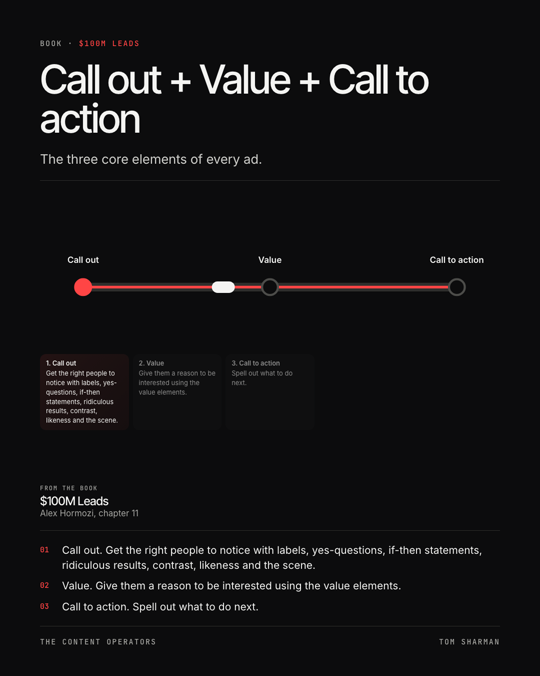
The three core elements of every ad.
- Call out. Get the right people to notice with labels, yes-questions, if-then statements, ridiculous results, contrast, likeness and the scene.
- Value. Give them a reason to be interested using the value elements.
- Call to action. Spell out what to do next.
From chapter: #4 Run Paid Ads Part I: Making An Ad, pp. 191–219
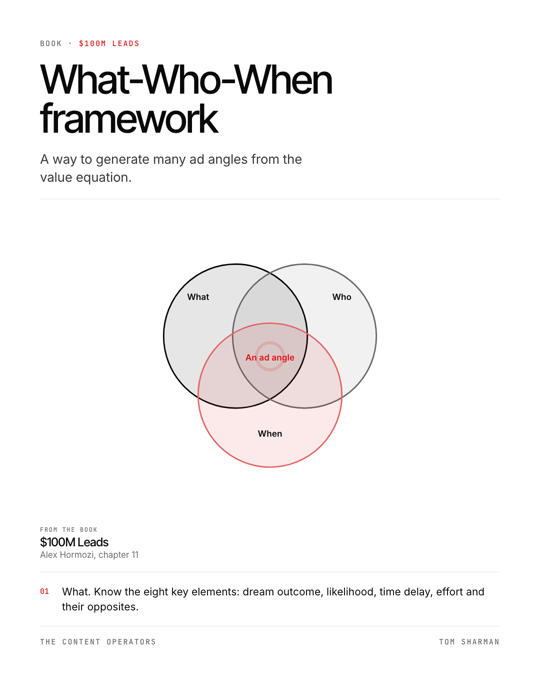
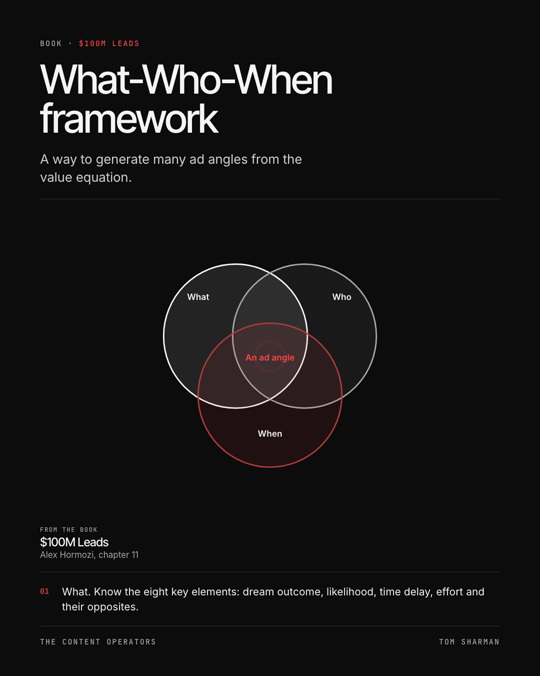
A way to generate many ad angles from the value equation.
- What. Know the eight key elements: dream outcome, likelihood, time delay, effort and their opposites.
- Who. Show how the offer changes the customer's status in the eyes of others.
- When. Run it through the past, present and future for them and the people they know.
From chapter: #4 Run Paid Ads Part I: Making An Ad, pp. 191–219
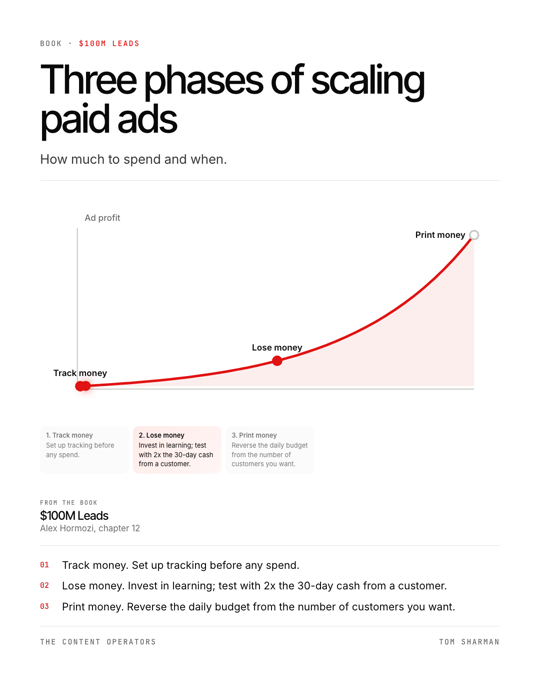
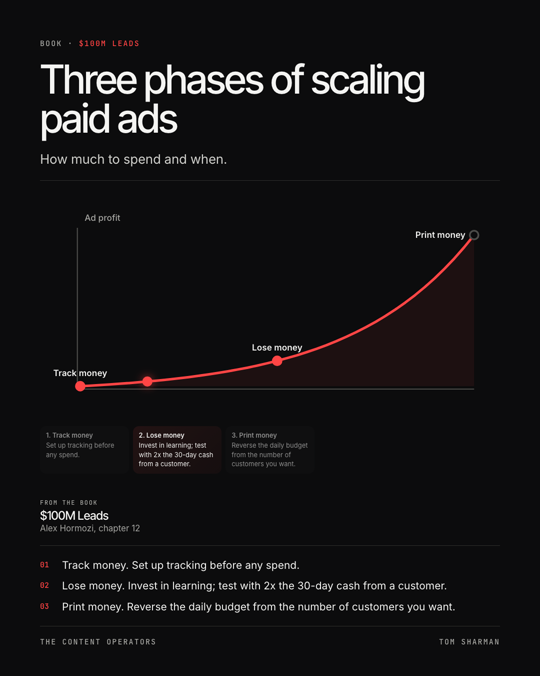
How much to spend and when.
- Track money. Set up tracking before any spend.
- Lose money. Invest in learning; test with 2x the 30-day cash from a customer.
- Print money. Reverse the daily budget from the number of customers you want.
From chapter: #4 Run Paid Ads Part II: Money Stuff, pp. 220–234
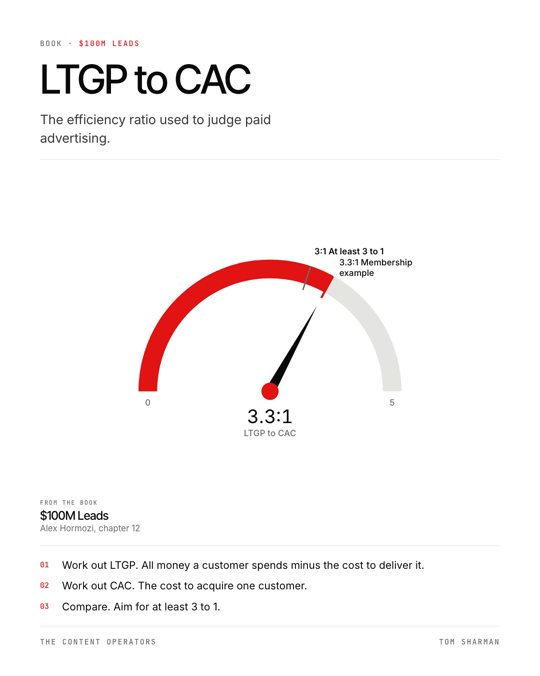
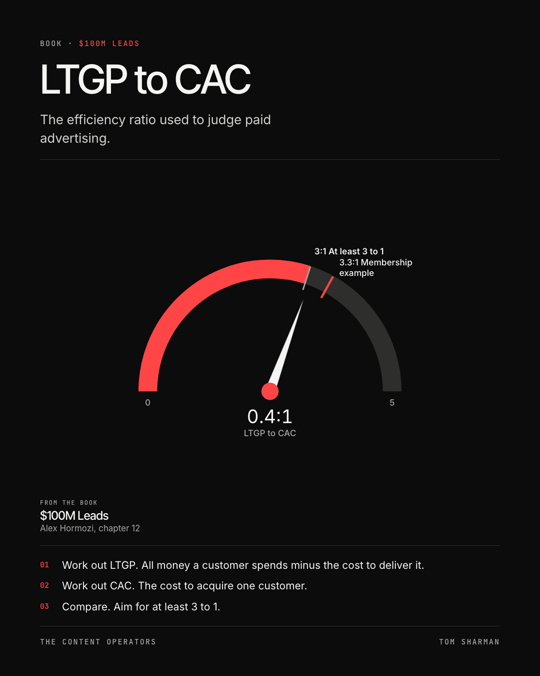
The efficiency ratio used to judge paid advertising.
- Work out LTGP. All money a customer spends minus the cost to deliver it.
- Work out CAC. The cost to acquire one customer.
- Compare. Aim for at least 3 to 1.
From chapter: #4 Run Paid Ads Part II: Money Stuff, pp. 220–234
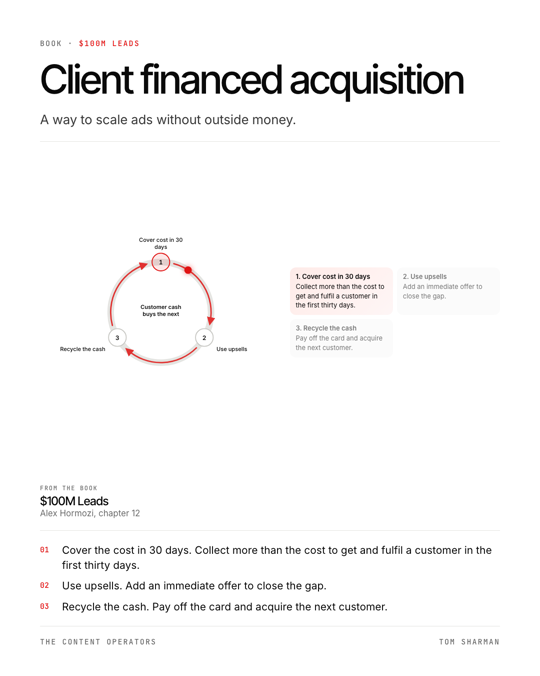
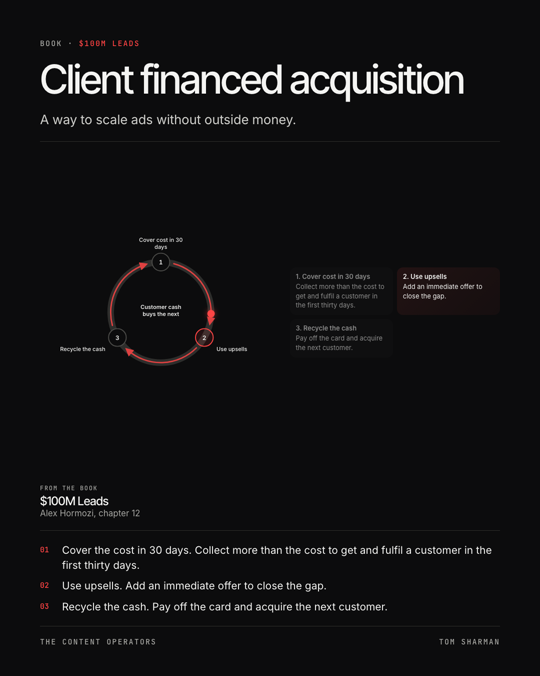
A way to scale ads without outside money.
- Cover the cost in 30 days. Collect more than the cost to get and fulfil a customer in the first thirty days.
- Use upsells. Add an immediate offer to close the gap.
- Recycle the cash. Pay off the card and acquire the next customer.
From chapter: #4 Run Paid Ads Part II: Money Stuff, pp. 220–234
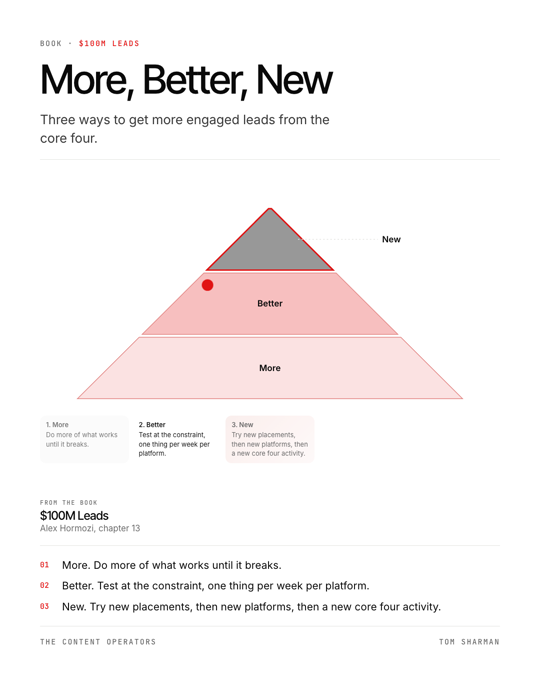
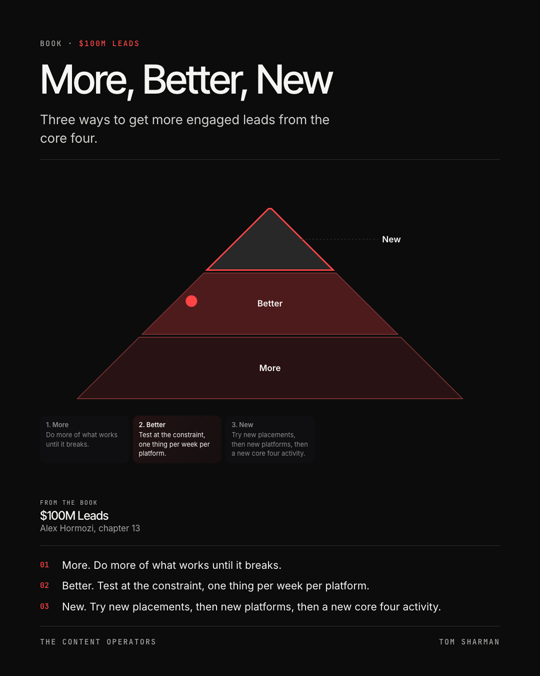
Three ways to get more engaged leads from the core four.
- More. Do more of what works until it breaks.
- Better. Test at the constraint, one thing per week per platform.
- New. Try new placements, then new platforms, then a new core four activity.
From chapter: Core Four On Steroids: More Better New, pp. 235–259
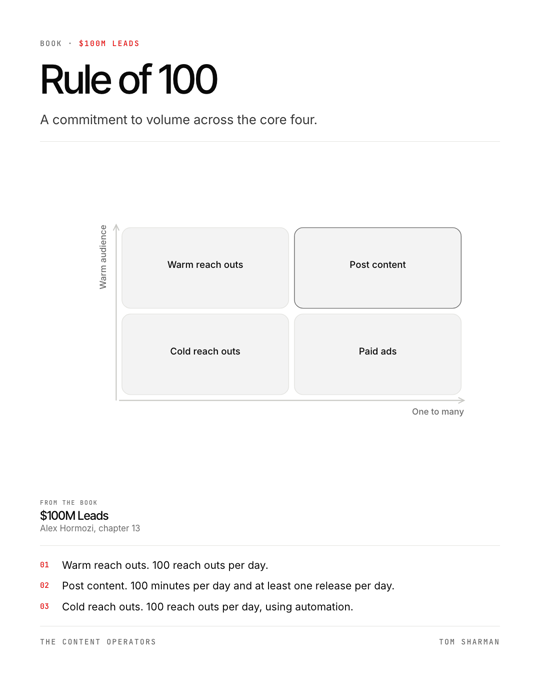
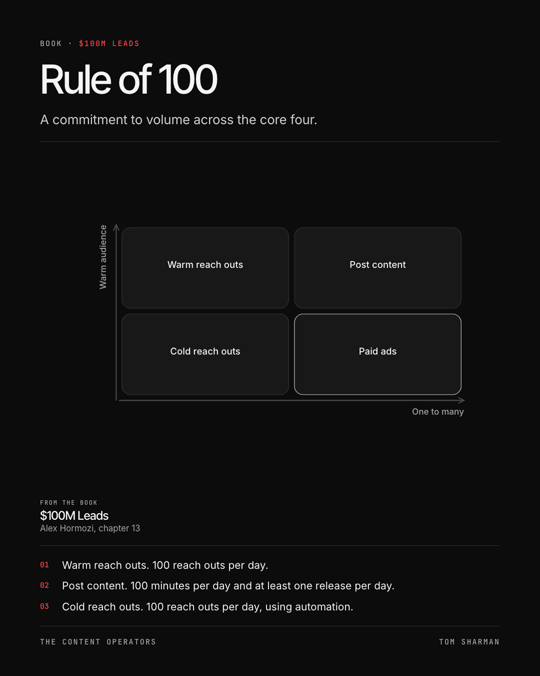
A commitment to volume across the core four.
- Warm reach outs. 100 reach outs per day.
- Post content. 100 minutes per day and at least one release per day.
- Cold reach outs. 100 reach outs per day, using automation.
- Paid ads. 100 minutes per day making ads, and 100 days of running them.
From chapter: Core Four On Steroids: More Better New, pp. 235–259
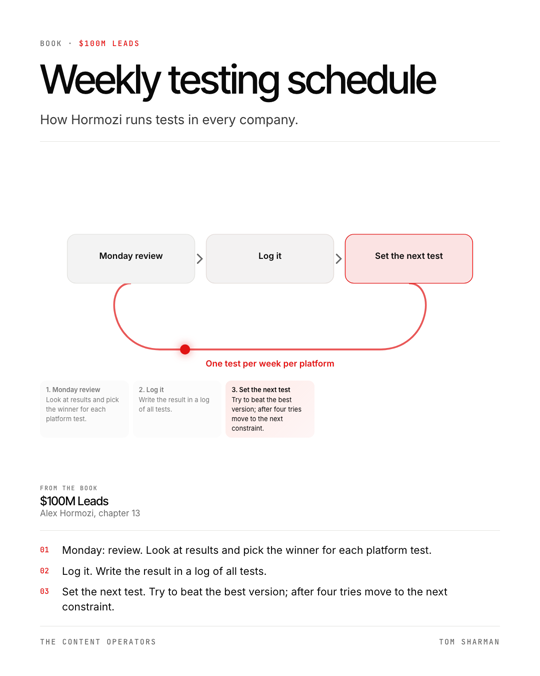
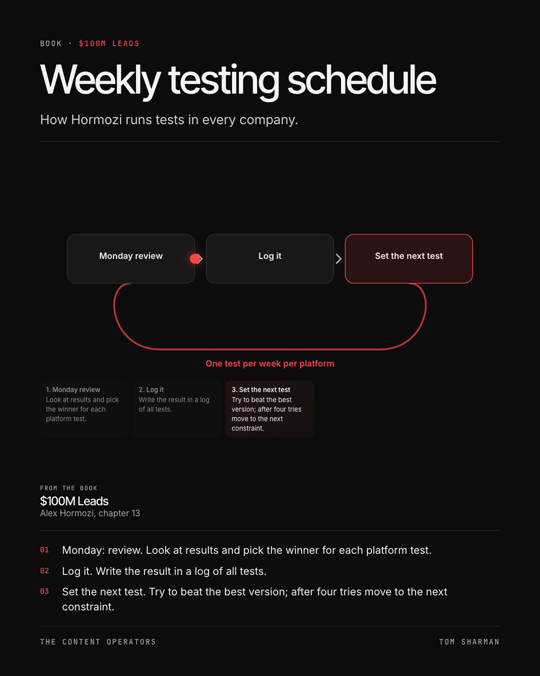
How Hormozi runs tests in every company.
- Monday: review. Look at results and pick the winner for each platform test.
- Log it. Write the result in a log of all tests.
- Set the next test. Try to beat the best version; after four tries move to the next constraint.
From chapter: Core Four On Steroids: More Better New, pp. 235–259
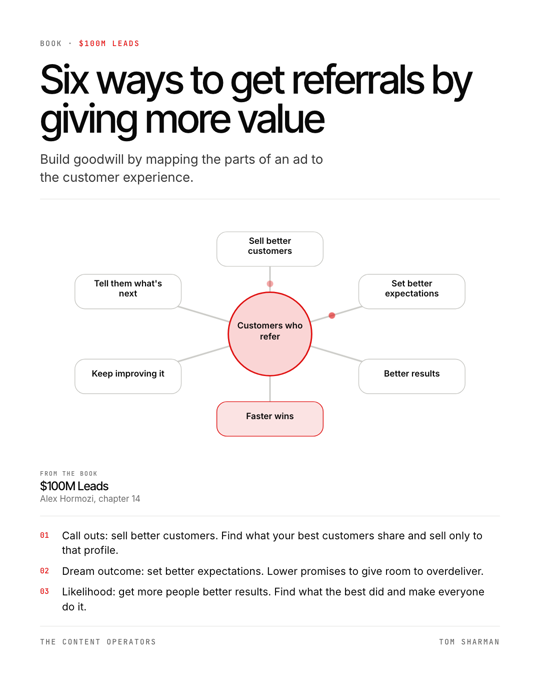
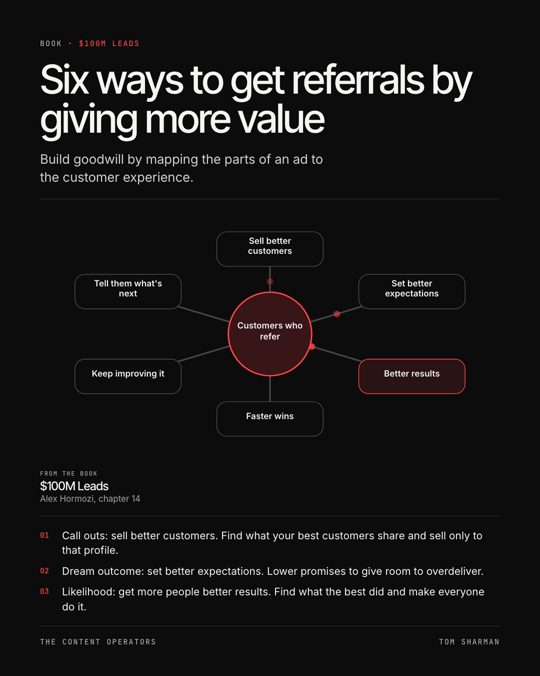
Build goodwill by mapping the parts of an ad to the customer experience.
- Call outs: sell better customers. Find what your best customers share and sell only to that profile.
- Dream outcome: set better expectations. Lower promises to give room to overdeliver.
- Likelihood: get more people better results. Find what the best did and make everyone do it.
- Time delay: make faster wins. Deliver in small increments and update often.
- Effort and sacrifice: keep making it better. Fix the most common problem every month.
- Call to action: tell them what to buy next. Keep selling after the first purchase.
From chapter: #1 Customer Referrals - Word of Mouth, pp. 260–289
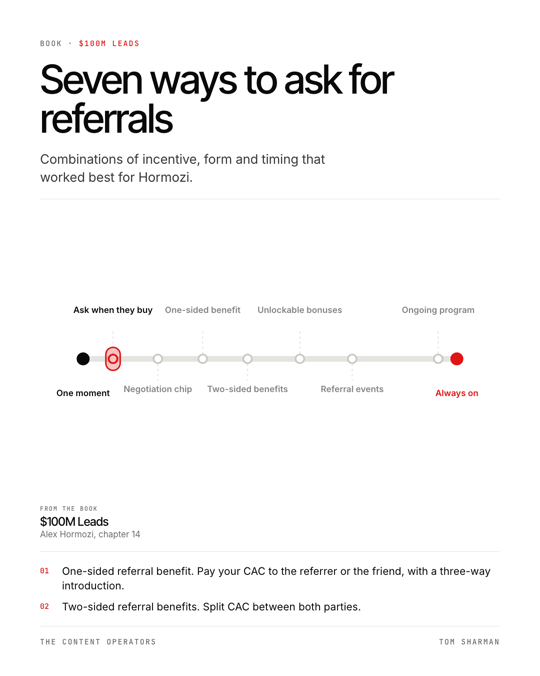
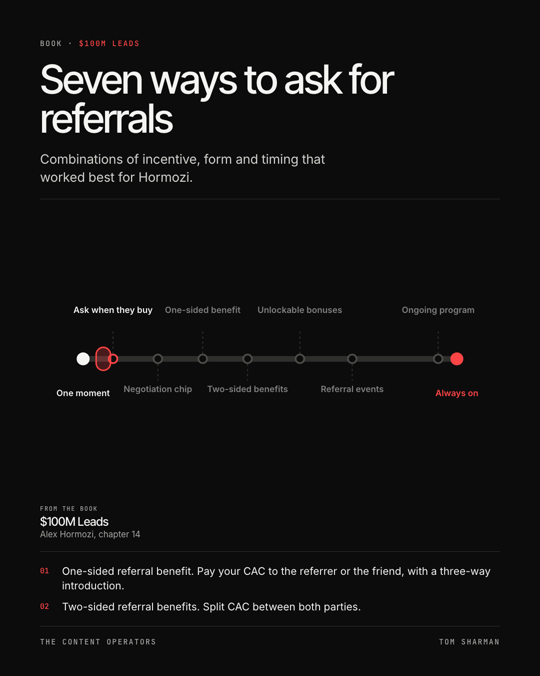
Combinations of incentive, form and timing that worked best for Hormozi.
- One-sided referral benefit. Pay your CAC to the referrer or the friend, with a three-way introduction.
- Two-sided referral benefits. Split CAC between both parties.
- Ask right when they buy. On the contract or checkout page.
- Referrals as a negotiation chip. A discount in exchange for introductions.
- Referral events. One to four weeks with points, credits or bragging rights.
- Ongoing referral programs. Talk about doing it with others all the time.
- Unlockable referral bonuses. Bonuses for referring and leaving a testimonial.
From chapter: #1 Customer Referrals - Word of Mouth, pp. 260–289
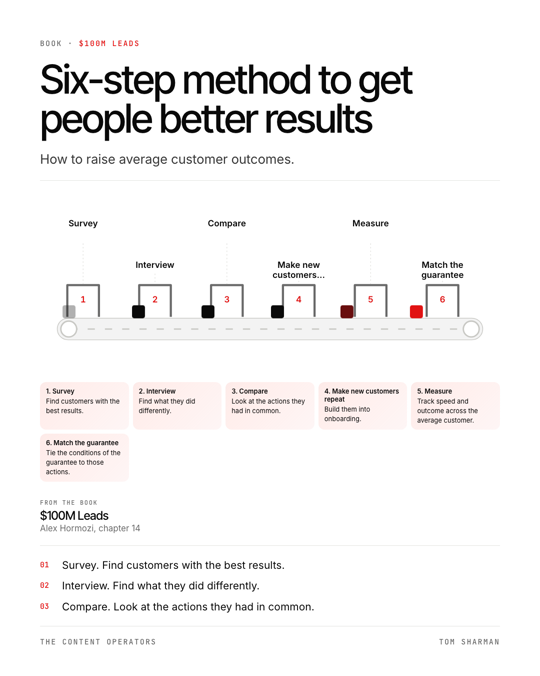
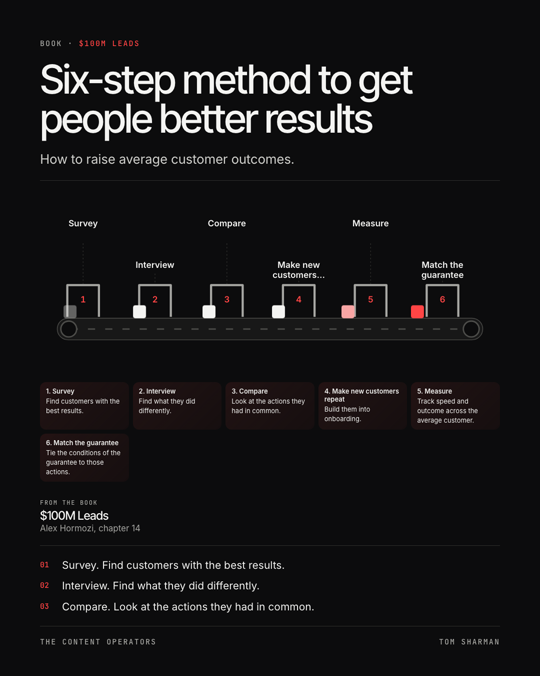
How to raise average customer outcomes.
- Survey. Find customers with the best results.
- Interview. Find what they did differently.
- Compare. Look at the actions they had in common.
- Force new customers to repeat them. Build them into onboarding.
- Measure. Track speed and outcome across the average customer.
- Match the guarantee. Tie the conditions of the guarantee to those actions.
From chapter: #1 Customer Referrals - Word of Mouth, pp. 260–289
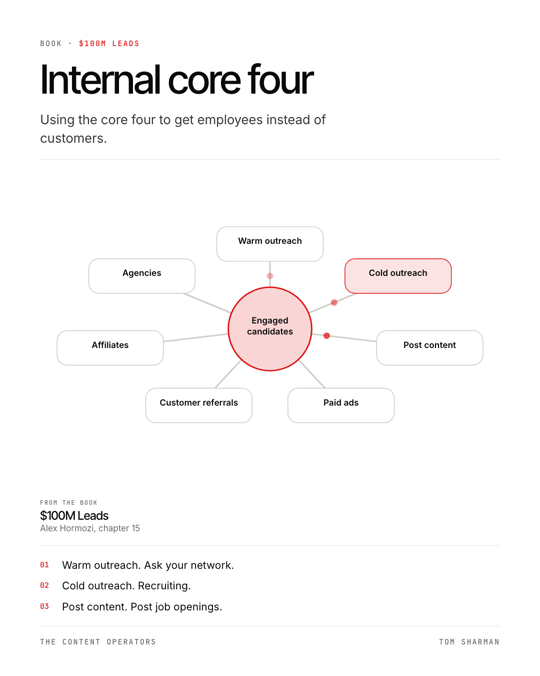
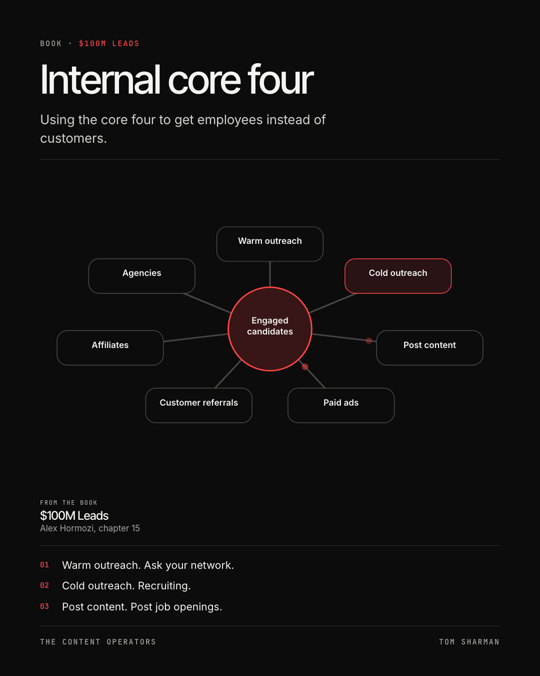
Using the core four to get employees instead of customers.
- Warm outreach. Ask your network.
- Cold outreach. Recruiting.
- Post content. Post job openings.
- Paid ads. Promote job postings.
- Customer referrals. Employee referrals.
- Affiliates. Associations, guilds and listservs.
- Agencies. Staffing firms.
From chapter: #2 Employees, pp. 290–307
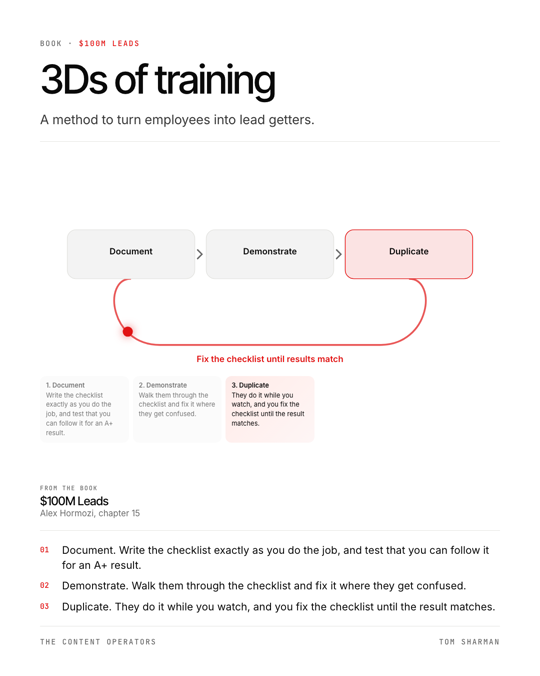
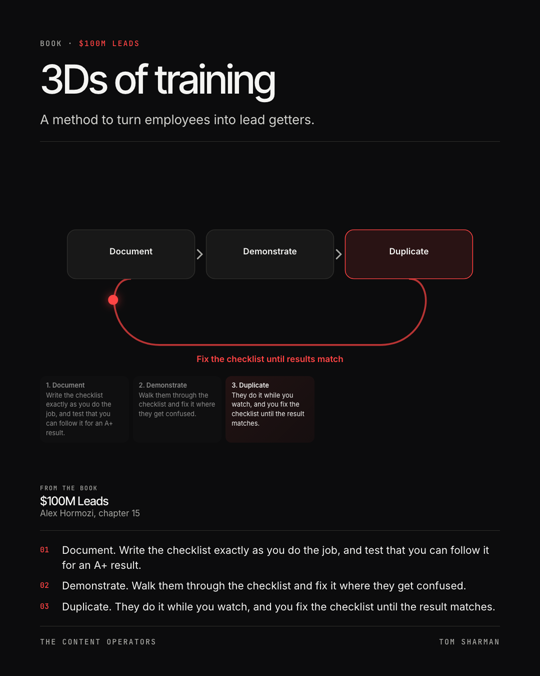
A method to turn employees into lead getters.
- Document. Write the checklist exactly as you do the job, and test that you can follow it for an A+ result.
- Demonstrate. Walk them through the checklist and fix it where they get confused.
- Duplicate. They do it while you watch, and you fix the checklist until the result matches.
From chapter: #2 Employees, pp. 290–307
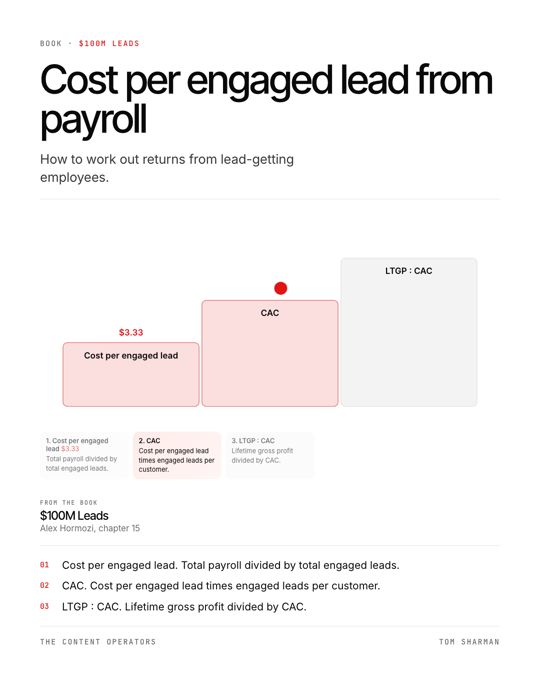
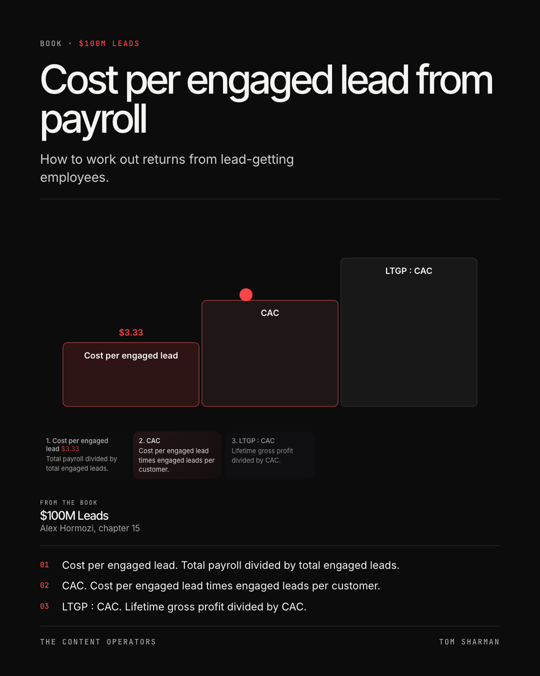
How to work out returns from lead-getting employees.
- Cost per engaged lead. Total payroll divided by total engaged leads.
- CAC. Cost per engaged lead times engaged leads per customer.
- LTGP : CAC. Lifetime gross profit divided by CAC.
From chapter: #2 Employees, pp. 290–307
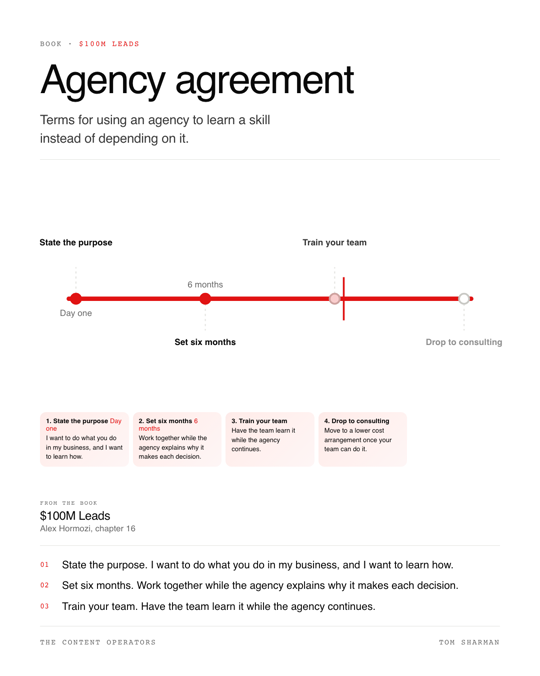
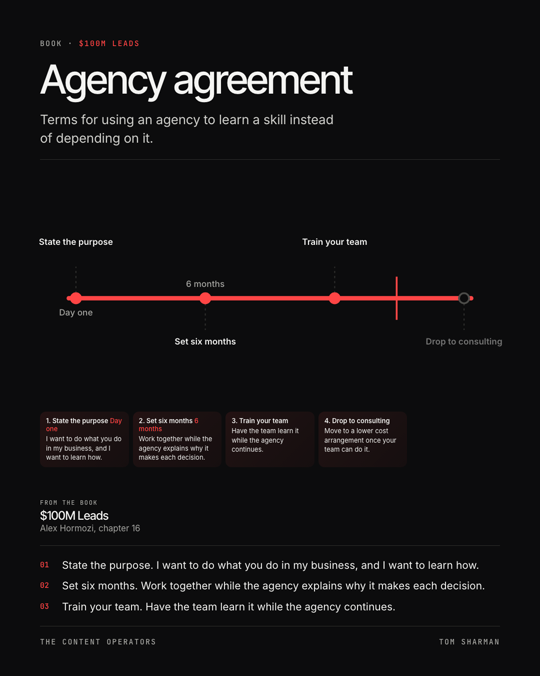
Terms for using an agency to learn a skill instead of depending on it.
- State the purpose. I want to do what you do in my business, and I want to learn how.
- Set six months. Work together while the agency explains why it makes each decision.
- Train your team. Have the team learn it while the agency continues.
- Drop to consulting. Move to a lower cost arrangement once your team can do it.
From chapter: #3 Agencies, pp. 308–321
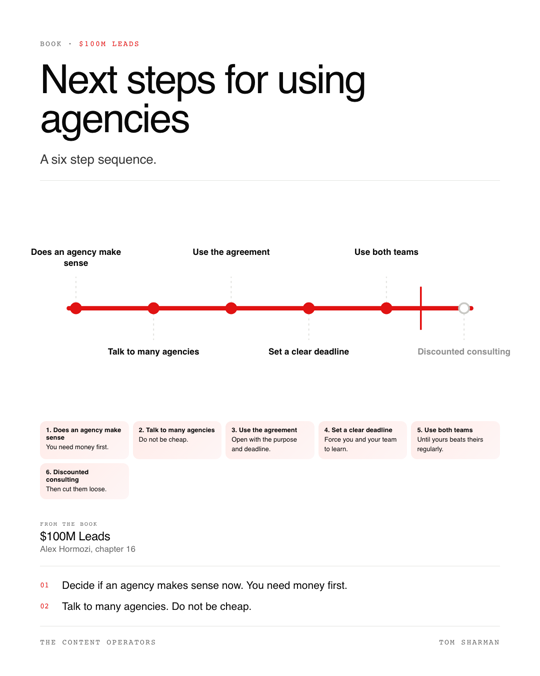
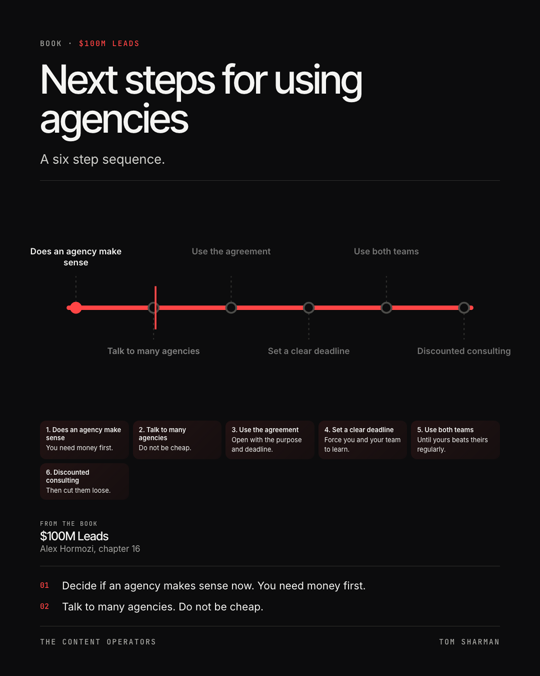
A six step sequence.
- Decide if an agency makes sense now. You need money first.
- Talk to many agencies. Do not be cheap.
- Use the agreement framework. Open with the purpose and deadline.
- Set a clear deadline. Force you and your team to learn.
- Use both teams. Until yours beats theirs regularly.
- Switch to discounted consulting. Then cut them loose.
From chapter: #3 Agencies, pp. 308–321
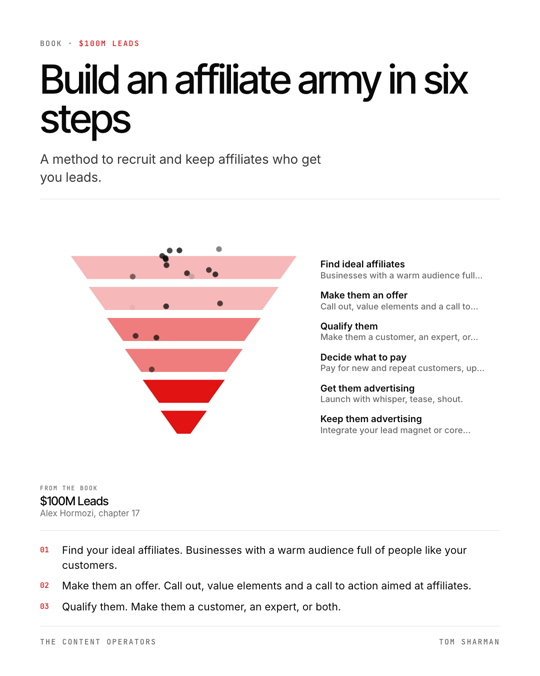
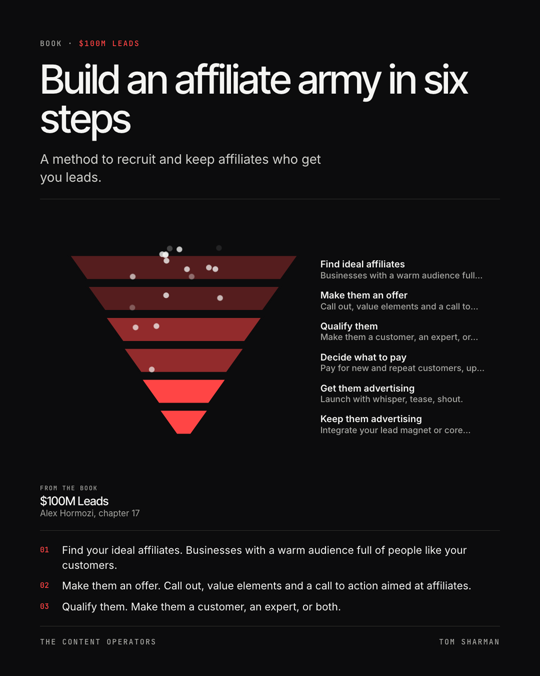
A method to recruit and keep affiliates who get you leads.
- Find your ideal affiliates. Businesses with a warm audience full of people like your customers.
- Make them an offer. Call out, value elements and a call to action aimed at affiliates.
- Qualify them. Make them a customer, an expert, or both.
- Figure out what to pay them. Pay for new and repeat customers, up to your maximum allowable CAC.
- Get them advertising. Launch with whisper, tease, shout.
- Keep them advertising. Integrate your lead magnet or core offer into their offer.
From chapter: #4 Affiliates and Partners, pp. 322–355
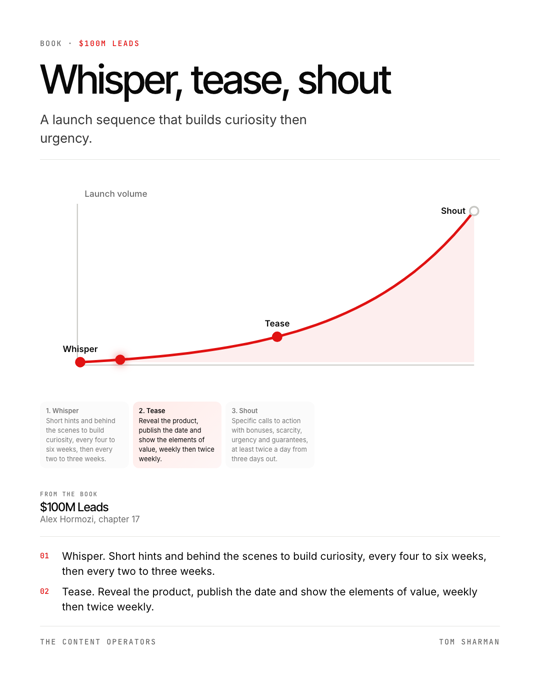
A launch sequence that builds curiosity then urgency.
- Whisper. Short hints and behind the scenes to build curiosity, every four to six weeks, then every two to three weeks.
- Tease. Reveal the product, publish the date and show the elements of value, weekly then twice weekly.
- Shout. Specific calls to action with bonuses, scarcity, urgency and guarantees, at least twice a day from three days out.
From chapter: #4 Affiliates and Partners, pp. 322–355
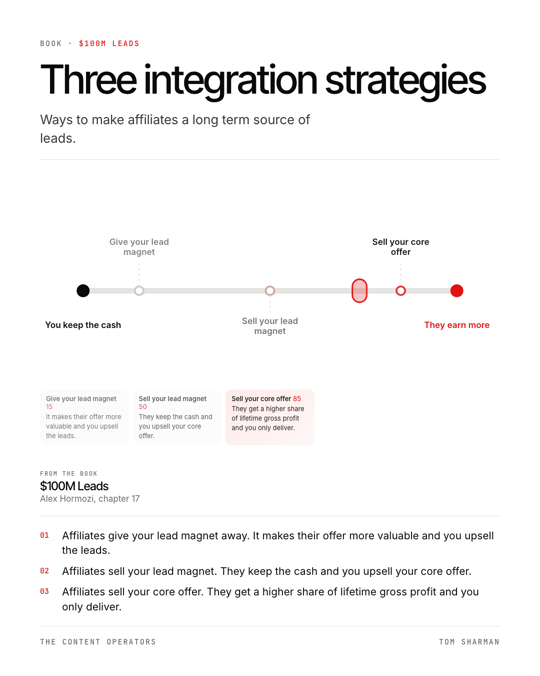
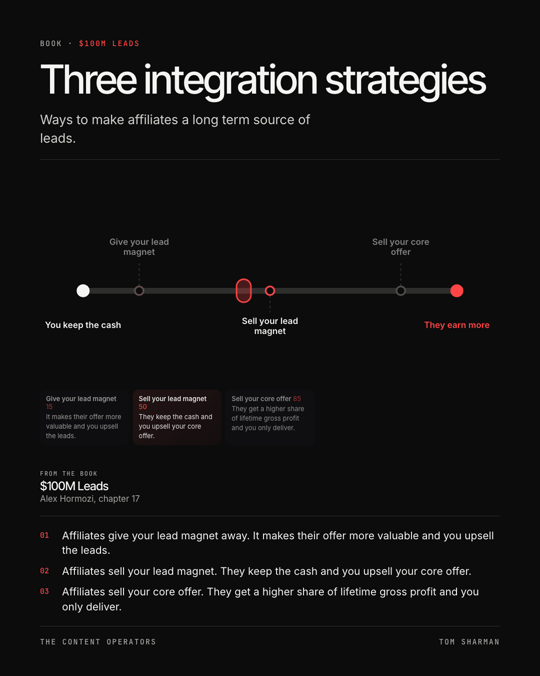
Ways to make affiliates a long term source of leads.
- Affiliates give your lead magnet away. It makes their offer more valuable and you upsell the leads.
- Affiliates sell your lead magnet. They keep the cash and you upsell your core offer.
- Affiliates sell your core offer. They get a higher share of lifetime gross profit and you only deliver.
From chapter: #4 Affiliates and Partners, pp. 322–355
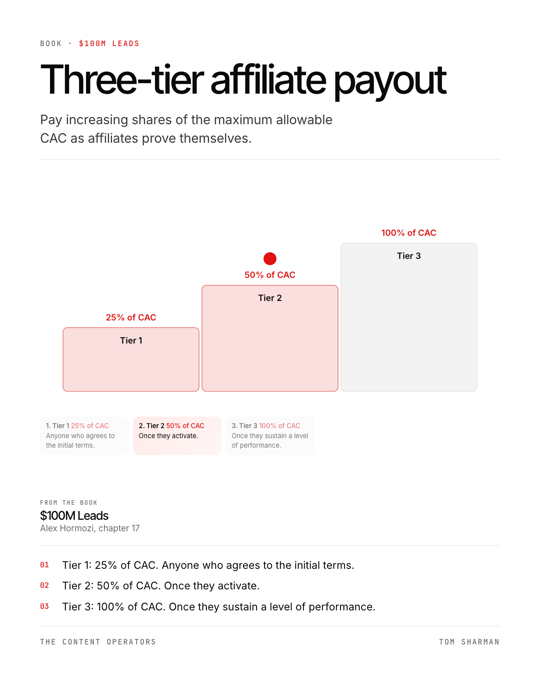
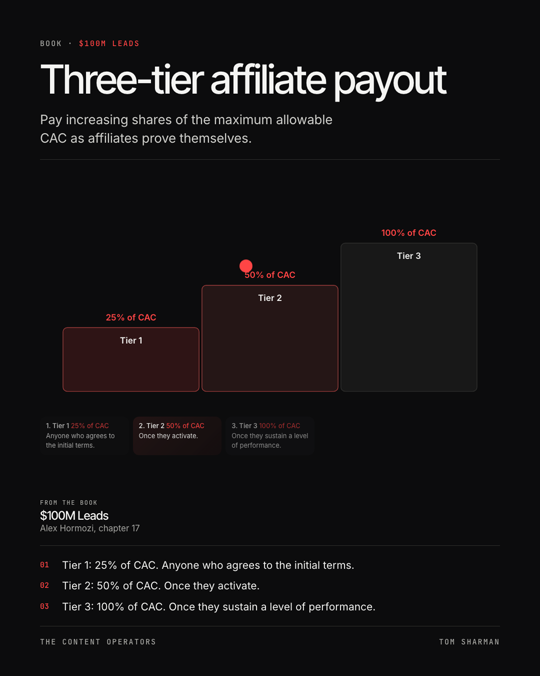
Pay increasing shares of the maximum allowable CAC as affiliates prove themselves.
- Tier 1: 25% of CAC. Anyone who agrees to the initial terms.
- Tier 2: 50% of CAC. Once they activate.
- Tier 3: 100% of CAC. Once they sustain a level of performance.
From chapter: #4 Affiliates and Partners, pp. 322–355
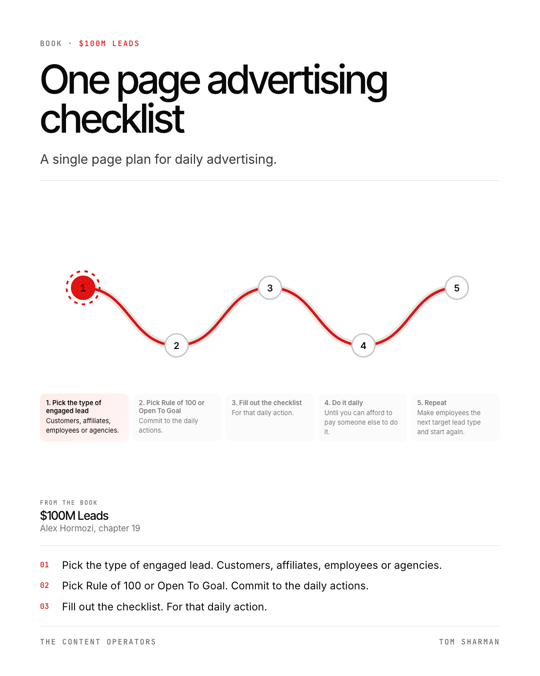
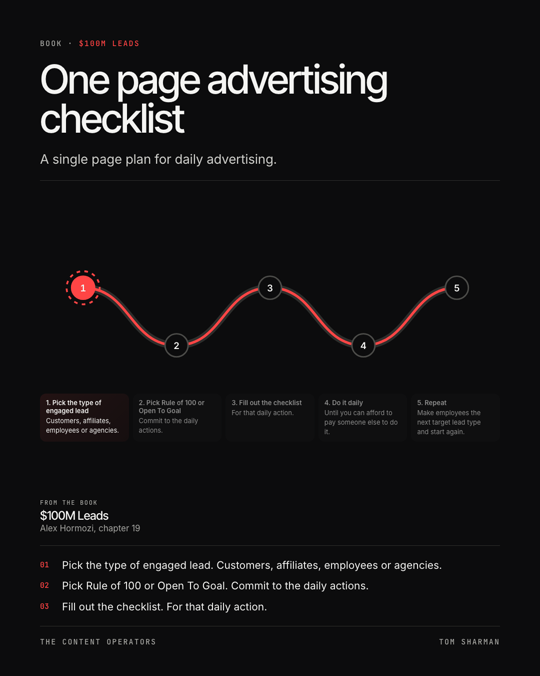
A single page plan for daily advertising.
- Pick the type of engaged lead. Customers, affiliates, employees or agencies.
- Pick Rule of 100 or Open To Goal. Commit to the daily actions.
- Fill out the checklist. For that daily action.
- Do it daily. Until you can afford to pay someone else to do it.
- Repeat. Make employees the next target lead type and start again.
From chapter: Advertising in Real Life: Open To Goal, pp. 365–374
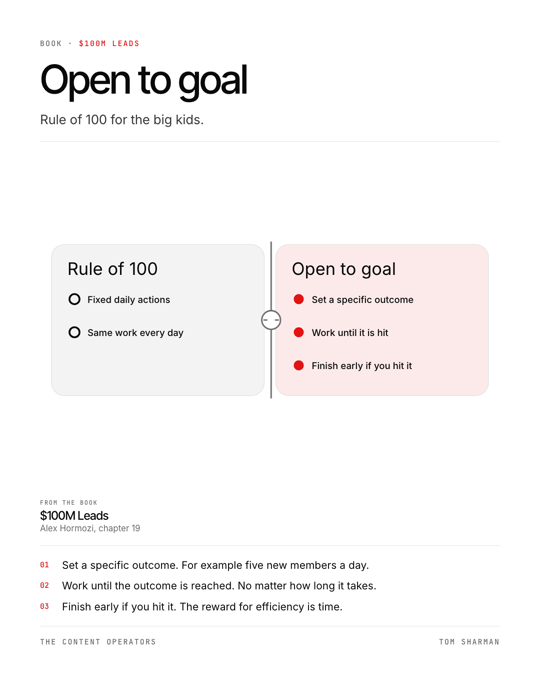
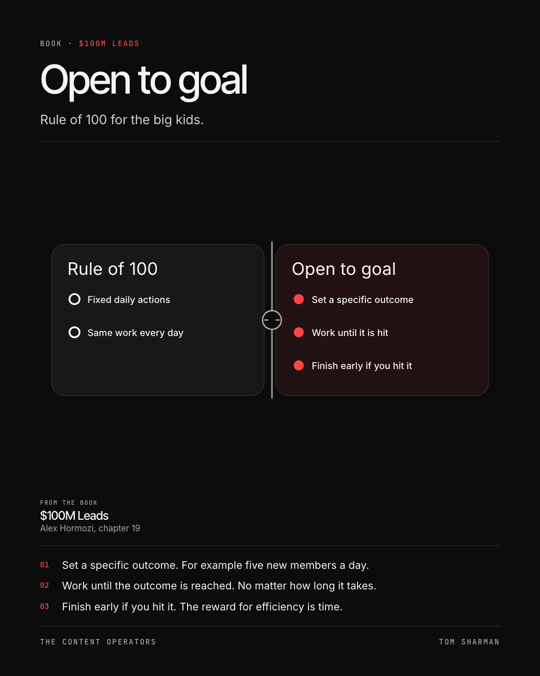
Rule of 100 for the big kids.
- Set a specific outcome. For example five new members a day.
- Work until the outcome is reached. No matter how long it takes.
- Finish early if you hit it. The reward for efficiency is time.
From chapter: Advertising in Real Life: Open To Goal, pp. 365–374
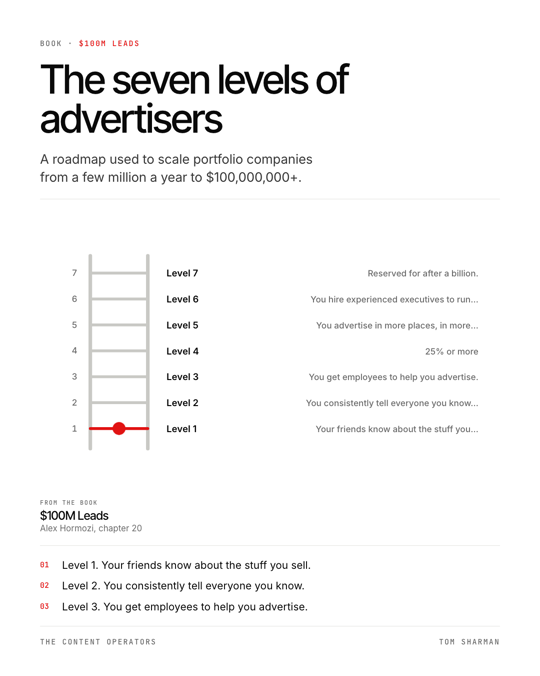
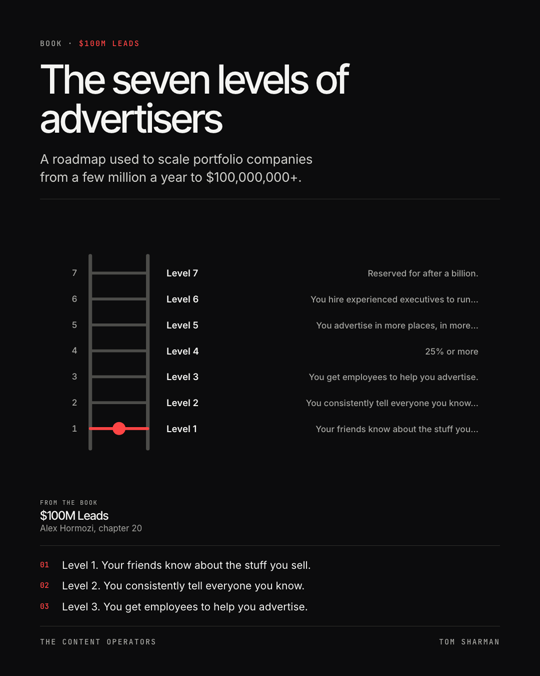
A roadmap used to scale portfolio companies from a few million a year to $100,000,000+.
- Level 1. Your friends know about the stuff you sell. Primary action: warm outreach.
- Level 2. You consistently tell everyone you know. Primary actions: warm outreach and posting content.
- Level 3. You get employees to help you advertise.
- Level 4. Your product gets consistent referrals, aiming for 25% or more of customers.
- Level 5. You advertise in more places, in more ways, with more people.
- Level 6. You hire experienced executives to run departments without you.
- Level 7. Reserved for after a billion.
From chapter: The Roadmap - Putting it All Together, pp. 375–381
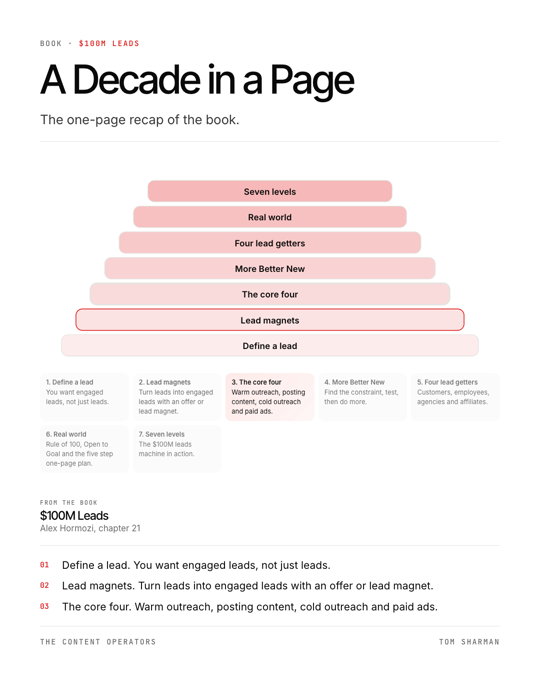
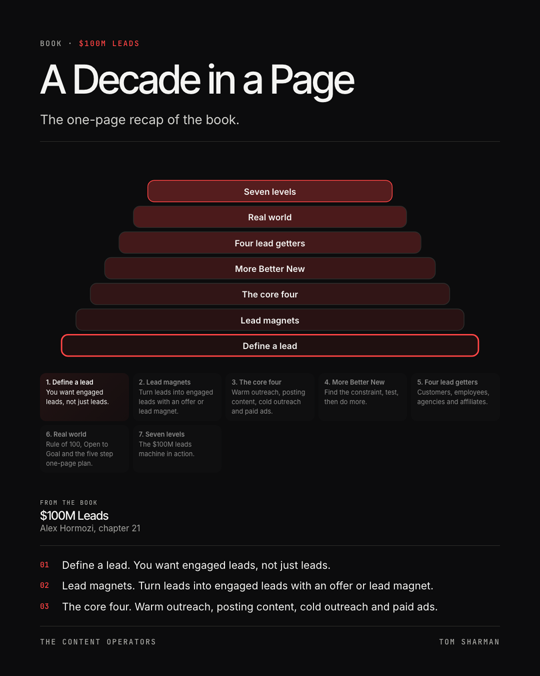
The one-page recap of the book.
- Define a lead. You want engaged leads, not just leads.
- Lead magnets. Turn leads into engaged leads with an offer or lead magnet.
- The core four. Warm outreach, posting content, cold outreach and paid ads.
- More Better New. Find the constraint, test, then do more.
- Four lead getters. Customers, employees, agencies and affiliates.
- Real world. Rule of 100, Open to Goal and the five step one-page plan.
- Seven levels. The $100M leads machine in action.
From chapter: A Decade in a Page, pp. 382–391
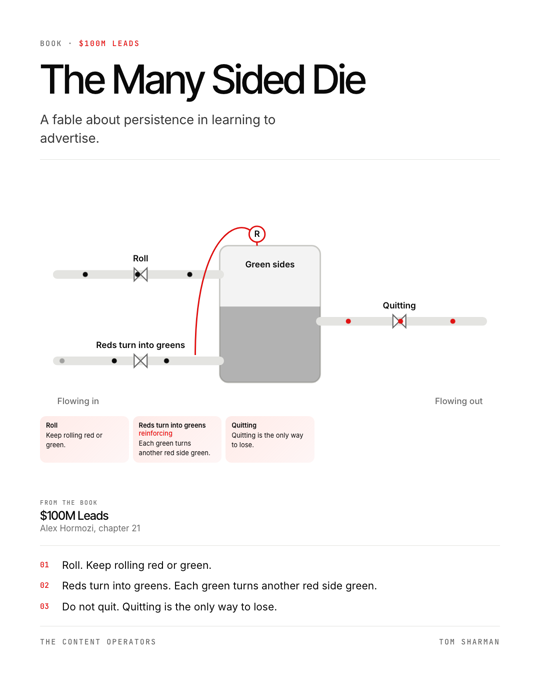
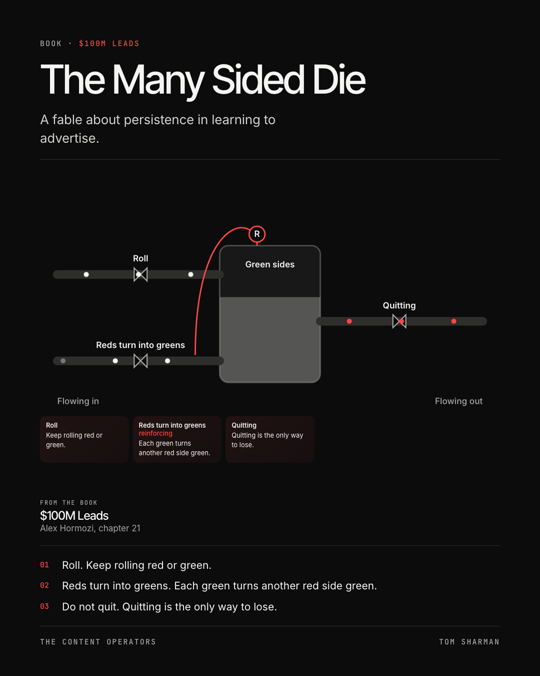
A fable about persistence in learning to advertise.
- Roll. Keep rolling red or green.
- Reds turn into greens. Each green turns another red side green.
- Do not quit. Quitting is the only way to lose.
From chapter: A Decade in a Page, pp. 382–391