What it argues
Hormozi argues that growth comes from making each customer worth more than competitors can afford to match, and from picking the right customer in the first place. Customers should finance the acquisition of the next customers, which means recovering cost to acquire inside 30 days and aiming for twice that. Stacked offers, free or discounted front ends, continuity bonuses and up-front fees raise lifetime gross profit, so the owner can outspend the market. The same logic applies to staff: build checklists, train by showing, diagnose performance with a simple diamond, and protect makers' time so the business runs without the founder.
Every framework, step by step
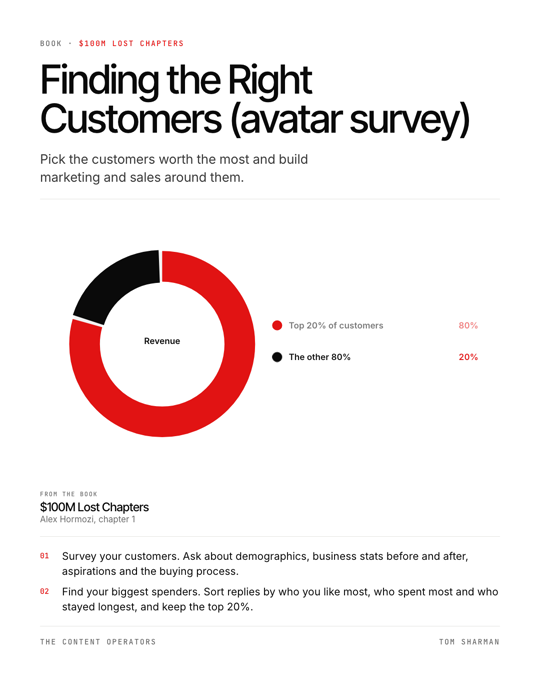
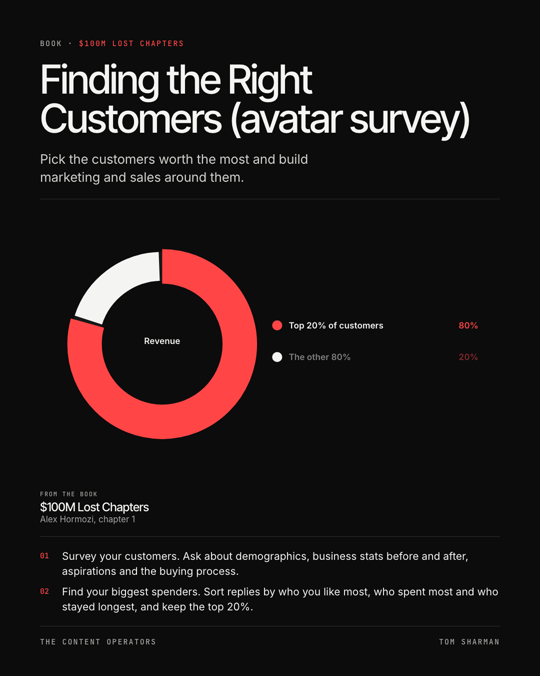
Pick the customers worth the most and build marketing and sales around them.
- Survey your customers. Ask about demographics, business stats before and after, aspirations and the buying process.
- Find your biggest spenders. Sort replies by who you like most, who spent most and who stayed longest, and keep the top 20%.
- See what they have in common. Read the answers and pull out the fewest qualifiers they all share, usually three to five.
- Execute. Speak only to the new avatar and re-engineer the sales process to copy how they bought.
From chapter: $100M Lost Chapters, pp. 8–18
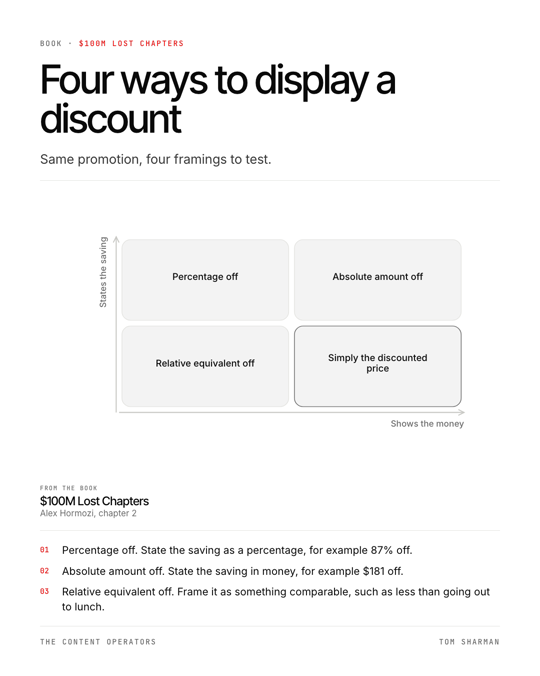
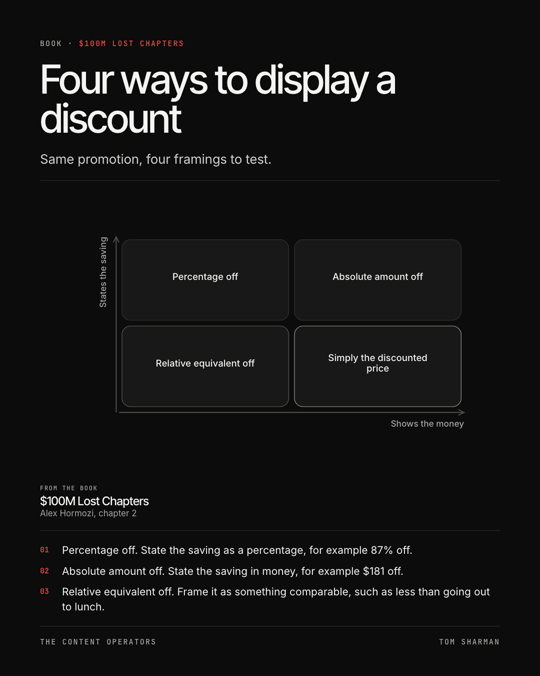
Same promotion, four framings to test.
- Percentage off. State the saving as a percentage, for example 87% off.
- Absolute amount off. State the saving in money, for example $181 off.
- Relative equivalent off. Frame it as something comparable, such as less than going out to lunch.
- Simply the discounted price. Show only the new price, which suits well-understood services.
From chapter: Section A: Attract, pp. 19–45
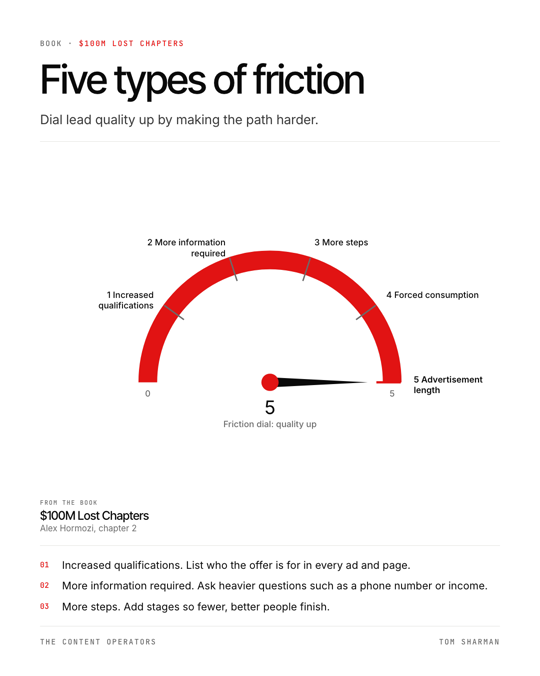
Dial lead quality up by making the path harder.
- Increased qualifications. List who the offer is for in every ad and page.
- More information required. Ask heavier questions such as a phone number or income.
- More steps. Add stages so fewer, better people finish.
- Forced consumption. Make prospects watch a long video before any call to action.
- Advertisement length. Lengthen the ad or copy before the call to action.
From chapter: Section A: Attract, pp. 19–45
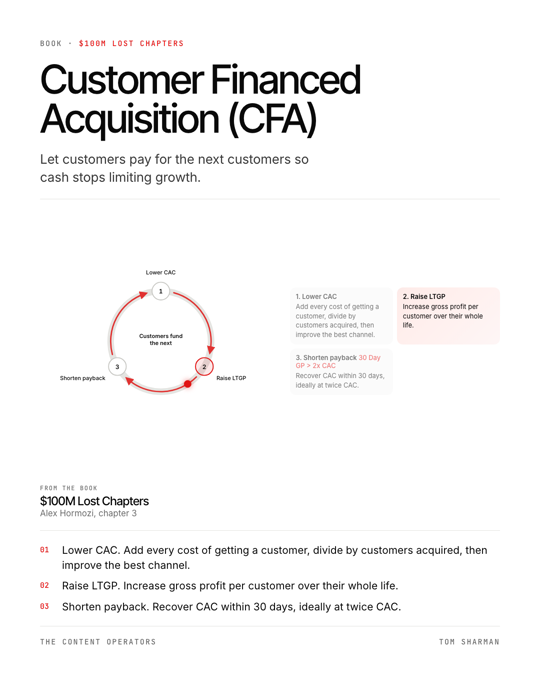
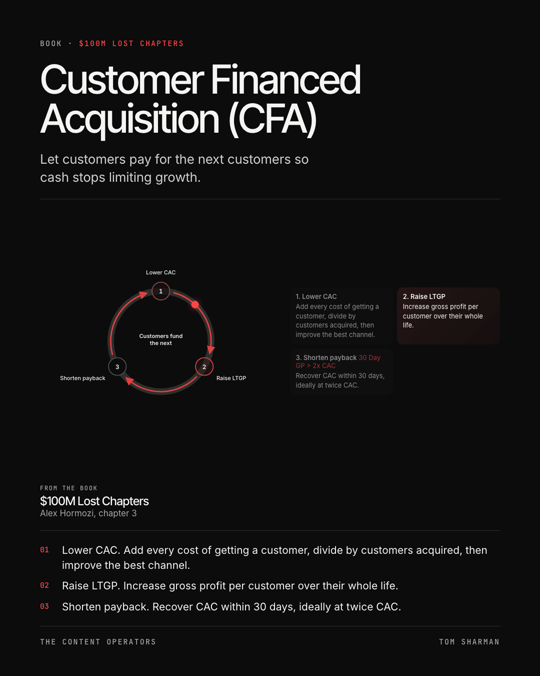
Let customers pay for the next customers so cash stops limiting growth.
- Lower CAC. Add every cost of getting a customer, divide by customers acquired, then improve the best channel.
- Raise LTGP. Increase gross profit per customer over their whole life.
- Shorten payback. Recover CAC within 30 days, ideally at twice CAC.
From chapter: Section B: The Expensive Customer Problem, pp. 46–71
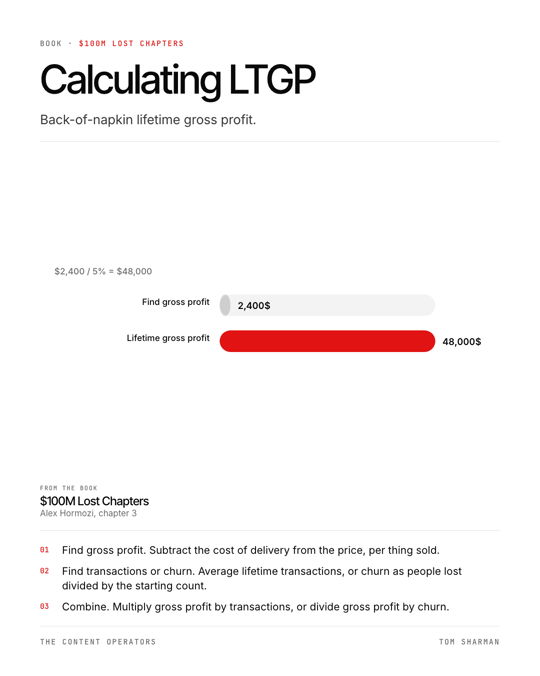
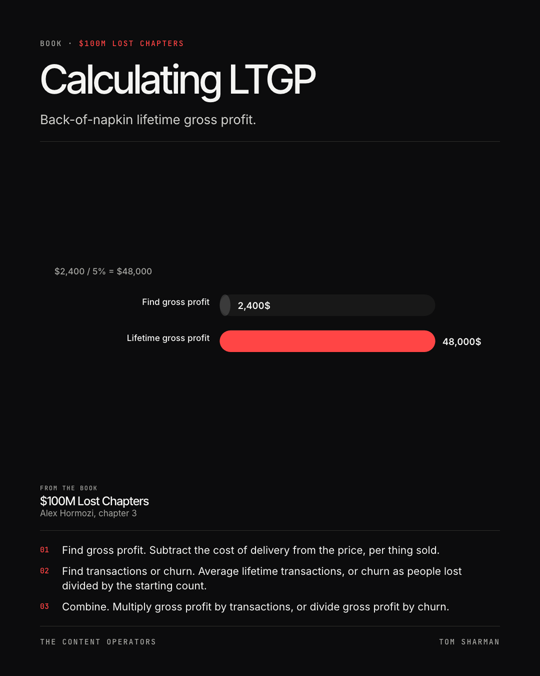
Back-of-napkin lifetime gross profit.
- Find gross profit. Subtract the cost of delivery from the price, per thing sold.
- Find transactions or churn. Average lifetime transactions, or churn as people lost divided by the starting count.
- Combine. Multiply gross profit by transactions, or divide gross profit by churn.
From chapter: Section B: The Expensive Customer Problem, pp. 46–71
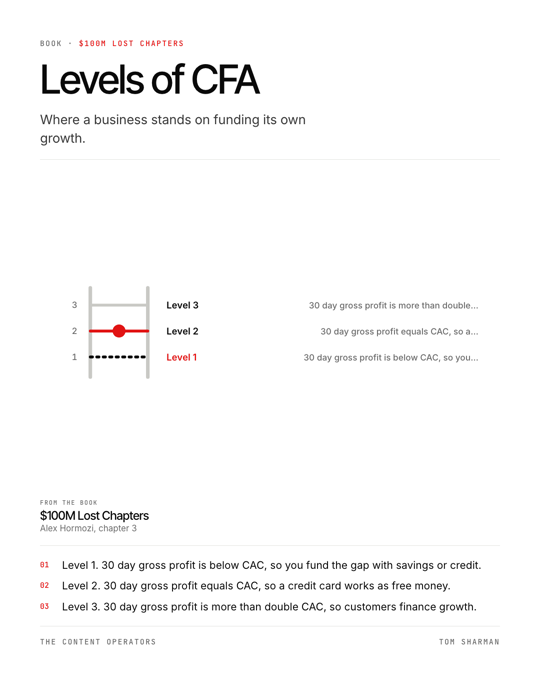
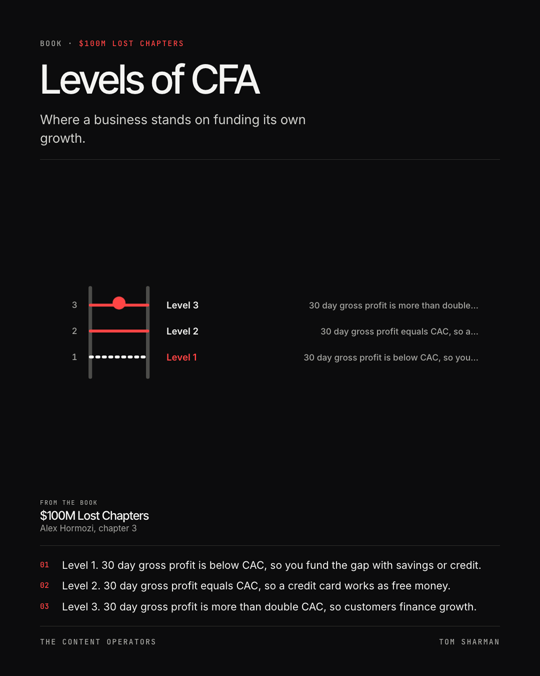
Where a business stands on funding its own growth.
- Level 1. 30 day gross profit is below CAC, so you fund the gap with savings or credit.
- Level 2. 30 day gross profit equals CAC, so a credit card works as free money.
- Level 3. 30 day gross profit is more than double CAC, so customers finance growth.
From chapter: Section B: The Expensive Customer Problem, pp. 46–71
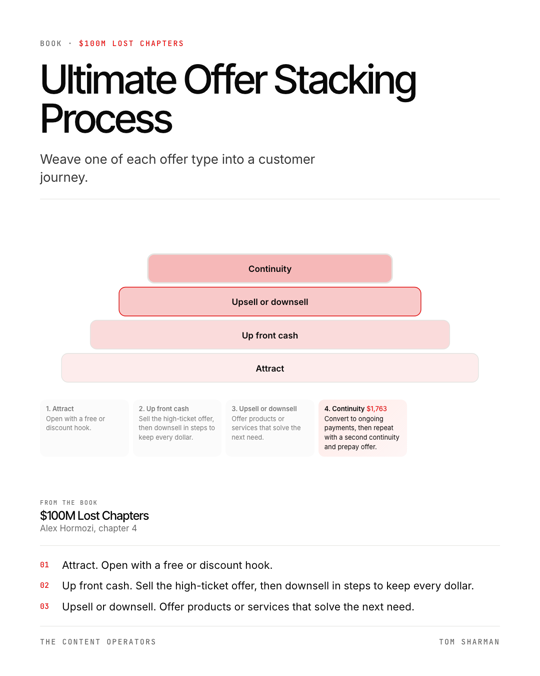
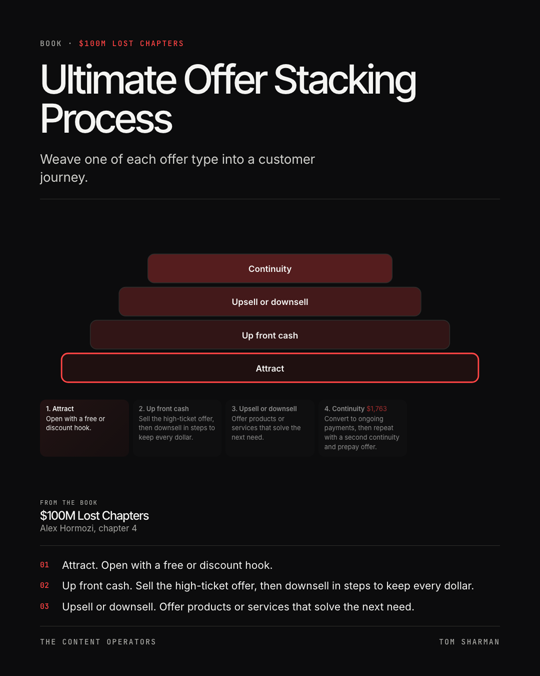
Weave one of each offer type into a customer journey.
- Attract. Open with a free or discount hook.
- Up front cash. Sell the high-ticket offer, then downsell in steps to keep every dollar.
- Upsell or downsell. Offer products or services that solve the next need.
- Continuity. Convert to ongoing payments, then repeat with a second continuity and prepay offer.
From chapter: Section C: Advanced Offer Stacking, pp. 72–132
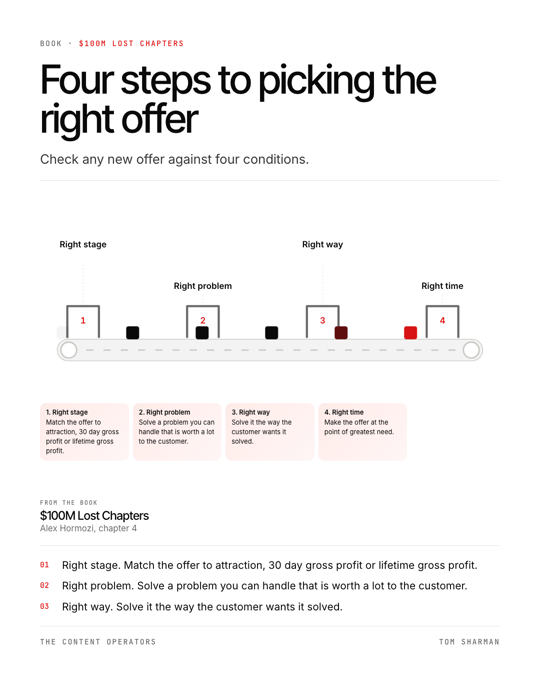
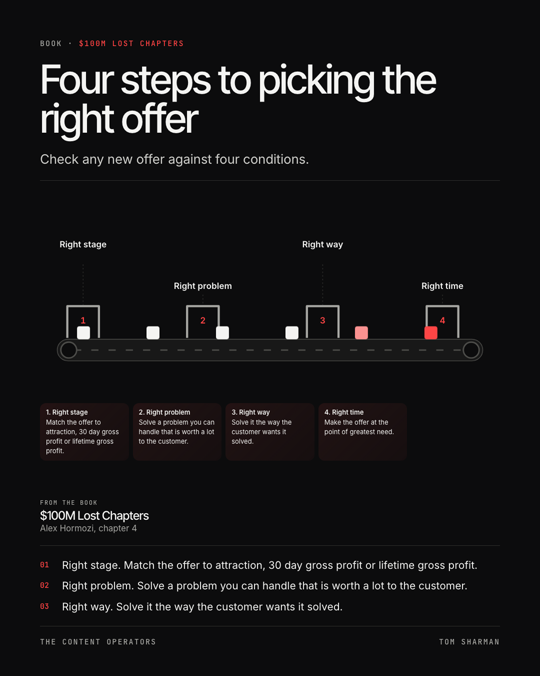
Check any new offer against four conditions.
- Right stage. Match the offer to attraction, 30 day gross profit or lifetime gross profit.
- Right problem. Solve a problem you can handle that is worth a lot to the customer.
- Right way. Solve it the way the customer wants it solved.
- Right time. Make the offer at the point of greatest need.
From chapter: Section C: Advanced Offer Stacking, pp. 72–132
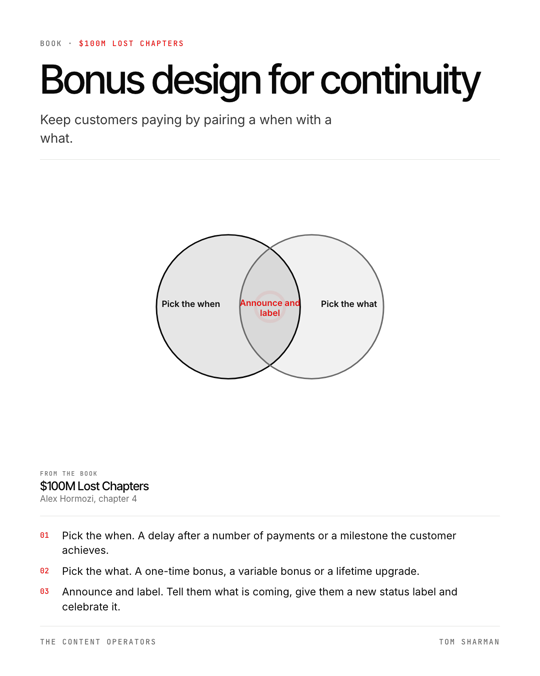
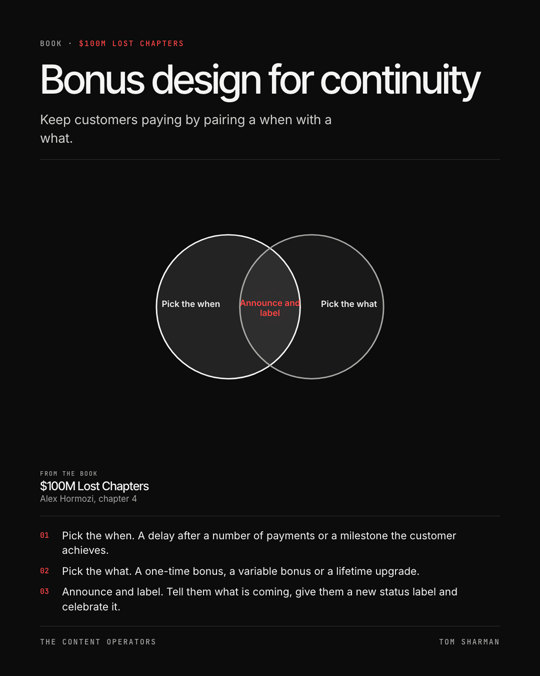
Keep customers paying by pairing a when with a what.
- Pick the when. A delay after a number of payments or a milestone the customer achieves.
- Pick the what. A one-time bonus, a variable bonus or a lifetime upgrade.
- Announce and label. Tell them what is coming, give them a new status label and celebrate it.
From chapter: Section C: Advanced Offer Stacking, pp. 72–132
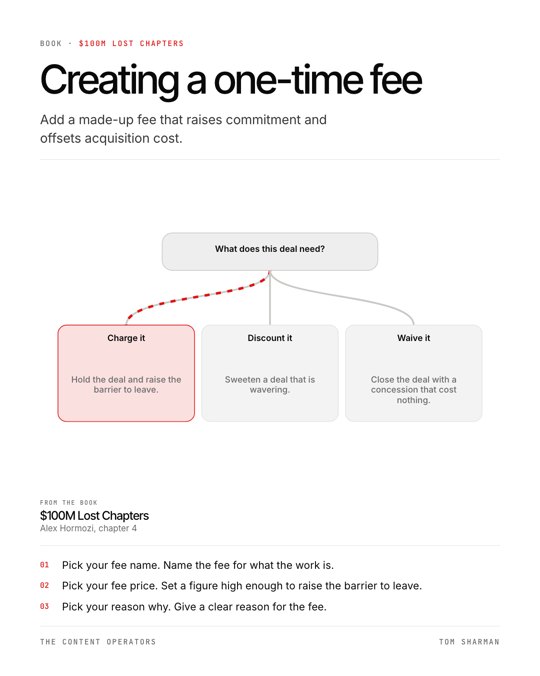
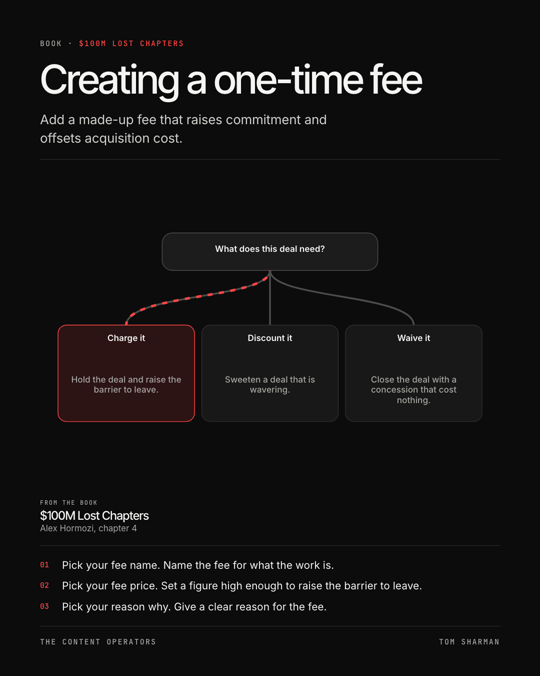
Add a made-up fee that raises commitment and offsets acquisition cost.
- Pick your fee name. Name the fee for what the work is.
- Pick your fee price. Set a figure high enough to raise the barrier to leave.
- Pick your reason why. Give a clear reason for the fee.
- Charge, discount or waive. Use the fee as a tool for the salesperson to sweeten or hold the deal.
From chapter: Section C: Advanced Offer Stacking, pp. 72–132
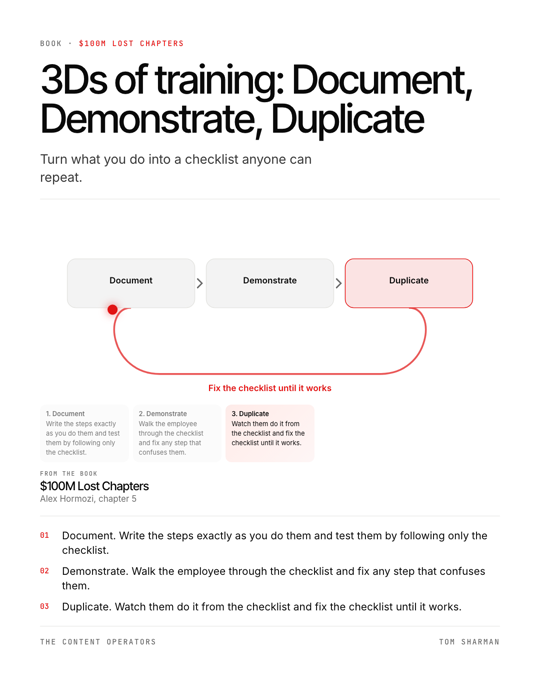
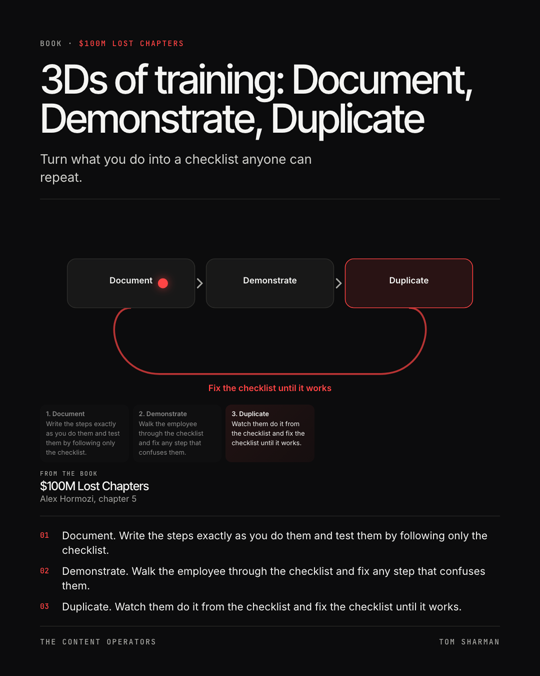
Turn what you do into a checklist anyone can repeat.
- Document. Write the steps exactly as you do them and test them by following only the checklist.
- Demonstrate. Walk the employee through the checklist and fix any step that confuses them.
- Duplicate. Watch them do it from the checklist and fix the checklist until it works.
From chapter: Section D: Expanded Employees Chapter, pp. 133–159
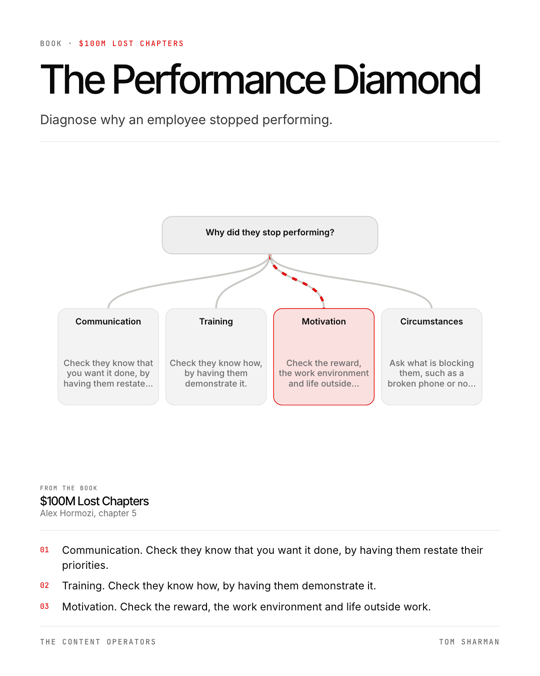
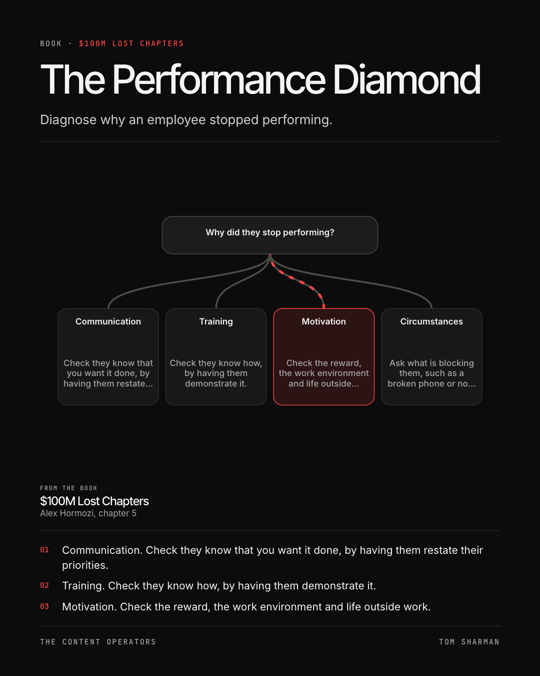
Diagnose why an employee stopped performing.
- Communication. Check they know that you want it done, by having them restate their priorities.
- Training. Check they know how, by having them demonstrate it.
- Motivation. Check the reward, the work environment and life outside work.
- Circumstances. Ask what is blocking them, such as a broken phone or no beef.
From chapter: Section D: Expanded Employees Chapter, pp. 133–159
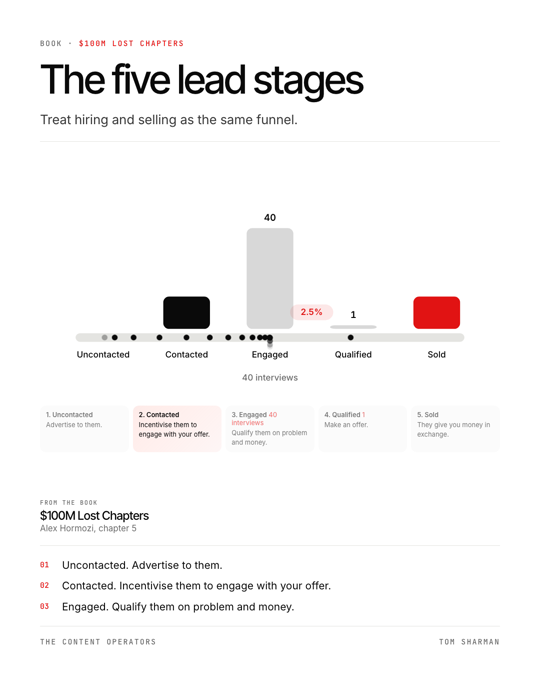
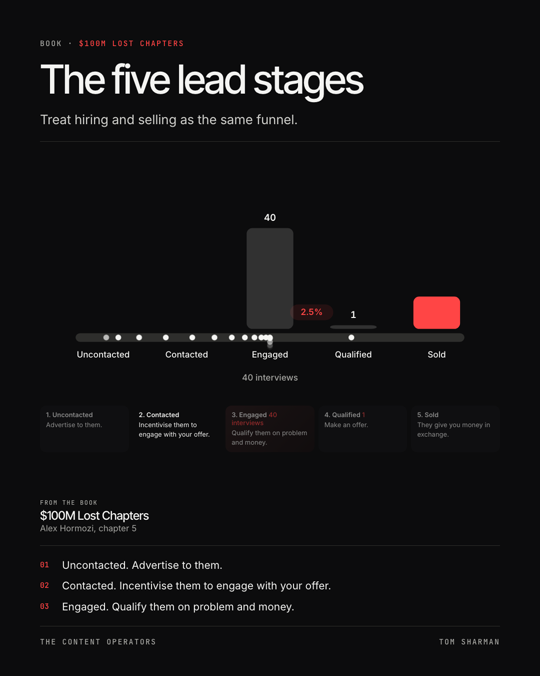
Treat hiring and selling as the same funnel.
- Uncontacted. Advertise to them.
- Contacted. Incentivise them to engage with your offer.
- Engaged. Qualify them on problem and money.
- Qualified. Make an offer.
- Sold. They give you money in exchange.
From chapter: Section D: Expanded Employees Chapter, pp. 133–159
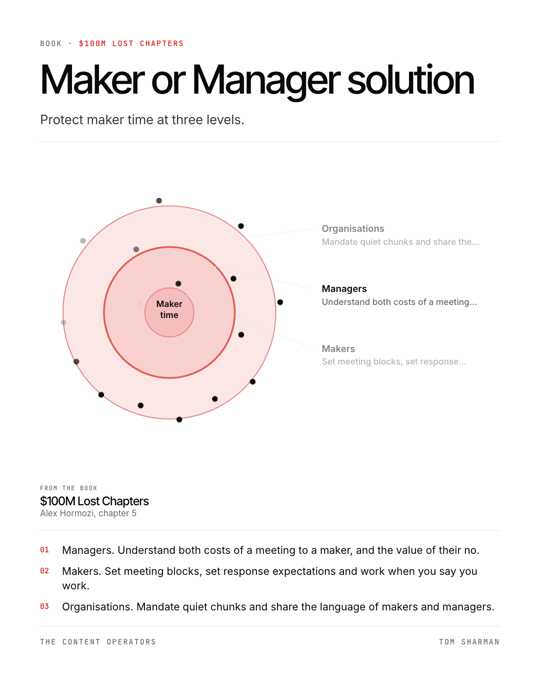
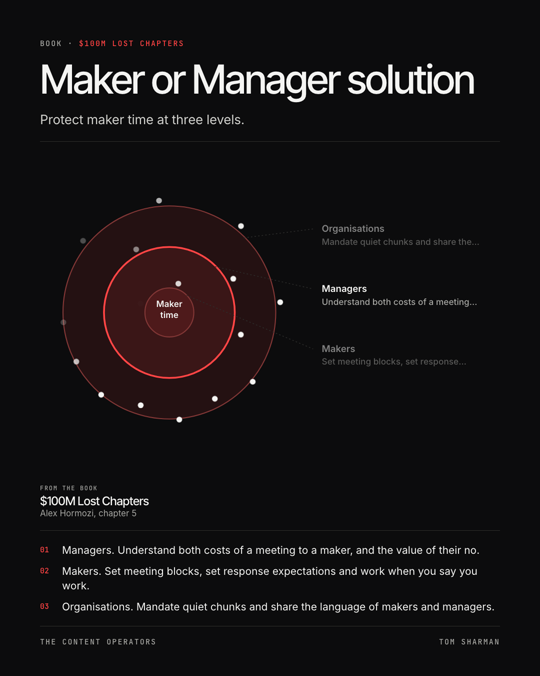
Protect maker time at three levels.
- Managers. Understand both costs of a meeting to a maker, and the value of their no.
- Makers. Set meeting blocks, set response expectations and work when you say you work.
- Organisations. Mandate quiet chunks and share the language of makers and managers.
From chapter: Section D: Expanded Employees Chapter, pp. 133–159