The Reputation Formula
Reputation equals Results x Reach.
- Results. What you have done.
- Reach. How many people know it.
- Reputation. The product of the two.
From chapter: Part 1: Personal Brand Principles, pp. 13–81
Wealthy and Well-Known backs six of Tom's lessons and argues with one. Under each of his lessons, what the book says about it, and on which pages.
The Vadens say to promote the problem and the destination people want, with the lesson shown in the founder's story, which matches leading with what the audience gets. pp. 114, 115 and 217. In the book: The Brand DNA Helix and Brand Positioning Statement, D.A.R.E.S. and the Primary Business Model, Fractal Math and the Services Spectrum, The Five Title Tests, Expert Bio and the Fast 50 referral process, The Content Diamond.
The Vadens call the Cause a crusade to eradicate a specific problem and say the most influential brands share one, which is the mission and enemy idea. pp. 135 and 267. In the book: The Brand DNA Helix and Brand Positioning Statement, D.A.R.E.S. and the Primary Business Model, Fractal Math and the Services Spectrum, The Brand Builder Journey.
They say your story and experience earn trust and the content should teach what you know in bite-sized pieces, which matches experience as the USP and learning as the subject. pp. 18 and 246. In the book: The Reputation Formula, Sheahan's Wall, The Five Title Tests, Expert Bio and the Fast 50 referral process, The Content Diamond.
They tell you to create only on the platforms where your avatar lives and cite Gary Vaynerchuk starting with one platform. pp. 56 and 254. In the book: The Reputation Formula, Sheahan's Wall, The Five Title Tests, Expert Bio and the Fast 50 referral process, The Content Diamond.
They say people buy the packaging as much as the product, so the look and words must carry the positioning. p. 219. In the book: The Five Title Tests, Expert Bio and the Fast 50 referral process, The Content Diamond.
They say your uniqueness is your own way of solving the problem and the power is that it worked for you, not that it is new. p. 149. In the book: The Brand DNA Helix and Brand Positioning Statement, D.A.R.E.S. and the Primary Business Model, Fractal Math and the Services Spectrum.
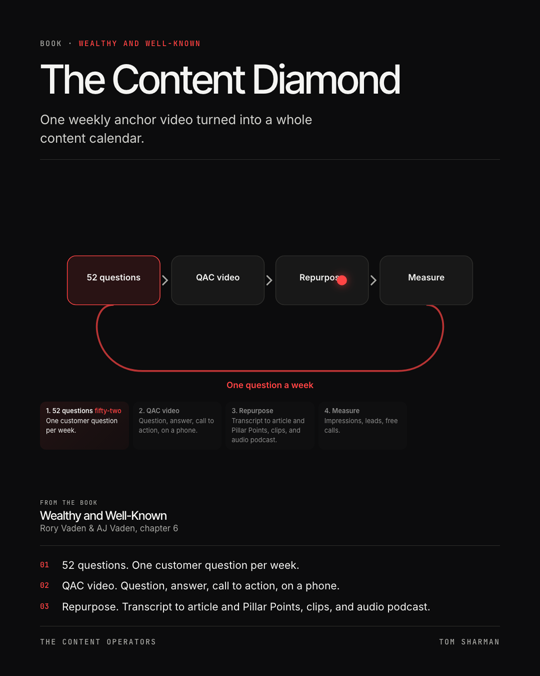
The Content Diamond builds around one anchor video a week split into smaller assets, a far lower cadence than several posts a day. pp. 249 and 257. In the book: The Five Title Tests, Expert Bio and the Fast 50 referral process, The Content Diamond.
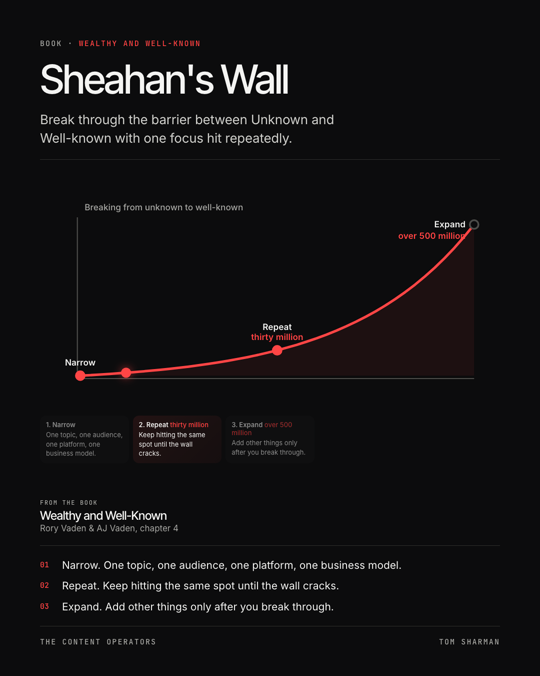
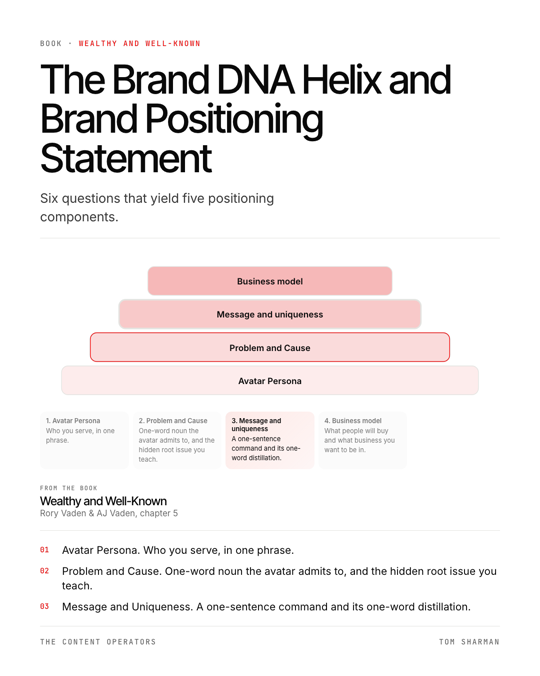
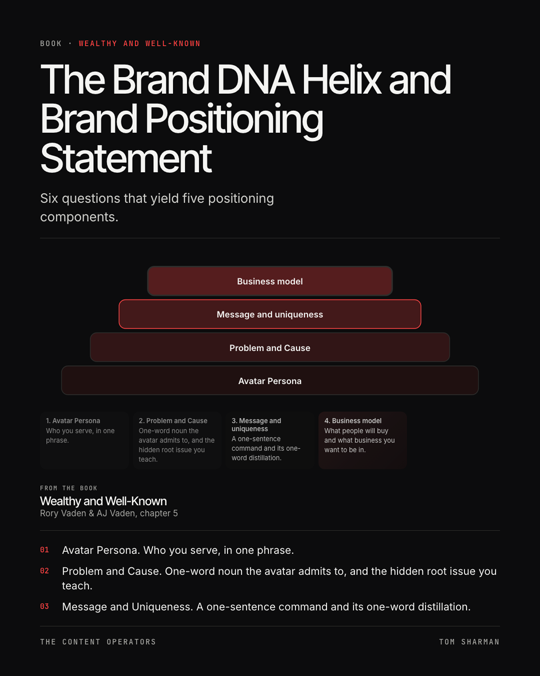
Rory and AJ Vaden argue that a personal brand is your reputation, which is Results x Reach, and that real experts lose to better marketers because they ignore reach. Most personal brands fail from diluted focus: too many topics, audiences, platforms and revenue streams. The fix is to break through Sheahan's Wall by hitting one spot repeatedly. You find that spot by serving the person you once were, writing to one real person and naming a one-word Problem, a one-word Cause, a one-sentence command Message and a one-word Uniqueness. You then pick one Primary Business Model, package it with clear titles and an Expert Bio, win your first customers through referrals from people who trust you, and teach what you know in content that builds trust. The book frames all of this as service to others, grounded in the authors' Christian faith.
The Content Operators launch
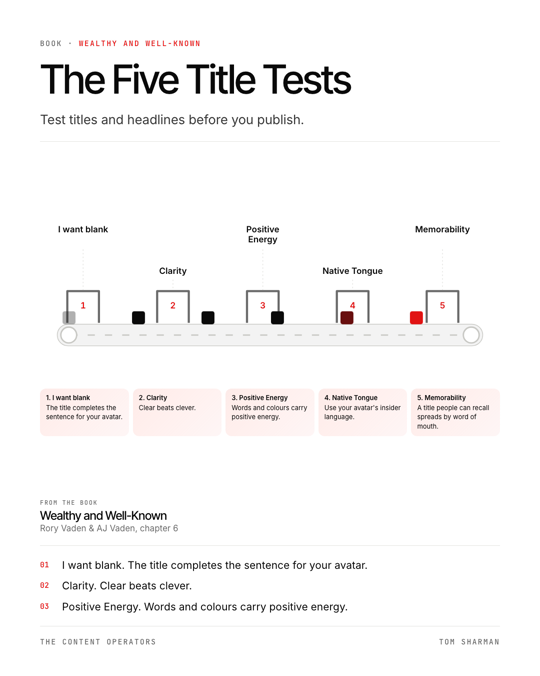
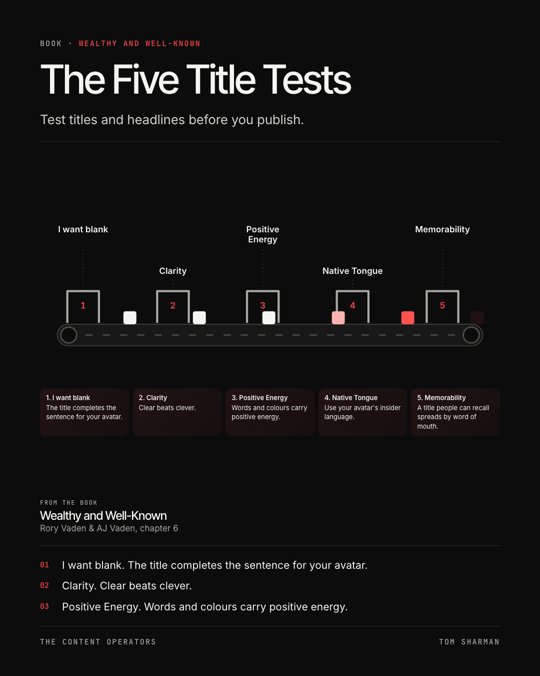
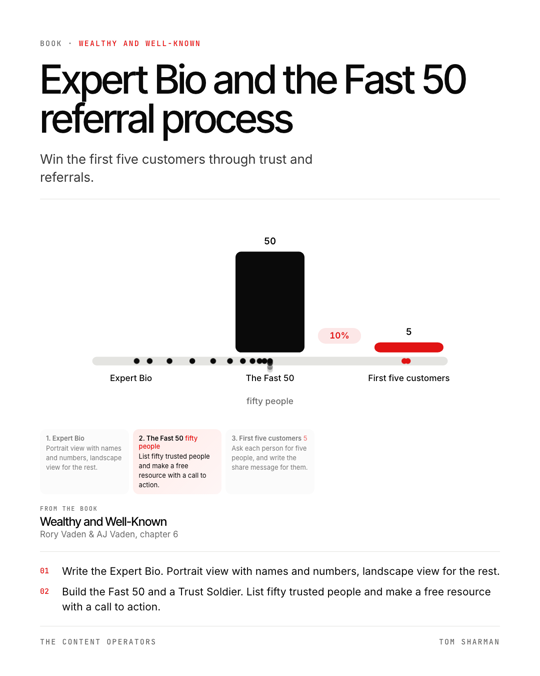
The launch needs a Brand Positioning Statement, titles that pass the Five Title Tests and a Fast 50 route to the first cohort, all of which the book lays out step by step.
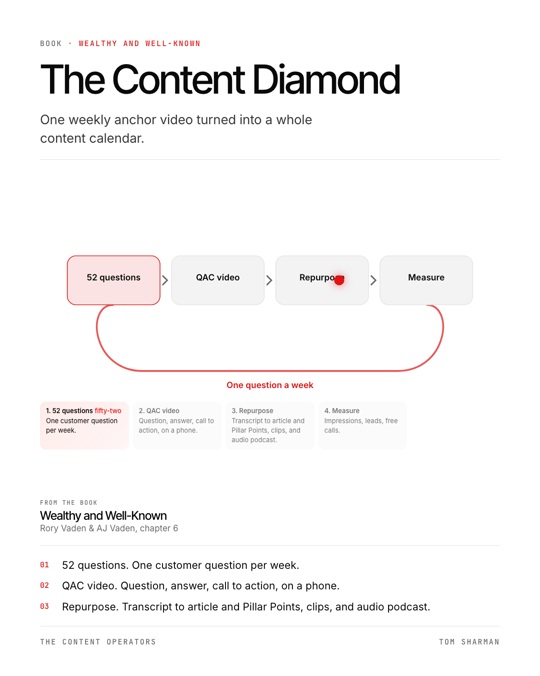
Trust comes from being seen, known and learned from, and the book measures it with impressions, leads and free calls, using a weekly anchor video and soft-offer calls to turn that trust into inbound.
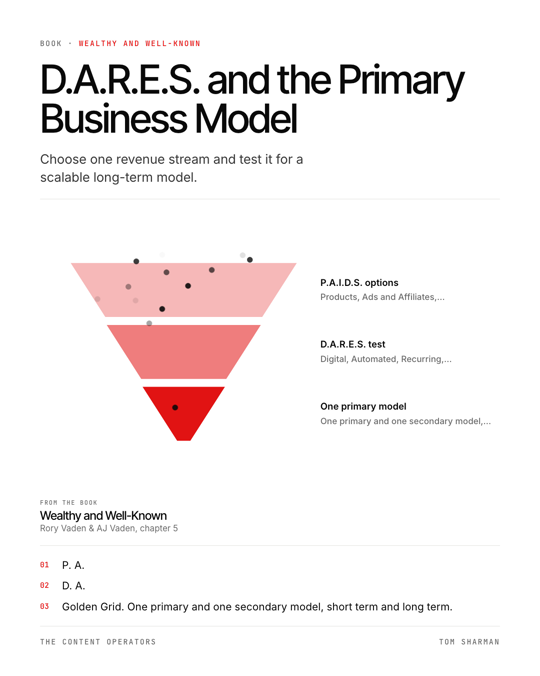
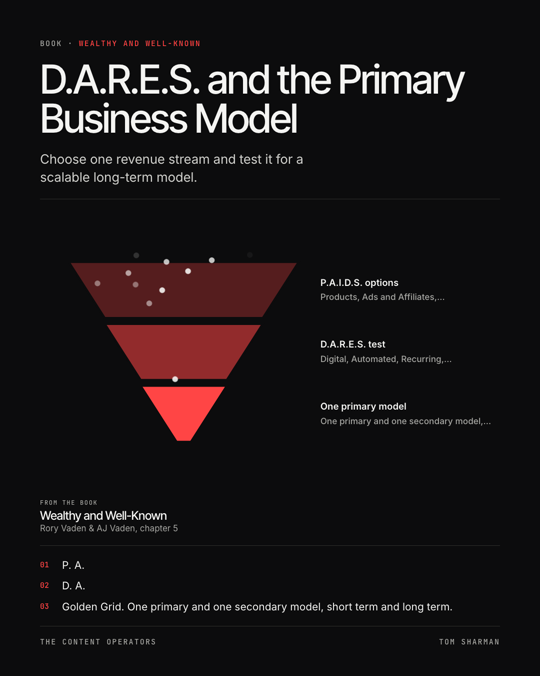
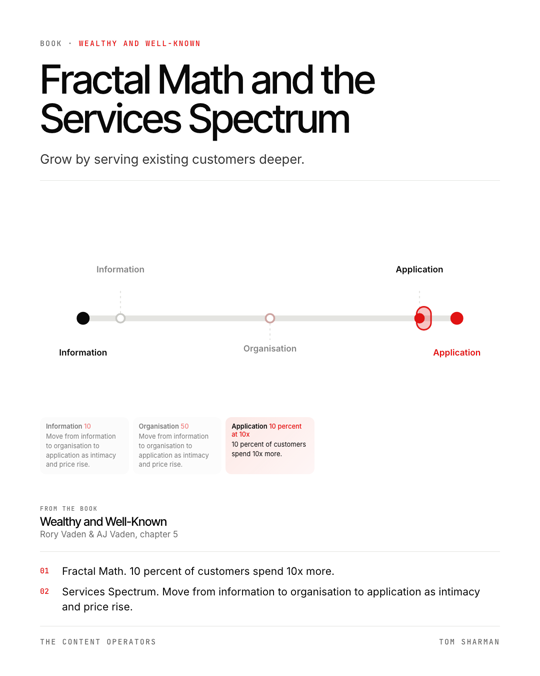
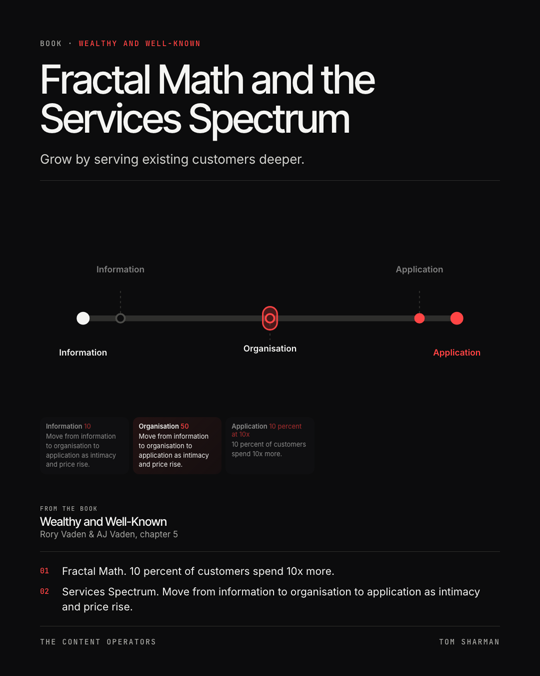
It gives D.A.R.E.S. and the Primary Business Model test for choosing a scalable model, Fractal Math for pricing tiers, and soft-offer free calls for selling anything over $2,000.
It says the stories that travel come from the pain you overcame and are told to one real person, so stories about the person you once were connect and the ones that boast do not.
The QAC protocol of question, answer, call to action, filmed weekly and cut into a text path and a video path, is the book's repeatable format.
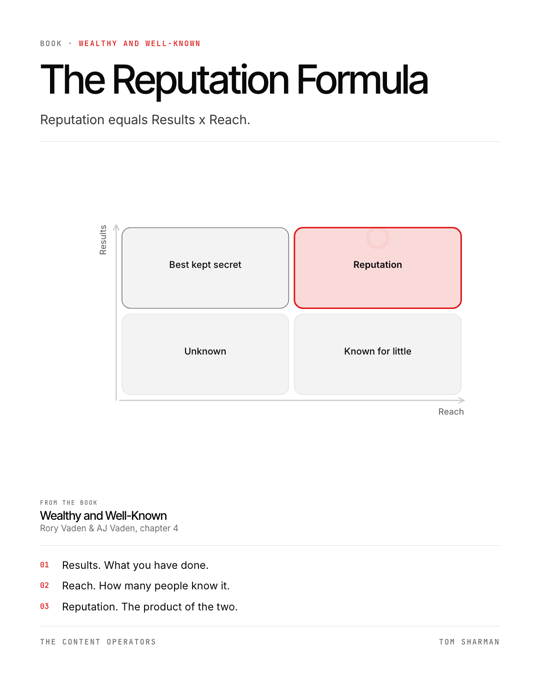
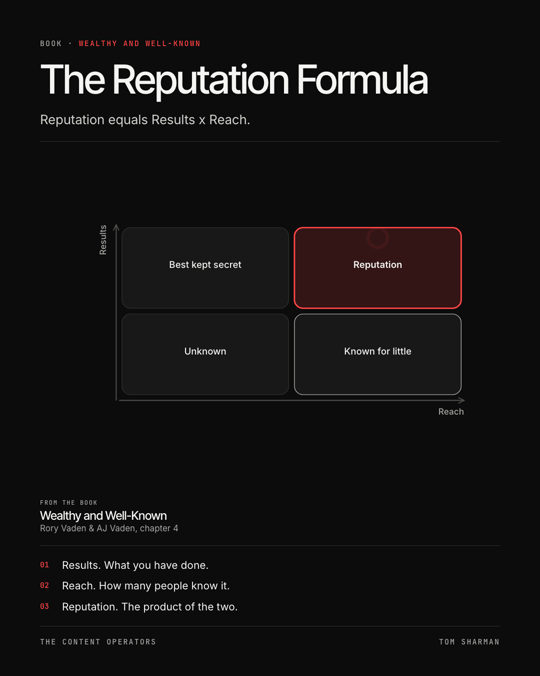
Reputation equals Results x Reach.
From chapter: Part 1: Personal Brand Principles, pp. 13–81
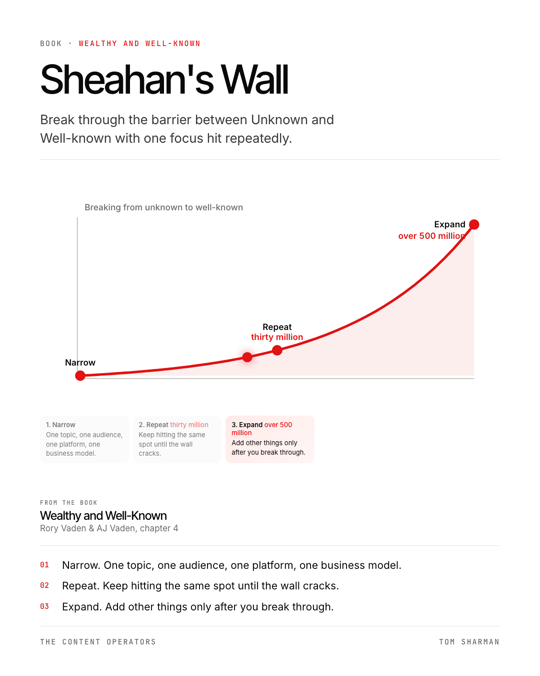
Break through the barrier between Unknown and Well-known with one focus hit repeatedly.
From chapter: Part 1: Personal Brand Principles, pp. 13–81
Six questions that yield five positioning components.
From chapter: Part 2: How to Build a Personal Brand, pp. 82–193
Choose one revenue stream and test it for a scalable long-term model.
From chapter: Part 2: How to Build a Personal Brand, pp. 82–193
Grow by serving existing customers deeper.
From chapter: Part 2: How to Build a Personal Brand, pp. 82–193
Test titles and headlines before you publish.
From chapter: Part 3: How to Monetize a Personal Brand, pp. 194–262
Win the first five customers through trust and referrals.
From chapter: Part 3: How to Monetize a Personal Brand, pp. 194–262
One weekly anchor video turned into a whole content calendar.
From chapter: Part 3: How to Monetize a Personal Brand, pp. 194–262
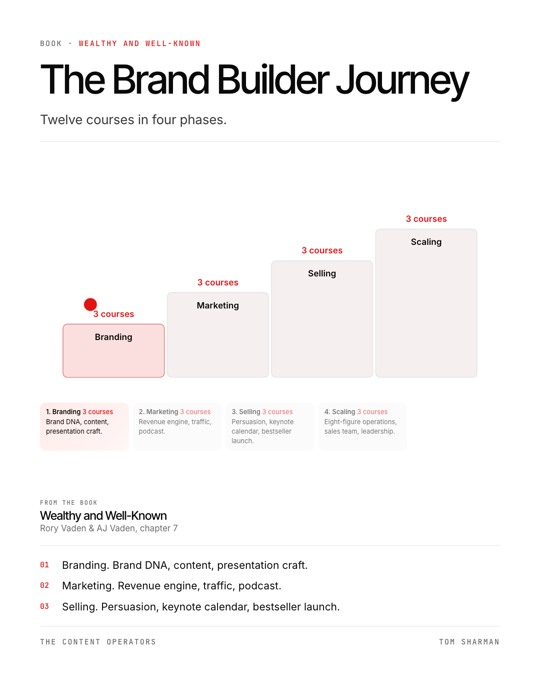
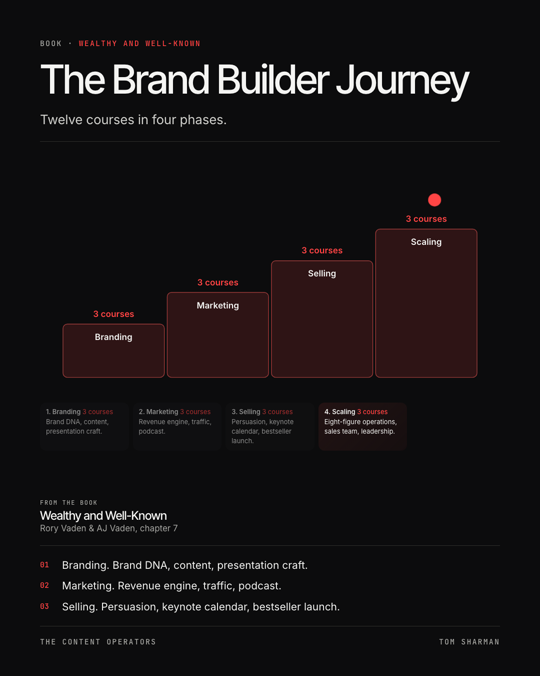
Twelve courses in four phases.
From chapter: Part 4: Personal Brand Action Plan, pp. 263–279
Tom works with creators and founders one to one, from a single session to a fractional role. Work with Tom