Bookshelf · The Courage To Be Disliked
The Courage To Be Disliked by Ichiro Kishimi and Fumitake Koga, framework 2 of 6
The three life tasks
Adler's three categories of interpersonal relationship every person has to face to become self-reliant and live in harmony with society.
Ichiro Kishimi and Fumitake Koga's framework, from The Courage To Be Disliked, pp. 57 to 113.
- Tasks of work
Cooperate with others on work, the relationship with the lowest hurdle because it has a shared aim.
- Tasks of friendship
Build relationships outside compulsion, judged by distance and depth rather than the number of friends.
- Tasks of love
Handle the closest relationships, partners and family, without restricting or controlling the other person.
From chapter: THE SECOND NIGHT: ALL PROBLEMS ARE INTERPERSONAL RELATIONSHIP PROBLEMS, pp. 57–113
More from this book
All 6 frameworks-
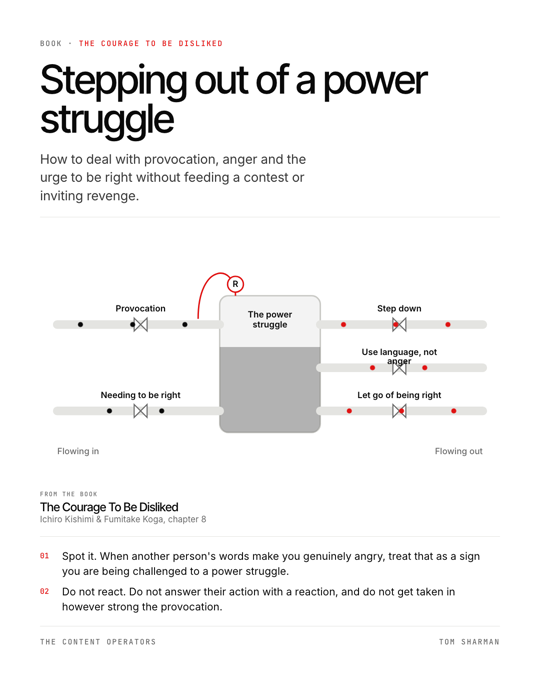
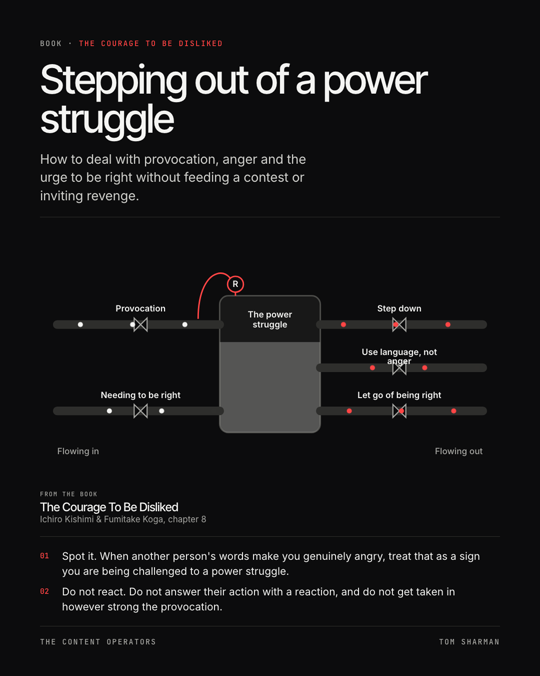
Framework 3 · Leadership Stepping out of a power struggle How to deal with provocation, anger and the urge to be right without feeding a contest or inviting revenge.
-
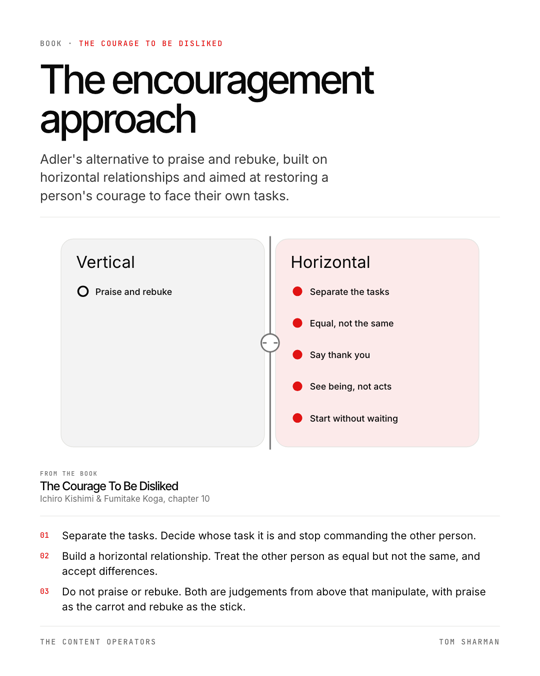
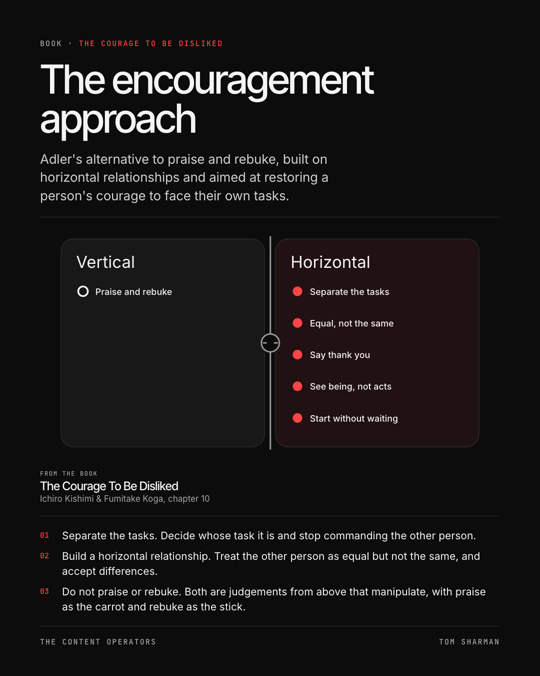
Framework 4 · Founder mindset The encouragement approach Adler's alternative to praise and rebuke, built on horizontal relationships and aimed at restoring a person's courage to face their own tasks.
-
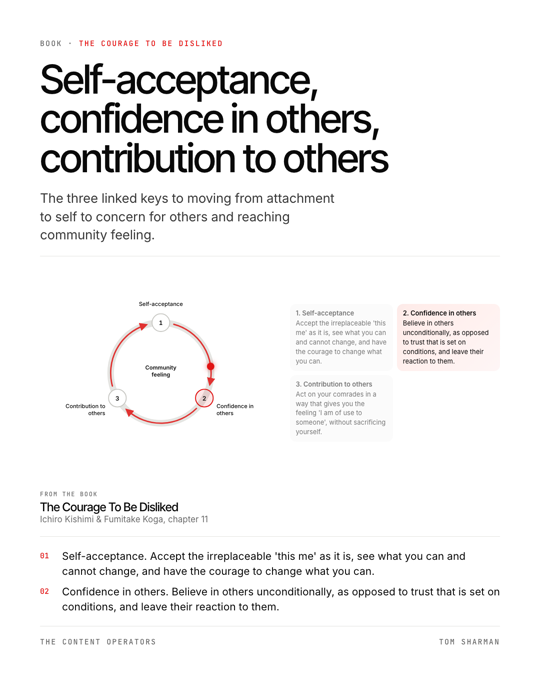
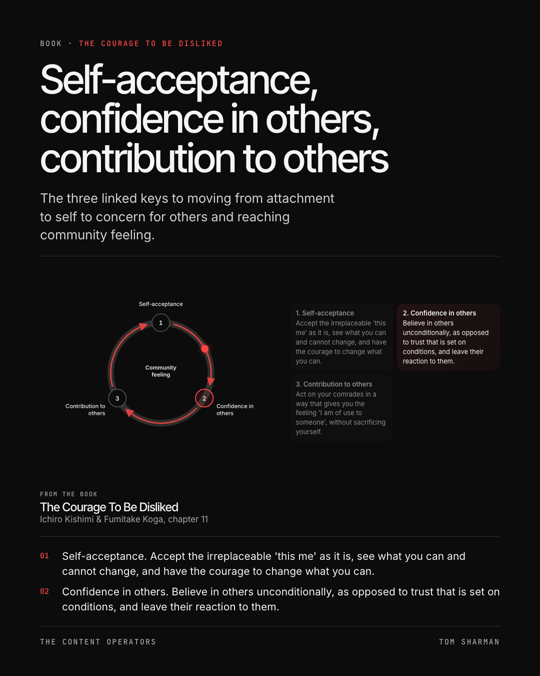
Framework 5 · Leadership Self-acceptance, confidence in others, contribution to others The three linked keys to moving from attachment to self to concern for others and reaching community feeling.
-
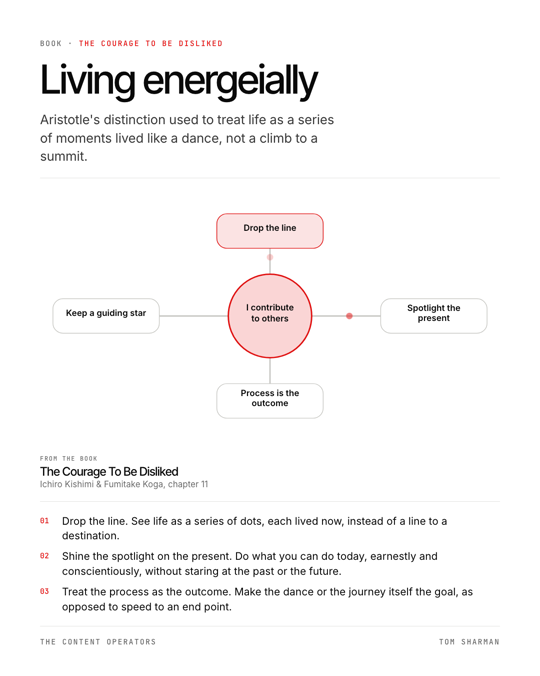
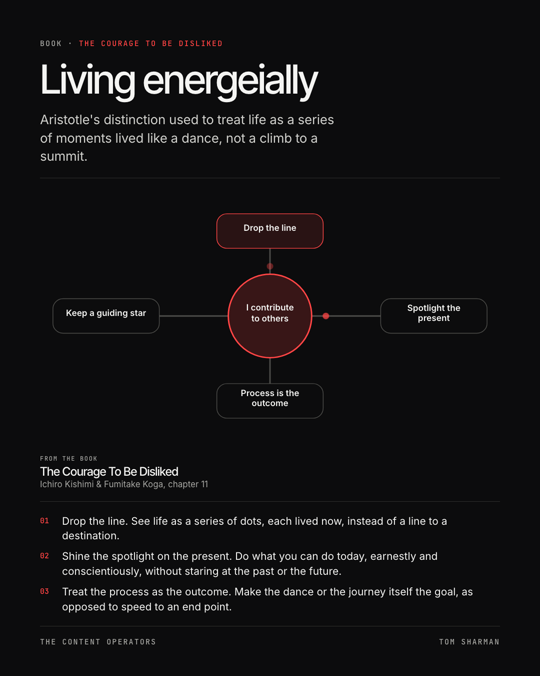
Framework 6 · Systems and operations Living energeially Aristotle's distinction used to treat life as a series of moments lived like a dance, not a climb to a summit.
-
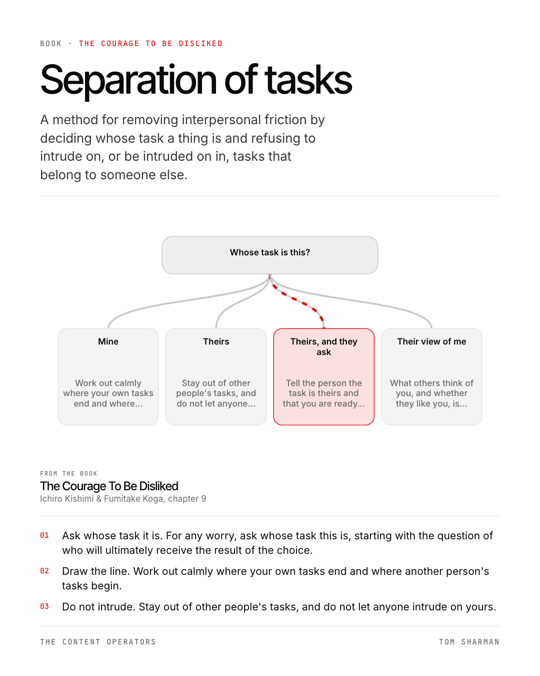
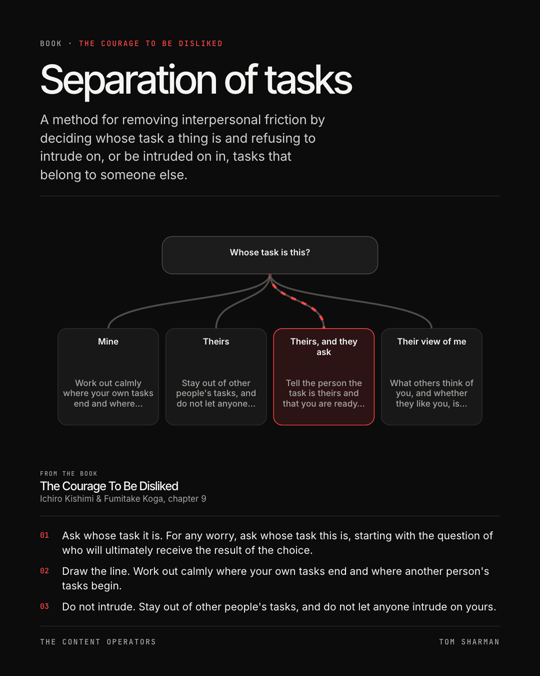
Framework 1 · Offers and pricing Separation of tasks A method for removing interpersonal friction by deciding whose task a thing is and refusing to intrude on, or be intruded on in, tasks that belong to someone else.