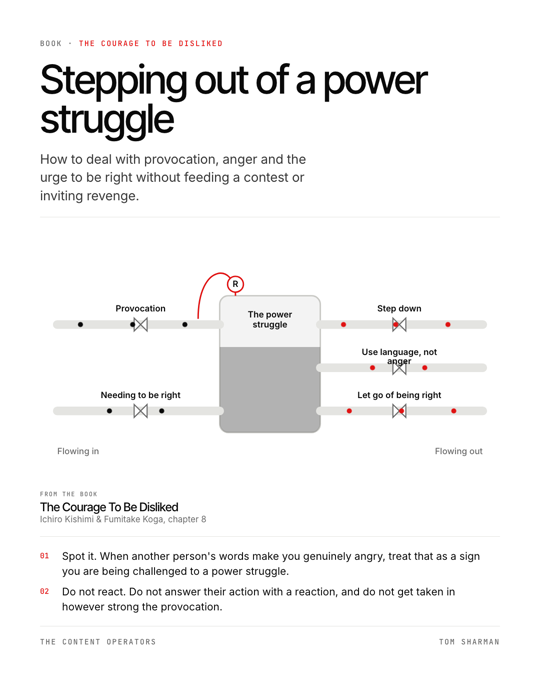
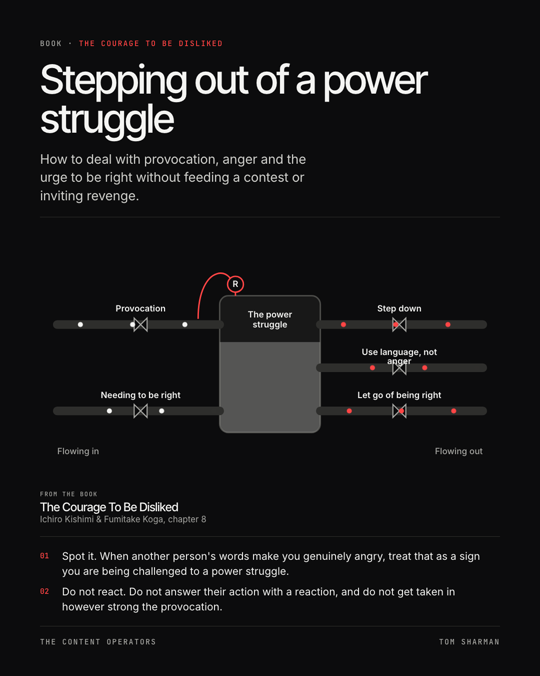
Adler's alternative to praise and rebuke, built on horizontal relationships and aimed at restoring a person's courage to face their own tasks.
Ichiro Kishimi and Fumitake Koga's framework, from The Courage To Be Disliked, pp. 154 to 197.
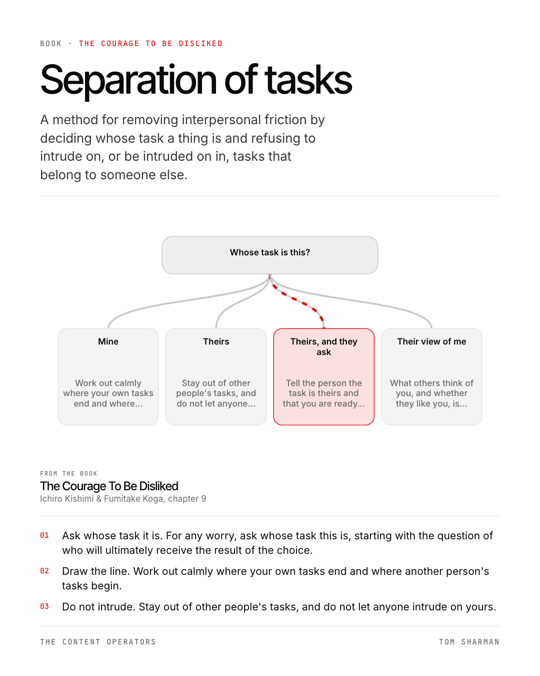
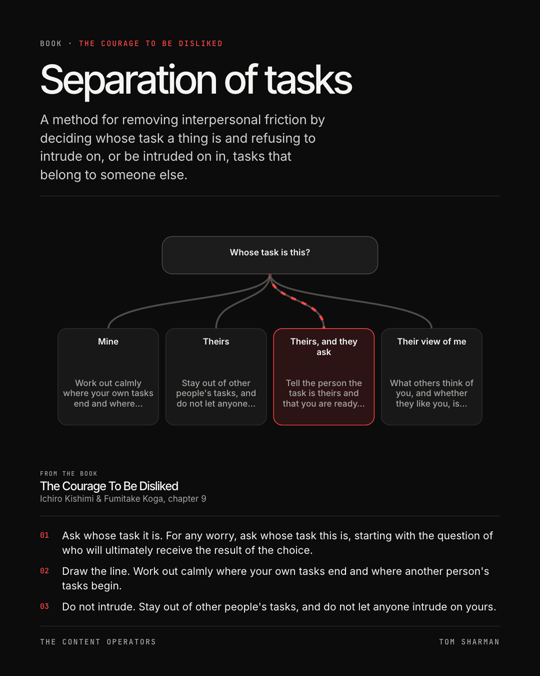
Separate the tasks
Decide whose task it is and stop commanding the other person.
Build a horizontal relationship
Treat the other person as equal but not the same, and accept differences.
Do not praise or rebuke
Both are judgements from above that manipulate, with praise as the carrot and rebuke as the stick.
Say thank you
Express gratitude, joy or respect in the way you would to a friend who helped you.
See being, not acts
Value people for being there, starting from zero rather than subtracting from an ideal image.
Start without waiting
Begin yourself, whether or not others cooperate.
From chapter: THE FOURTH NIGHT: WHERE THE CENTRE OF THE WORLD IS, pp. 154–197
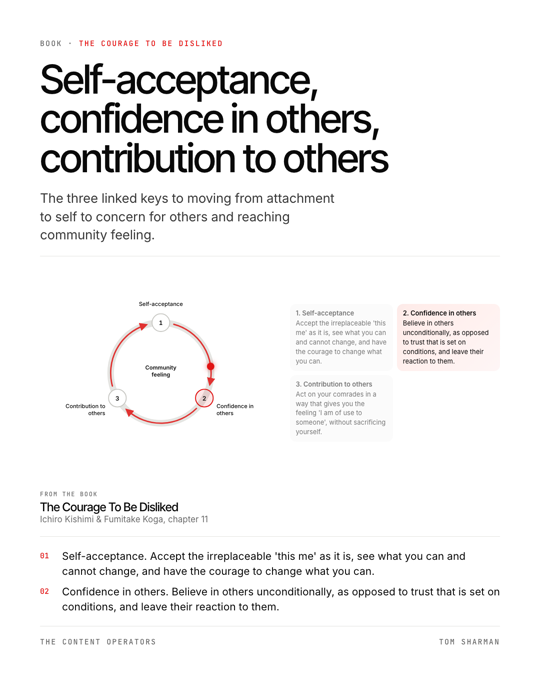
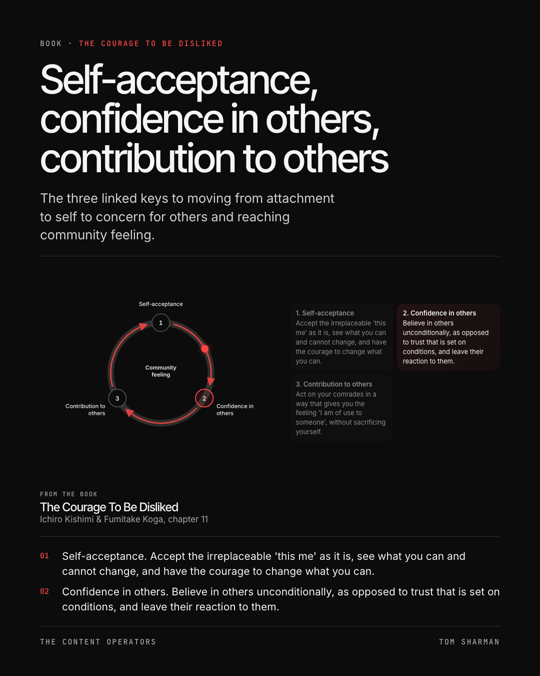
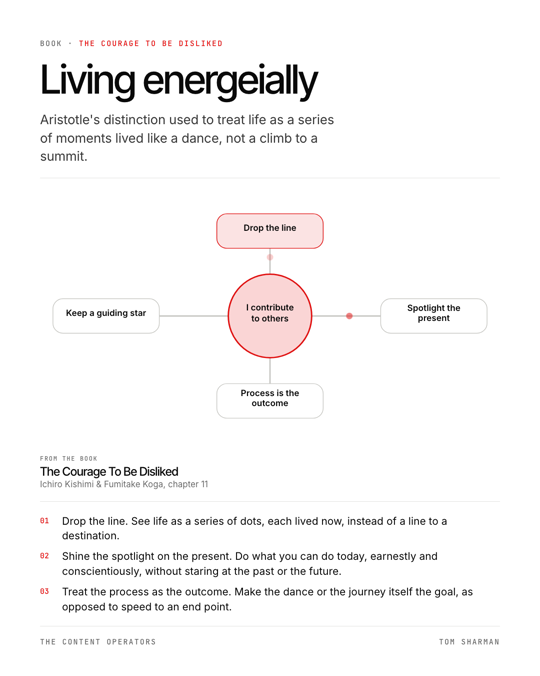
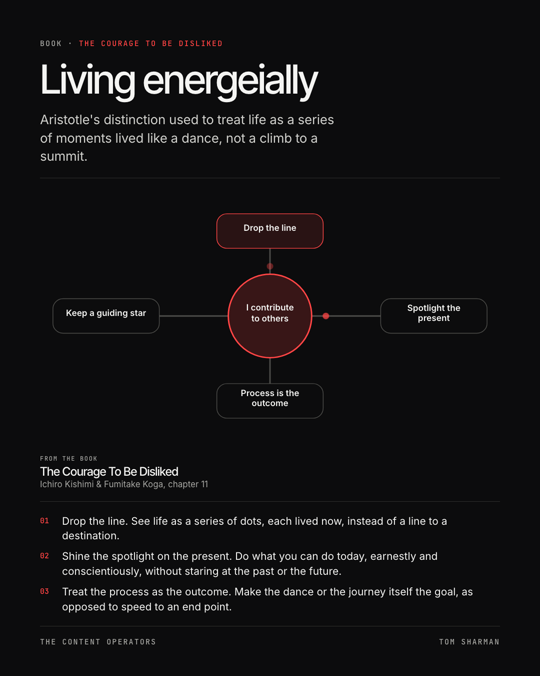
The fourth night sets the goal of interpersonal relationships as community feeling: seeing others as comrades and feeling that it is okay to be here. People caught up in the desire for recognition are self-centred, looking at themselves while seeming to look at others. You are part of the community and not its centre (a globe with many centres instead of a flat map), and belonging comes from contributing, so ask what you can give. When a small community fails you, listen to the voice of a larger one. Adler rejects praise and rebuke because both are vertical and manipulative, and proposes encouragement within horizontal relationships. Worth comes from feeling useful to others, which can be felt at the level of being as well as acts.