Bookshelf · Thinking in Systems
Thinking in Systems by Donella Meadows, framework 3 of 7
The eight system traps
Common structures that produce persistent bad behaviour, each paired with its way out.
Donella Meadows's framework, from Thinking in Systems, pp. 93 to 165.
- Policy resistance
Actors pull a stock towards different goals. Way out: let go, bring in all actors, and find an overarching goal.
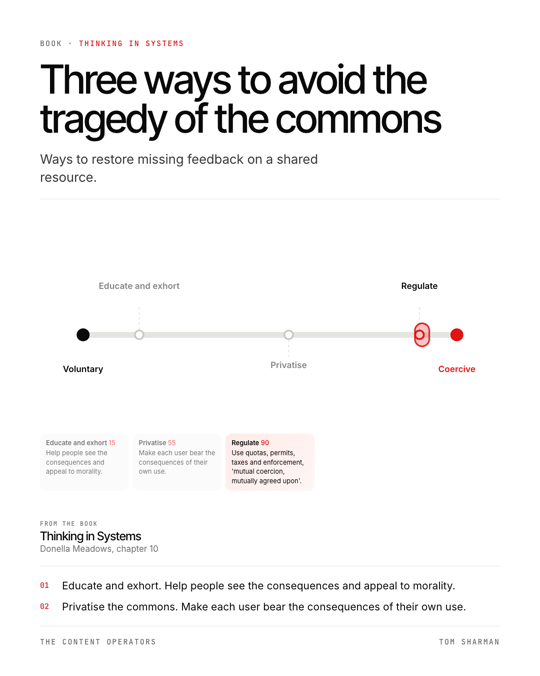
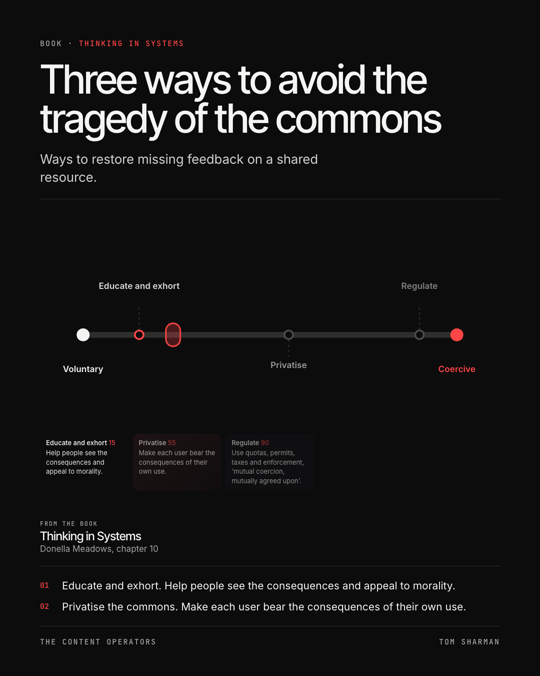
- Tragedy of the commons
Shared resource with weak feedback to users. Way out: educate and exhort, then privatise or regulate to restore the feedback.
- Drift to low performance
Goals erode towards past performance. Way out: keep standards absolute or anchor them to the best results.
- Escalation
Each side tries to out-do the other. Way out: refuse to compete or negotiate balancing loops.
- Success to the successful
Winners get the means to win again. Way out: diversify, limit winners' share, level the field.
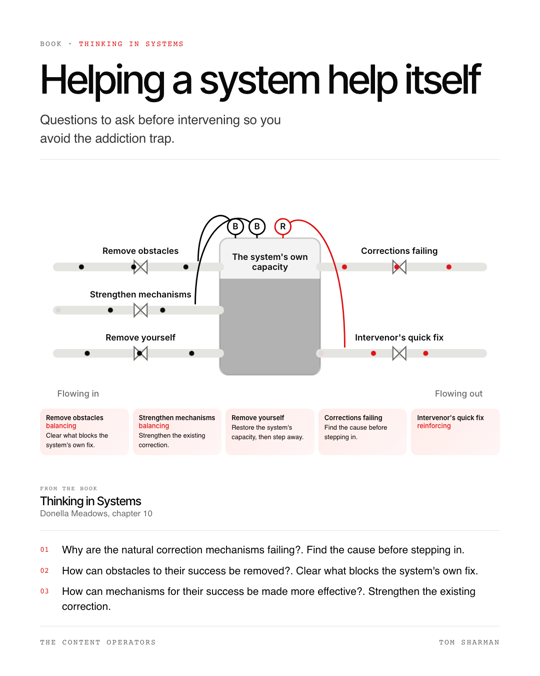
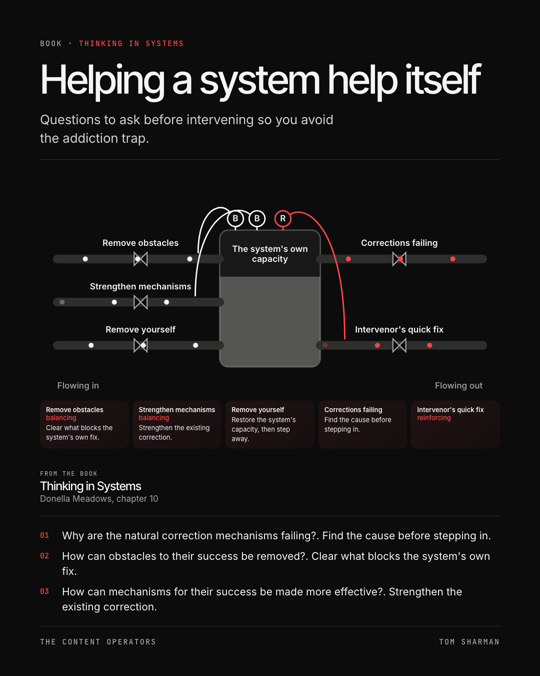
- Shifting the burden to the intervenor
A symptom fix weakens the system's own capacity. Way out: avoid it, strengthen the system, then remove yourself.
- Rule beating
Letter of the rule is met and the spirit is dodged. Way out: redesign rules so creativity serves their purpose.
- Seeking the wrong goal
The system delivers exactly the indicator you set. Way out: specify goals that reflect real welfare, and do not confuse effort with result.
From chapter: Part Two: Systems and Us, pp. 93–165
More from this book
All 7 frameworks-
-
-
-
-
-