The six phases every weekly or quarterly campaign follows, from planning to repeat.
Daniel Priestley's framework, from Oversubscribed, pp. 110 to 113.
Phase 1: Planning
Know your capacity and target market, clarify messages, choose channels and hooks and keep a rolling year plan.
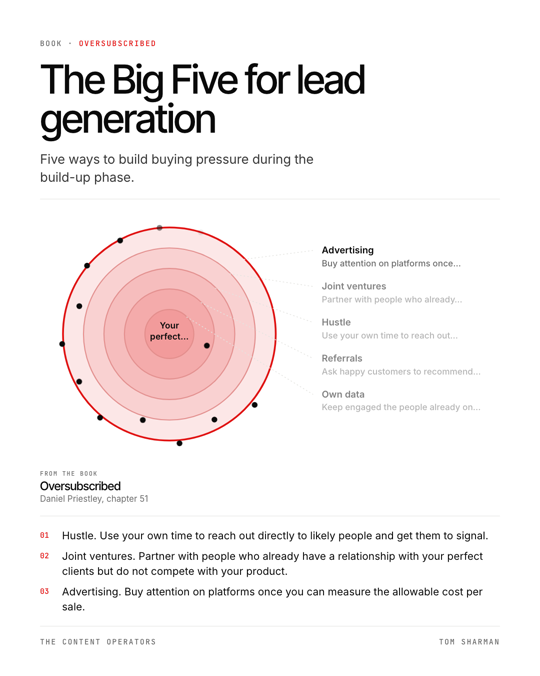
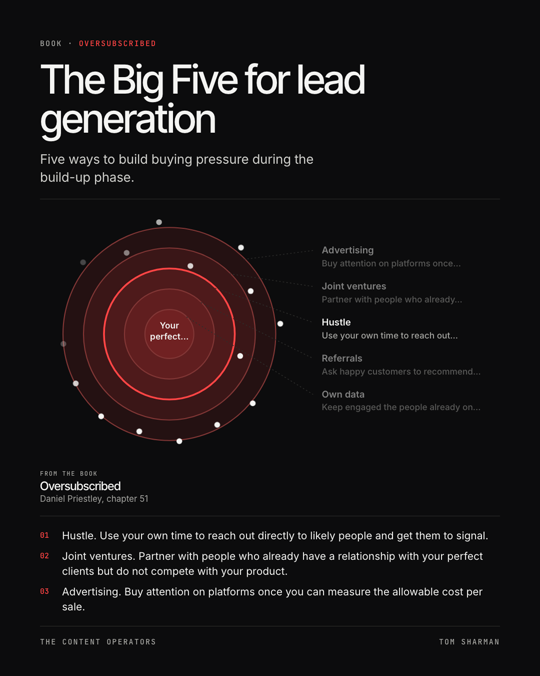
Phase 2: Build-up
Share genuine insights and entertain, signal your intentions and collect buying signals.
Phase 3: Oversubscribed release
Highlight the imbalance of signalled interest against limited availability, release, and let some miss out.
Phase 4: Sales follow-through
Follow up proactively, keep accurate data and encourage referrals.
Phase 5: Remarkable delivery
Deliver beyond the expectations that were created.
Phase 6: Celebrate and innovate
Tell the stories, share the numbers, learn the lessons and refine before repeating.
From chapter: SIX STEPS TO CREATING OVERSUBSCRIBED CAMPAIGNS, pp. 110–113
Both weekly and quarterly campaigns follow six phases: planning, build-up, oversubscribed release, sales follow-through, remarkable delivery, and celebrate and innovate. Planning means knowing your capacity and audience, build-up warms the market with signals, release highlights demand against limited supply, follow-through is proactive sales activity, delivery exceeds the expectations created, and celebration spreads stories and lessons. Examples include a weekly lunch and learn, a martial arts school briefing parents, and a trial membership starting each Friday. Priestley admits it is not the only way but says it works for most people, and lets you pinpoint what failed.